

Every barn find hunter knows the feeling of walking up to a car that looks too good to be true. In rural Indiana, a seller named Ken pulled a Le Mans blue 1969 Camaro out of the corner of his shop, and the first thing he told buyer Parker of Backyard Barn Finds was that the car was a Z28. The second thing he admitted was that he had no paperwork to prove it. As he put it, everything he had on the car was that it is a Z28, “but that’s all hearsay.”
That one honest sentence set the tone for a long, open walk around three cars: the Camaro, a black 1969 Mustang Mach 1, and a 1957 Chevy truck with a blower. Ken said he was only brokering the sale for a friend of 52 years who is battling cancer, and he wanted the cars to go to a good home. The cars came out of New York, Ken brought them to Indiana, and Parker was ready to see whether a deal could be made.
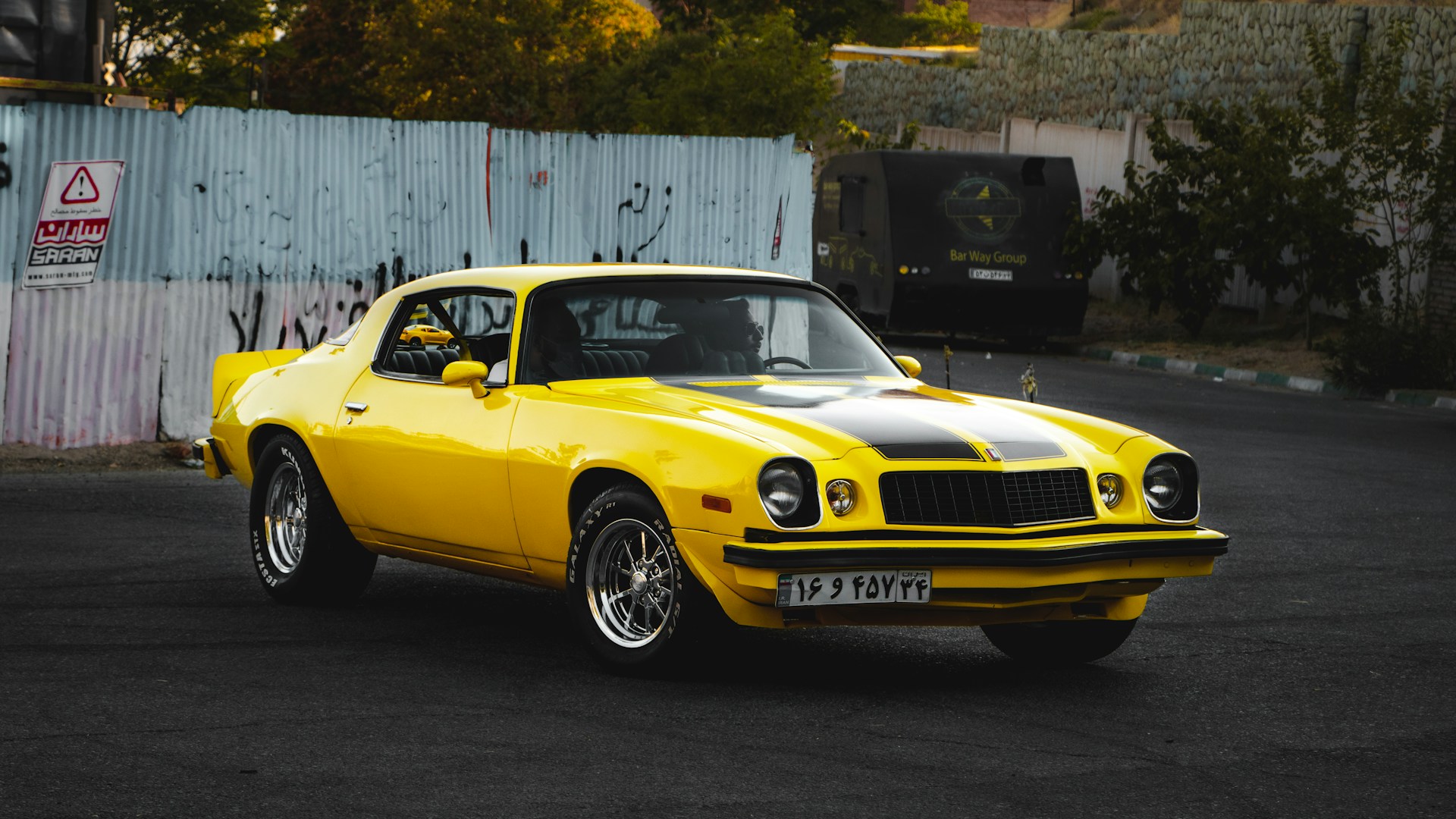
Ken described the Camaro as a Le Mans blue Z28 with white stripes and an ivory interior, with nice paint that runs well. According to Ken, the car sat for roughly 14 years while life got busy for its owner. Ken says he went and resurrected it, got it sorted out and running again, and now it only needs a new home. The paint and bodywork, he explained, were done by the owner himself, who ran a body shop in New York with his team.
Checking Whether the Camaro Is the Real Deal
With no paper trail, Parker did what any careful buyer should do and went looking for evidence on the car itself. He noticed right away that the reverse lights were not working and that the grille was not painted silver the way a Z28 grille would have been. Those are small fixes, but they were the first items on his list.
Under the hood, Parker found a block stamped 0725DZ, which he called an original stamp. A DZ block is the engine code tied to the Z28, so Ken’s claim that a real DZ short block sits in the car was a big plus. Parker also pointed out that the doubler plate in the trunk area looked original, judging by the way it was welded in. Ken said the engine bay was repainted blue around 2002, and Parker agreed that the MSD ignition box and plug wires screamed early 2000s.
Other clues pointed the right way too. Parker noted the car had an early VIN, and the tag matched a Los Angeles-built car with Le Mans blue paint and an ivory interior. The trunk had the smaller top bar and larger bottom bar of the factory optional spoiler. The car also lacked the extra chrome and lens trim a faker might add. Parker explained that when someone builds a clone, they often miss details that have to match all around the car, and this car’s details were consistent with a Z28 at some point.
Not everything was original. The console had been added later, Parker said, since there was no hole in the dash for the oil pressure gauge a factory console car would have had. The cowl induction hood was added during the paint job, and Ken still has the original hood. The rear wheels looked too big for a Z28, likely Corvette wheels. The carpet was not original, though the seats and kick panels looked original to Parker, and he spotted P15 rust inhibitor in the trunk, which he called a good thing.
The Raven Black Mach 1
Parker was just as excited about the Mustang. It is a 1969 Mach 1 in Raven Black with a 390, and Parker said only about 3,000 black Mustangs were made that year. He pointed out that by production numbers a 390 car is rarer than a 351 or a 428 car, even if it may not be more desirable. It has an automatic transmission, which Parker said hurts the car a little.
Ken said the Mustang also sat in a museum for a long time with the Camaro, indoors with heat and air, and was restored around 2002 to 2004. The car came out of South Carolina and was never salted, which Ken said probably saved it. He called it a class A restoration where every nut and bolt was taken apart and the transmission was rebuilt. Parker checked the underside, which was painted black instead of the correct red oxide primer, but he said it saved the car either way.
Unlike the Camaro, the Mustang came with paperwork. Ken produced the build sheet, and Parker walked through it. The codes confirmed a 1969 Mach 1 with the 390 S-code engine, and the 63C code that confirms a Mach 1. The paint code showed Raven Black with a black interior. Parker said that even though a Marti Report can be ordered for about 30 dollars, having the original paperwork in hand is awesome. He added that Mustangs are not like Camaros, because they are what they are and the VIN tells the story.
The buck tag on the passenger fender was still in place, which Parker said is often gone on Mustangs, and it listed factory air conditioning, power brakes, power steering, dual exhaust, courtesy lights, remote mirror and lower rocker moldings. It also showed the GT two-tone treatment on the hood, which Parker said looks killer. The odometer reads 34,700 miles, and Parker figured it could be 134,000, since the car in the restoration photos looked far more worn than a 34,000-mile example.
Ken said he has the original factory stickers in an envelope, new door panels and brand new seat covers that will go with the car. The AM/FM radio has gone missing, and the Mustang’s reverse lights did not light up either. Parker’s takeaway was that both cars need some wiring work, which he called always an issue with old cars. Both cars started and ran smoothly.
The Pro Street Truck on the Side
The third vehicle, a 1957 Chevy truck, was not on Parker’s shopping list. Ken said it has a 1969 427 Corvette engine rated at 390 horsepower, converted to Square Port heads, with a blower, built many years ago by Jim Audi in New York. It has a Turbo 400 transmission, a 12-bolt rear end, shaved door handles opened with poppers on a key fob, a louvered hood and huge tires out back. Parker called it a pro street truck with a lot of power. Ken plans to tidy it up, replace the bumper and grille, and then offer it for sale.
How the Deal Came Together
Parker had been on the road since September 19, and it was October 4 when he arrived. Ken said he deliberately under-described the cars so no buyer would arrive disappointed, and Parker said the cars were better in person than described. After a short break, the two called the owners. Ken reported they were good with the numbers, and the price stayed private because it was a private sale. Ken then offered to recommend a carrier to haul the cars back to Pennsylvania.
For anyone shopping for a car like this, the lesson is simple. Paperwork matters, so a build sheet or buck tag can turn a good story into a proven car, and a seller who says “that’s all hearsay” is handing you a to-do list. Check the block stamp, the VIN, the trim, the doubler plate and the options, and budget for the small stuff such as lights and wiring.
More Stories You May Like
- Creator Stumbles on a Massive Classic Car Graveyard in America Where Mustangs, Camaros and Firebirds Are All Selling for Less Than $2,000 Each
- Classic Car Hunter Chases Down a Rare 1969 Mustang 428 Super Cobra Jet With a $50,000 Asking Price, Then Sees What Kind of Shape It Is Really In
- True Barn Find 1967 Corvette L71 427 Is Found in Georgia with Only Three Thousand Miles on It