

The seller showed up with the car, the keys and the title in hand. On paper, everything looked ready to go. Then @mateoflips, who buys and resells cars from Facebook Marketplace, took a closer look at that paperwork and noticed a problem. The title was not in the seller’s name. A few minutes later, a vehicle history report revealed something even worse.
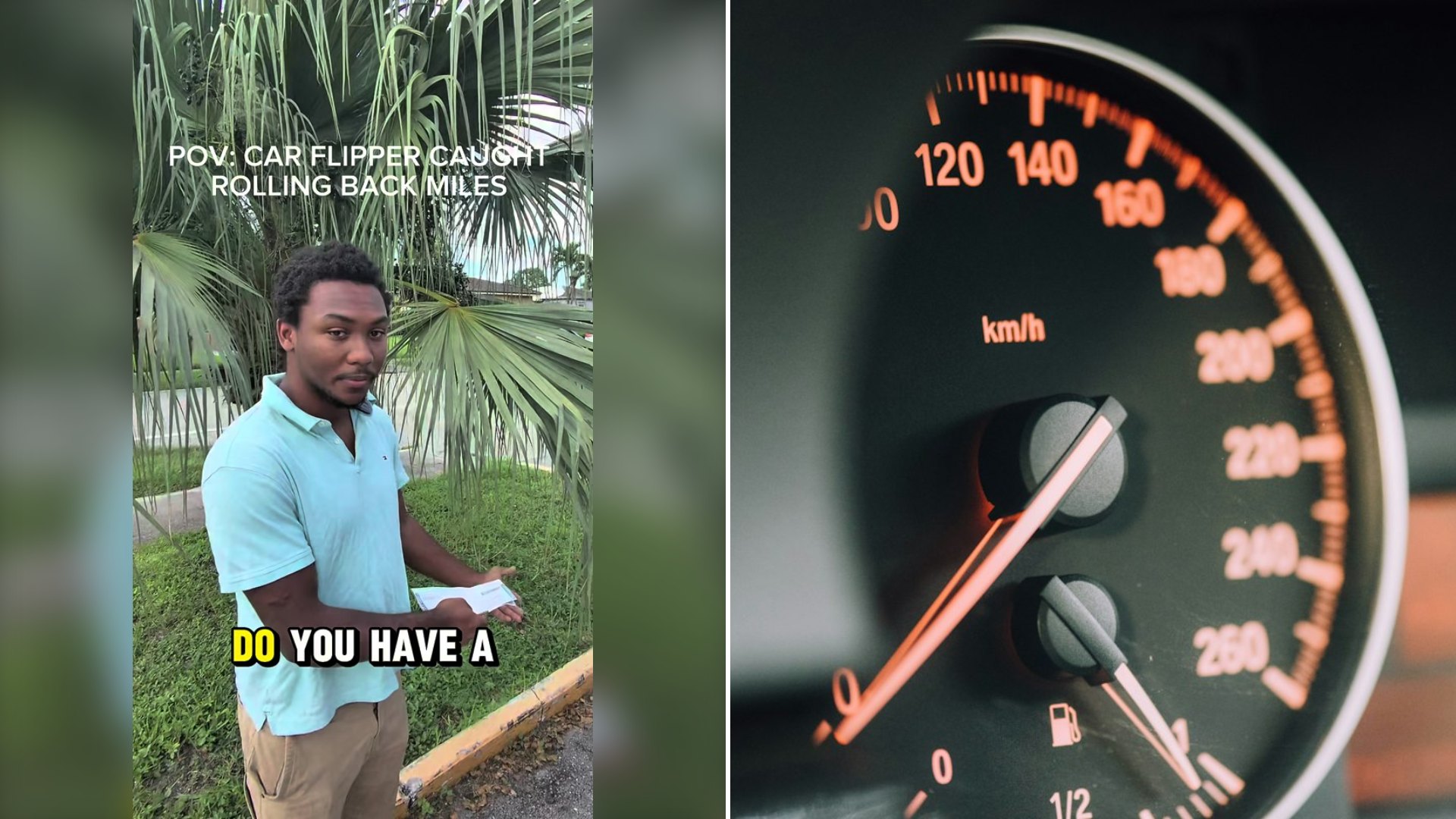
“The title is not in your name,” he says in the video, as the realization sinks in. The seller insists that yes, he does have the title with him. That part is true. It just belongs to someone else, a woman whose name is printed on it. The car flipper immediately wants to know who she is and why her name, not the seller’s, is on the paperwork.
For someone who buys and sells cars regularly, that is the moment the alarm bells start ringing. The title is the legal proof of ownership. Whoever is named on it is the person with the right to sell the car, and that person was not the one standing in front of him.
Even before checking anything else, he had a strong hunch about the car. “I haven’t even pulled the report yet,” he says, “but I guarantee you this car is definitely rolled back.”
The Report That Ended the Deal
The seller told him the engine was good, though there was a known noise coming from the tensioner. The flipper suggested a test drive and said he would prefer to be behind the wheel himself. Then he did what every used car buyer should do. He pulled a vehicle history report on the spot.
His hunch was right. “The report’s coming back rolled back,” he says. “Like, they rolled back the mileage on the car.” The report showed the car with about 210,000 miles, far more than the odometer was claiming.
Standing there with a title in the wrong name and an odometer that did not match the car’s history, he tried to make sense of it. “I’m just trying to understand what’s going on here,” he says. In the end, he lays it out plainly: the title is not in the seller’s name, and the mileage is rolled back. The deal was off.
@mateoflips
Why a Title in Someone Else’s Name Is a Red Flag
Buying a car from someone whose name is not on the title is one of the riskiest moves in a private sale. Sometimes there is an innocent explanation, such as a relative selling a car for an elderly parent or settling an estate. But it is also a classic sign of what is called title jumping or curbstoning, where someone buys cars, never registers them in their own name, and resells them, often with problems hidden.
Many states restrict or prohibit this practice because it lets sellers dodge taxes, dealer licensing rules and responsibility for the car. For the buyer, it can mean trouble registering the vehicle, no one to hold accountable if something is wrong, and in the worst case, a car that turns out to be stolen or carries a loan nobody mentioned.
Match the name. The name on the title should match the seller’s photo identification. If it does not, ask why, and be ready to walk away.
Check the title itself. Look for words like “salvage,” “rebuilt,” “flood” or “lien.” Compare the vehicle identification number on the title with the numbers on the dashboard and the driver’s door jamb.
Handle estates and family sales the right way. If someone is selling on behalf of a relative, they should be able to show legal paperwork, such as a power of attorney or court documents for an estate. Your state motor vehicle agency can tell you exactly what is required.
How to Spot a Rolled Back Odometer
Odometer tampering is a federal crime, and it still happens, even with digital dashboards. It can cost buyers thousands of dollars in lost value and surprise repairs. Here is how to protect yourself.
Run the history report every time. Services such as Carfax and AutoCheck list mileage readings from inspections, oil changes, registrations and sales. A reading that suddenly goes down is a major warning sign. The government-backed National Motor Vehicle Title Information System, found at VehicleHistory.gov, offers low-cost title checks as well.
Compare wear to the mileage. A worn brake pedal, a shiny steering wheel, a sagging driver’s seat or heavily worn floor mats do not belong on a car showing low miles.
Look for service stickers and records. Oil change stickers on the windshield and receipts in the glove box often record mileage. If they show higher numbers than the dashboard, you have your answer.
Get a pre-purchase inspection. A trusted mechanic can scan the car’s computer modules, some of which store mileage separately, and can spot wear and tear that does not match the odometer.
Report fraud if you find it. If you believe a seller tampered with an odometer, you can report it to your state attorney general or to the National Highway Traffic Safety Administration, which oversees odometer fraud enforcement.
This flipper knew what to look for and walked away before handing over a dime. For any buyer, the lesson is simple. If the paperwork and the car’s story do not line up, the best deal is the one you do not make.
More From Steel Horse Rides
- Buyer Says Toyota Camrys and Priuses Are Almost Always the Smart Answer Because They Hold Their Value and Keep Running Well Past One Hundred Fifty Thousand Miles
- Driver Says He Just Went Around a Stopped Car in a Left Turn Lane and Headed Home Only to Be Ordered Out of His Tesla at Gunpoint
- Crew Rescues A Yellow 1977 Porsche 911 Targa That Sat In The Woods For About Twenty Years Then Power Washes The Dirt Off And Polishes Faded Paint