

It was very early in the morning, the rain had just started to fall, and the car behind her had been riding her bumper for miles. When that driver skidded through a green light and nearly slammed into the back of her car, Australian TikTok creator @emilyjnewton did what almost any of us would do without thinking. She leaned on her horn. What followed, she says, was “one of the most scariest things I have ever been through,” and it ended with her racing toward a police station with emergency services on the phone.
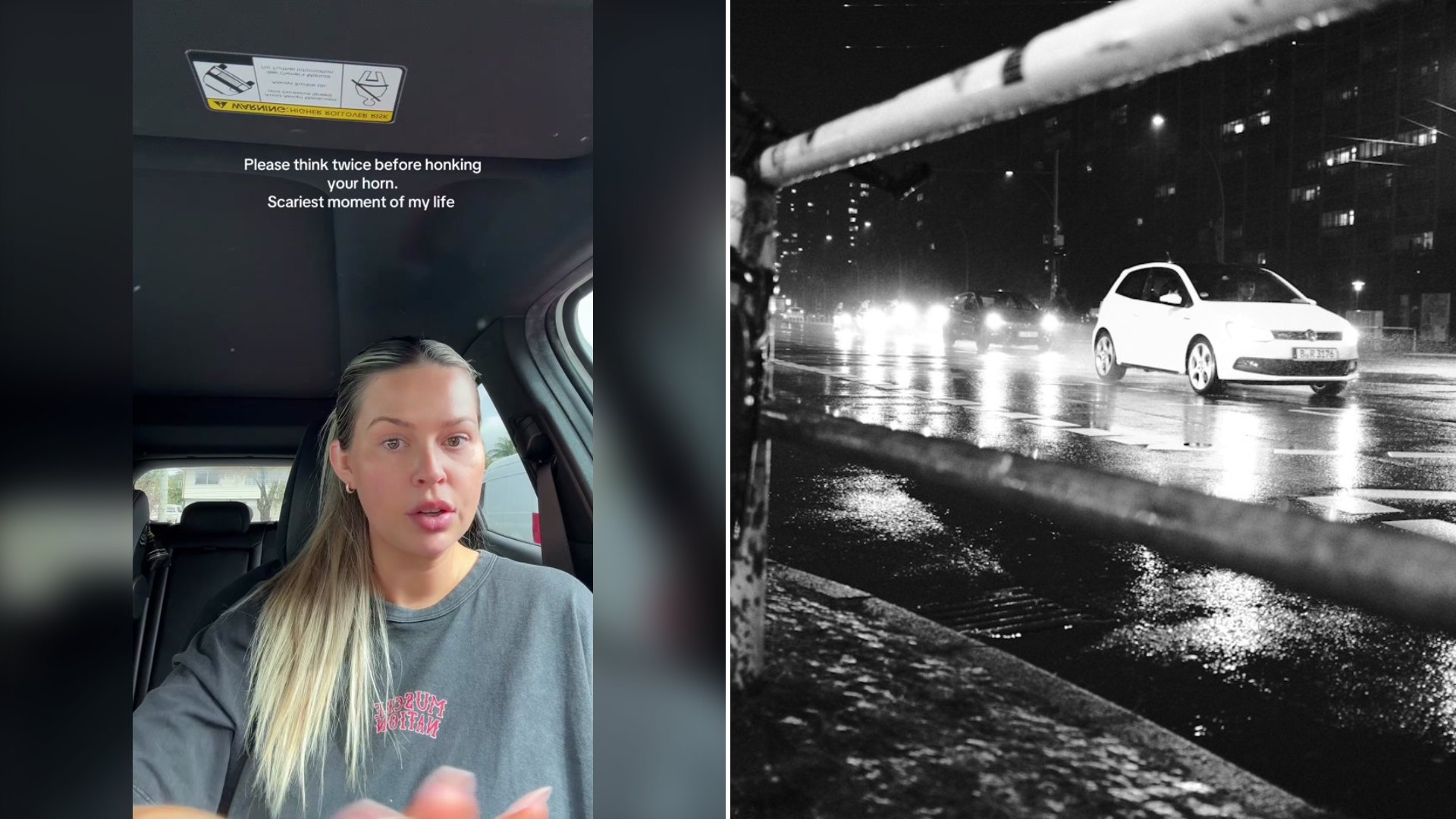
The incident happened two years ago, but she says it still shapes the way she drives every single day. She shared the story as what she called “just a friendly reminder” to other drivers: you never really know who is sitting in the other car.
“Some people have anger issues, some people aren’t mentally stable and it’s just really not worth it,” she explains.
She remembers noticing the car creeping up very close behind her. The driver did not seem to be paying much attention to the road. Then the rain started, and as the two cars moved through a green light, the other driver skidded and nearly lost control. The car came within inches of hitting the back of hers.
That is when she honked. It was a natural reaction to a frightening moment, the kind of warning blast that a horn is designed for. But the man behind the wheel of the other car did not take it as a warning. He took it as a challenge.
“From there I was followed for a very long time and this man was trying to get my car off the road,” she says. She believes that if he had managed to force her to stop, he intended to hurt her badly. She says she truly feared that if he got her to pull over, she might not make it home that day.
She called triple zero, Australia’s emergency number, and told the operator exactly where she was. Because it was so early in the morning, she worried that the nearest police station might be locked or empty, so she asked for help in advance. She told the operator which station she was heading to and asked if someone could be waiting there when she arrived. By then, she says, she was “flying” in her car, and the man was “just like relentless.”
Police vehicles were sent out to meet her. “Obviously I survived,” she says, “but it was the scariest time of my life.”
@emilyjnewton
Since that morning, she says she has probably honked her horn only once, and she panicked the moment she did it. She even jokes that cars should come with two horns: a gentle, friendly one that simply says the light has turned green, and a separate angry one for real emergencies.
Why a Simple Honk Can Set Someone Off
Most drivers use the horn as a quick alert. But a driver who is already stressed, embarrassed about a near miss, or simply prone to anger can hear that same sound as an insult. In her case, the other driver had just made a mistake that nearly caused a crash. A honk drew attention to it, and instead of feeling relief, he appears to have felt humiliated and furious.
That does not mean you should never use your horn. It exists to prevent collisions, and a short tap can save a life. The lesson is about how and when: a brief tap to warn someone is very different from a long, angry blast after the danger has already passed.
What to Do If Another Driver Follows You
Her instincts that morning were exactly what safety experts recommend, and they are worth memorizing before you ever need them.
- Do not drive home. Leading an angry stranger to your house tells them where you live. Keep driving on busy, well-lit roads instead.
- Call 911 right away. In the United States, dial 911 (in Australia it is triple zero). Give your location, your direction of travel, and a description of the other car. If you can safely catch a license plate number, share it.
- Head somewhere with people and protection. A police station is ideal, but a fire station, hospital emergency entrance, or busy gas station also works. Like she did, ask the dispatcher to have officers meet you, since smaller stations may not be staffed around the clock.
- Keep your doors locked and windows up. If you are boxed in or forced to stop, stay inside the car, keep your phone on, and lean on the horn to draw attention.
- Do not engage. Avoid eye contact, do not slam on the brakes to “teach them a lesson,” and never get out to confront anyone.
Small Habits That Keep You Out of Trouble
Road rage incidents often start with something small: a lane change, a slow merge, a horn, or a hand gesture. A few habits can lower the chances of becoming someone’s target.
Leave plenty of space in front of you so you always have room to change lanes or pull away if needed. If someone is tailgating you, especially in rain, it is usually safer to change lanes or let them pass than to tap your brakes or slow down to make a point. In wet weather, stopping distances grow longer, so give the drivers around you extra room and expect that some of them will misjudge the conditions.
Consider a dashboard camera. A simple front and rear camera records what happens and can give police useful evidence if something goes wrong.
And when someone makes a mistake near you, take a breath before you react. As she puts it, it is “really just not worth it.” A few seconds of irritation can be swallowed. A run-in with the wrong driver can follow you for the rest of your life.
More From Steel Horse Rides
- Car Insurance Averages $143 A Month, But Full Coverage Runs $302 In Maryland Versus $85 In New Hampshire, And 32 States Are Projected To See Hikes By Year End
- Pickers Checked Out A Hidden Garage Of Cars Next Door Including A Big Block 1967 Chevelle And A 1967 Corvette The Owner Refuses To Put Any Price On
- Cameras And Radar Are Making Fender Benders Cost More, With AAA Finding Driver Assistance Systems Can Add Up To 37.6 Percent To Repair Bills, Including $1,540 After A Minor Front Hit