
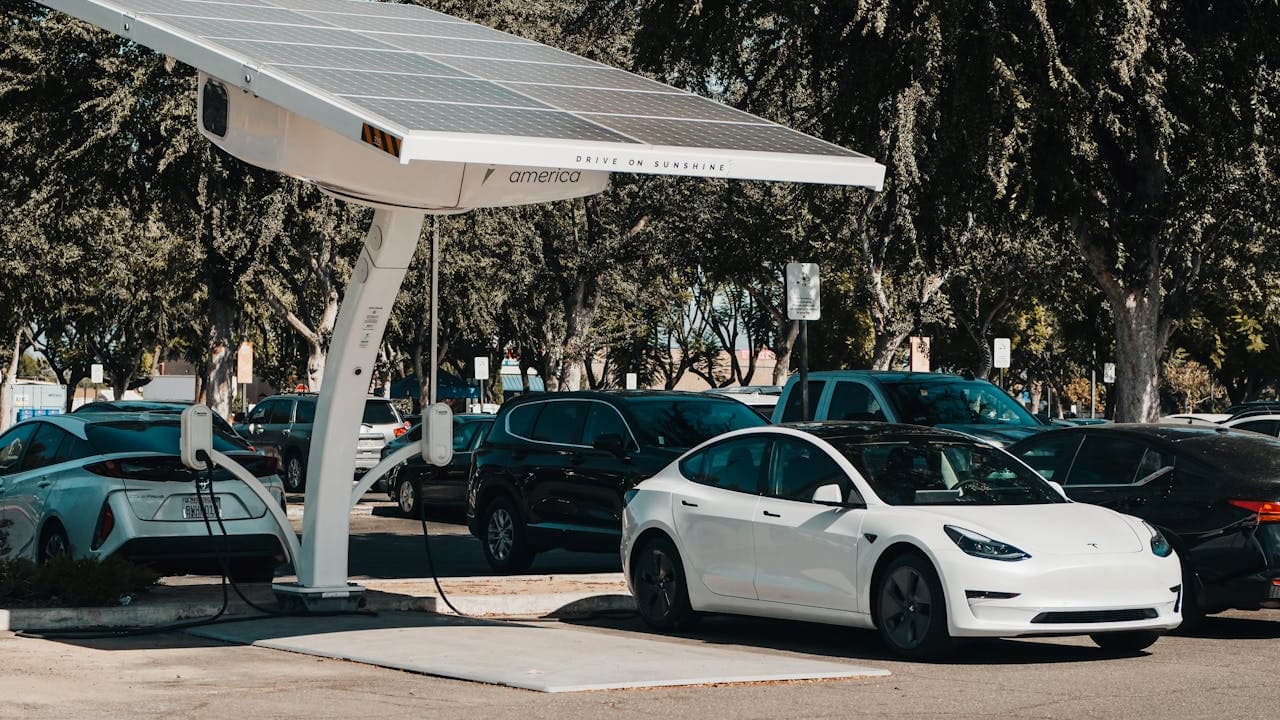

Nationally, public charging infrastructure works out to about 42 ports for every 1,000 registered electric vehicles, according to charging-location data from the U.S. Department of Energy’s Alternative Fuels Data Center, compiled in the Energy Information Administration’s state charging infrastructure tables and cross-referenced against EIA’s state EV registration figures. That average hides a wide gap: New Jersey scrapes by with roughly 26 ports per 1,000 EVs, while Wyoming tops the country at more than 128. States with small EV fleets but heavy federal highway-corridor investment now offer far more charging headroom per driver than the coastal states that get most of the attention. Here are the states where a registered EV owner has the least competition for a public plug.
1. Wyoming: 128 Charging Ports per 1,000 Registered EVs
Wyoming posts the nation’s widest charging cushion, with 308 public ports across 119 stations backing an EV population of roughly 2,400 vehicles, per DOE figures. The ratio is almost backwards from what drivers might guess: this is one of the least electrified vehicle markets in the country, yet interstate corridor funding lined I-80 and I-25 with plugs built for cross-country travelers rather than a local EV fleet that barely exists. A Wyoming EV owner is unlikely to ever wait for a charger.
2. North Dakota: 121 Charging Ports per 1,000 Registered EVs
North Dakota counts 266 public ports across 108 stations against an EV population of about 2,200 vehicles, federal data show, producing one of the highest charger-to-driver ratios anywhere. Long, sparsely populated stretches of Interstate 94 made federal and utility-funded fast chargers a priority in towns that otherwise have only a handful of EVs on the road. Infrastructure arrived well ahead of demand here, built for through-traffic, but it leaves resident EV drivers with unusually wide coverage.

3. Mississippi: 97 Charging Ports per 1,000 Registered EVs
Mississippi has just 7,000 registered EVs, yet its 676 public ports across 205 stations produce a charger ratio that outpaces every EV-heavy coastal state. The gap reflects how slowly EV adoption has moved in the Deep South even as federal grants and utility programs funded plug installations along interstates and retail centers. For the few Mississippi drivers who do own an EV, that means unusually short waits relative to the size of the local fleet.
4. West Virginia: 92 Charging Ports per 1,000 Registered EVs
West Virginia’s 533 charging ports across 182 stations serve an EV population of only 5,800 vehicles, DOE figures show, one of the smallest EV fleets nationally. Mountainous terrain made federal highway-corridor money especially important here, concentrating chargers along I-79 and I-64 well before local demand caught up. Charging infrastructure has effectively outrun EV ownership, a pattern that repeats across much of Appalachia.
5. South Dakota: 86 Charging Ports per 1,000 Registered EVs
South Dakota’s 334 ports across 120 stations back an EV fleet of roughly 3,900 vehicles, giving it a ratio well above the national average. Interstate 90’s long, thinly populated run made federal corridor funding a priority target, and the state has used it to string fast chargers across otherwise charger-poor terrain. With so few EVs registered locally, a public charger in South Dakota is rarely far away and rarely occupied.
6. Connecticut: 84 Charging Ports per 1,000 Registered EVs
Connecticut breaks the rural pattern seen elsewhere on this list. Its 1,434 stations and 4,994 ports support nearly 60,000 registered EVs, a genuinely sizable fleet, but dense population and an aggressive utility-backed buildout kept infrastructure roughly in step with ownership rather than falling behind it. Connecticut proves a state can post strong per-driver numbers through sustained investment alone, without a tiny EV population inflating the math.
7. Alabama: 80 Charging Ports per 1,000 Registered EVs
Alabama has 1,890 public ports across 586 stations serving about 23,500 registered EVs, federal data show, a ratio that lands it comfortably inside the top eight. The state’s growing Southern manufacturing footprint, including new EV and battery plants, has pulled utility and state investment into charging infrastructure even though Alabama’s own EV adoption rate remains modest. Drivers here benefit from a network sized more for future growth than for the EVs currently on the road.
8. Arkansas: 80 Charging Ports per 1,000 Registered EVs
Arkansas rounds out the top eight with 1,026 charging ports across 380 stations against roughly 12,800 registered EVs statewide. Interstate 40 and Interstate 30 corridor funding, tied to the federal NEVI formula program, did much of the work, adding fast-charging plazas at highway exits well ahead of local EV demand. As with several states here, the ratio says less about a thriving EV culture than about federal highway money arriving early.
The states at the bottom of this ranking tell the inverse story. New Jersey, Hawaii and Illinois all post ratios below 31 ports per 1,000 EVs, not because their networks are small but because EV adoption has outpaced buildout even where investment has been heavy. California, despite operating more than 70,000 public ports, still lands near the middle of the pack at roughly 37 per 1,000 EVs simply because nearly two million EVs are competing for them.
Put together, the ranking measures timing more than ambition: rural, highway-heavy states got federally funded plugs before their EV fleets grew, while the biggest EV markets are still racing to catch up with the drivers they already have.