

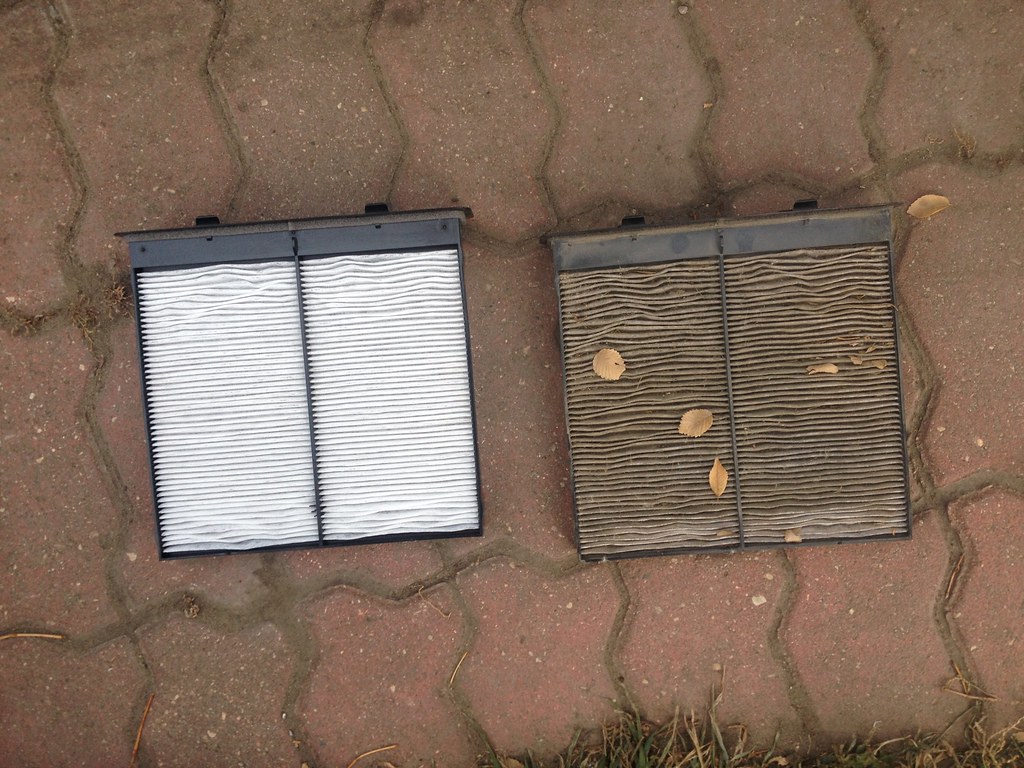
It started out as one of those “in and out” jobs that shops schedule to pad the day. Mid-size SUV, basic cabin air filter, customer waiting, service writer already promising, “Shouldn’t be more than like 30 minutes.” The tech doing it was the kind of guy who could pull a glovebox in his sleep, which is exactly why nobody paid much attention when he grabbed his shop light and slid into the passenger footwell.
The SUV was one of those layouts where the cabin filter door is tucked behind the glovebox, plastic tabs and a little rectangle cover that never wants to come off clean. He did the usual routine: open glovebox, pinch the sides, let it swing down toward the floor, and then lean in with a light so you can actually see what you’re doing. The light was one of those metal-bodied LED work lights with a hook and a magnet—handy, heavy, and absolutely not something you want falling into a dashboard cavity.
He had the glovebox hanging and he was halfway through unlatching the filter cover when the light shifted. Maybe the hook wasn’t seated, maybe someone bumped the cord, maybe it just decided gravity was done waiting. It slipped, tipped forward, and disappeared through the glovebox opening with a hollow clunk that made his shoulders tense like he’d just dropped a socket into an engine bay.
The little “clunk” that didn’t sound expensive—until it did
At first it seemed like the standard annoyance: something fell inside the dash, now you’ve got to fish it out with your hand and some swearing. He stuck his arm in through the glovebox opening, feeling around blind, trying to find the light by touch without scratching everything to death. The problem is those cavities aren’t open space; they’re packed with ductwork, wiring, brackets, and whatever sharp plastic edges the engineers decided were fine because nobody was supposed to be in there.
He shifted his weight, craning his neck so he could look into the dark gap, and that’s when he noticed the smell. Not the usual dusty HVAC smell or old leaves—this was the crisp, ugly bite of hot insulation. He froze for half a second like his brain was waiting for confirmation, and then the first thin ribbon of smoke curled out from behind the blower housing.
It wasn’t a dramatic “dashboard on fire” scene, but it was enough to change the whole room. He yanked his head out, jerked the light switch off on instinct even though the light wasn’t in his hand anymore, and started slapping at the area like you can intimidate electricity into stopping. Somebody a bay over looked up when they heard him say, very clearly, “Oh no. Oh no, no, no.”
Smoke, silence, and the moment everyone realizes it’s not a joke
He killed the vehicle’s ignition and popped the hood, more out of panic than logic, because when something starts smoking inside a dash your brain goes straight to “disconnect the battery.” A coworker wandered over with that half-amused, half-annoyed expression people wear when they think you’re being dramatic. Then he saw the smoke coming from the passenger side, and his face changed to the kind of blank seriousness shops reserve for “this is going to be paperwork.”
They got the negative terminal off fast, and the smoke thinned, but the smell stayed. It clung to the interior like burnt plastic always does, that chemical campfire stink that never fully leaves once it’s in the carpet and foam. The service writer walked over with a tablet in hand, ready to ask if the filter was done, and instead got greeted by two techs staring into a glovebox hole like it was a crime scene.
That’s when the tech finally managed to see the light. It wasn’t just resting in there like a dropped flashlight; it had wedged itself at an angle against the blower motor housing. The metal body of the light was pressed into a bundle of wires tight enough that it might as well have been a clamp. And one wire—one unlucky, rubbed-thin section of wire—was now fused to the plastic housing like someone had taken a soldering iron to it.
The “how does that even happen” explanation that made it worse
It took a minute for everyone to agree on what they were seeing, because “welded a wire” sounds like an exaggeration until you’re staring at it. The light had a metal casing, and the wiring harness had power somewhere it shouldn’t have been exposed. The impact and the pressure created just enough contact and just enough heat to melt insulation and fuse conductor to the housing, leaving a shiny, ugly little spot that absolutely did not belong in an HVAC box.
Someone said, “So it was live when it fell?” and the tech snapped back that the work light had its own cord and switch, not connected to the car. Which was true, and also not the point, because it didn’t matter how the light was powered if the metal body bridged something hot in the vehicle. They started tracing the harness visually—no multimeter yet, just eyes and dread—and immediately noticed the damage wasn’t confined to that one spot.
The blower motor connector looked heat-stressed, like it had seen more current than it wanted. A section of loom had shrunk and warped. The plastic housing had a little crater where the wire had fused, and it was the kind of crater that tells you it got hot enough to soften the plastic, then cooled while stuck together. The tech kept repeating, “It just fell,” like if he said it enough times the story would change into something less stupid.
The awkward customer waiting room math: filter price vs. dash teardown
Meanwhile the customer was still in the waiting room, sipping burnt coffee and scrolling on their phone, probably expecting the advisor to come out with a “You’re all set.” Instead, the service writer had to walk that long hallway with the slow steps of someone mentally rewriting the day. There’s no good way to tell a customer that the easiest service on the menu just turned into “we need to take your dash apart,” especially when they didn’t come in complaining about anything.
The first version of the explanation was gentle and vague—something about an “unforeseen issue” and “we’re checking the HVAC system.” The customer asked the obvious question: “Did you break something?” and the service writer hesitated just long enough to make the answer worse. Back in the shop, the tech could hear muffled voices through the door and kept tightening and loosening the same screw like it was going to solve the problem.
It got messy fast because everyone’s incentives were different. The tech wanted it to be a small repair: fix the wire, replace a connector, move on. The shop foreman wanted it corrected the right way, which usually means replacing damaged sections properly and inspecting for hidden heat damage, because comebacks are poison. The service writer wanted something he could explain without the customer picturing their SUV erupting in flames on the highway.
Damage control turns into blame control
Once they started pulling trim to get better access, the “quick fix” fantasy died. The wire wasn’t just nicked; it had cooked enough that you couldn’t trust the copper not to be brittle further down the line. The blower housing damage was cosmetic until you remembered it’s part of the airflow system, and a melted spot can become a rattle, a whistle, or a moisture trap. And if there’s one thing customers love, it’s new noises after a routine service.
The foreman asked the tech why the light was positioned where it was, and the tech got defensive. He said he always hooks it there, that it’s never been an issue, that the hook must’ve slipped. Someone else pointed out that “always” is exactly how weird accidents find you, and that didn’t go over well. The vibe shifted from problem-solving to the quiet shop version of a fight: clipped sentences, tools put down a little harder than necessary, everyone pretending they’re calm.
They ended up documenting everything with photos—close-ups of the fused wire, the housing crater, the heat-distorted loom—because once a customer hears “electrical” they get rightfully jumpy. The shop had to decide whether it was an internal “we eat it” mistake, an insurance claim, or some Frankenstein repair they could stand behind. And none of those options feel good when the job was literally supposed to be a cabin filter.
By late afternoon, the SUV was still stuck half-disassembled, glovebox dangling, trim panels stacked neatly like a sad little tower of regret. The customer had been given a loaner, but that didn’t make the air in the shop any lighter. Everybody kept glancing at that bay like it might start smoking again on its own.
The tech who dropped the light wasn’t getting yelled at, which almost made it worse. The foreman’s disappointment had that quiet weight of “you know better,” and the tech could feel the whole shop recalculating how careful they were being around customer cars. Because it wasn’t just a mistake—it was the kind of dumb, random chain reaction that makes people wonder what else could go wrong when nobody’s watching.
And the unresolved tension hung there even after the smoke cleared: not whether they could fix the wire or replace the blower motor, but whether the customer would ever feel normal about that SUV again. Every future whir of the fan, every faint plastic smell on a hot day, every little dash creak would now have a backstory. The shop could repair the damage, but they couldn’t un-tell the part where a simple cabin filter turned into a melted harness because a shop light took the worst possible bounce.