

It started the way a lot of bad ideas start: with a teenager standing in a doorway, keys in hand, trying to sound casual about something that obviously wasn’t casual. His dad had a Hellcat—one of those cars that looks like it’s already speeding even when it’s parked—and the teen needed it for “one quick errand.” Not a joyride, not a hangout, not a “can I take the car tonight,” just a simple in-and-out situation.
The dad hesitated, because dads always hesitate when a sixteen- or seventeen-year-old asks to borrow the loudest, fastest thing in the driveway. But the kid hit the right notes: it was daylight, it was nearby, he’d be careful, he’d be right back. The dad, who’d probably been the same kind of kid once and liked believing his son had some sense, handed over the keys with the usual warnings and the implied threat: bring it back exactly as it left.
About forty minutes later, the Hellcat rolled back into the driveway sounding… wrong. Not engine-wrong, like it was dying, but vibe-wrong, like a dog slinking home after it found the trash. The kid stepped out and walked toward the house with that stiff, overly normal posture people get when they’re trying to outrun whatever’s behind them. And then the dad looked at the front end and realized the car didn’t just come back with a scratch—it came back without its bumper.
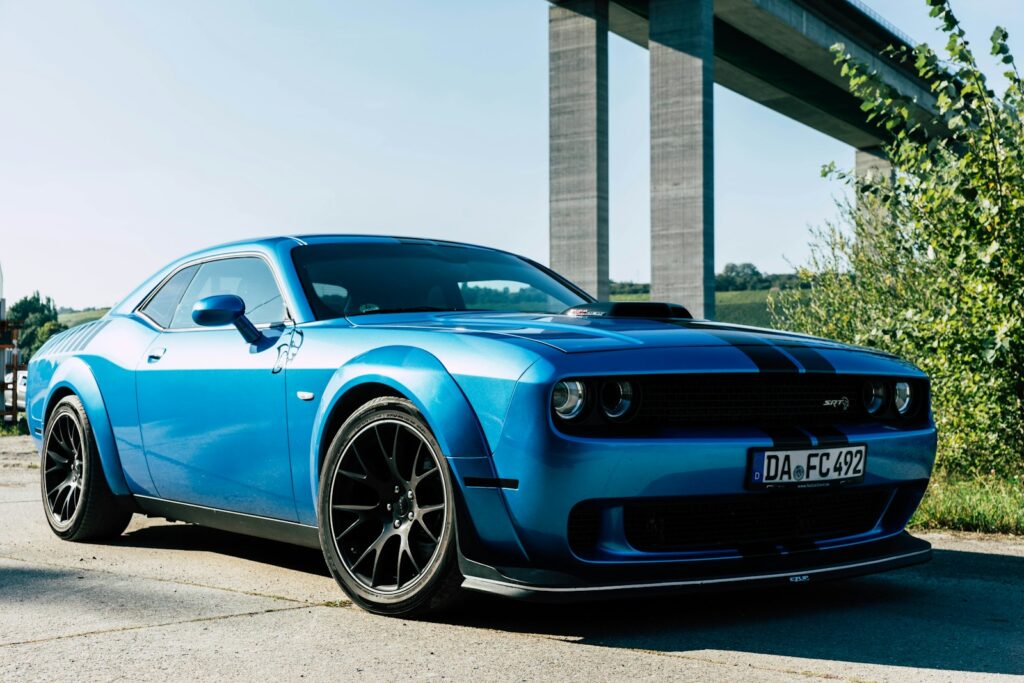
The “quick errand” that ran long
The dad didn’t even say anything at first, because he was still processing what his eyes were telling him. A modern car doesn’t “lose” a bumper the way you lose a hubcap; it takes effort, impact, or spectacular incompetence. The front looked like someone had yanked the face off it—exposed edges, dangling bits, the kind of damage that makes your stomach drop because you can already hear the repair estimate printing itself.
The teen, meanwhile, acted like he didn’t notice anything was missing. He walked inside and started doing that thing teenagers do when they know they’re in trouble: taking off shoes slowly, lingering by the fridge, narrating nothing. When the dad finally asked, in a voice that wasn’t loud but had weight, “Where’s the bumper?” the kid blinked like he’d just heard the question for the first time.
That’s when the story started… except there wasn’t one. No “someone hit me,” no “a truck kicked up debris,” no “I clipped a pole in the parking lot.” Just a pause, then a shrug that tried to pass as confusion. And when the dad pushed again, the teen’s answer was basically a blank wall: “I don’t know.”
The walk to the driveway and the quiet panic
The dad made him walk back out to the car, like physically stand there and look at it together. In that moment, the kid couldn’t hide behind the doorway or pretend the conversation was optional. The sun was still up, neighbors were still outside, and the Hellcat was sitting there half undressed, looking like it had been in a fight and lost.
He asked the questions any parent would ask, rapid-fire but controlled: where did you go, what route, who was with you, did you call the police, did anyone exchange information, did you hit something. The teen kept answering in these tiny, clipped fragments that didn’t add up. He was alone. He went to the store. He came straight back. He didn’t hit anything. He didn’t see anything. He didn’t know where the bumper was.
At some point, the dad’s tone shifted from angry to genuinely alarmed, because the denial was too flat to be believable. It wasn’t the usual “I messed up, please don’t kill me” panic. It was like the kid had decided that if he provided no details, the problem couldn’t fully form, like refusing to name the monster would keep it in the closet.
What makes it worse: no call, no honesty, no plan
The dad wasn’t just mad about the missing bumper; he was mad about the missing phone call. Any accident, even a dumb one, comes with a basic script: you stop, you assess, you contact someone, you own what happened. Instead, his son had apparently driven home in a visibly damaged, expensive car and tried to slide into the house like nothing occurred.
And the kid wouldn’t even give him the dignity of a lie he could interrogate. If the teen had said, “I hit a curb,” the dad could ask where. If he’d said, “Someone backed into me,” the dad could ask for a plate number. But “I don’t know” is an unanswer that turns every question into a dead end, and it made the dad feel like he was being played.
That’s where the tension in the house really kicked up. The dad started doing practical things—taking photos, checking for more damage, looking under the car—while the teen hovered nearby, arms crossed, eyes darting. It was less like a kid owning a mistake and more like a suspect waiting to see what evidence turned up.
Then came the quiet, nasty realization: bumpers don’t just evaporate. If it came off, it was somewhere. A parking lot. A curb. Someone’s fence. Maybe another car. The dad started asking the questions people ask when they’re afraid of what the answer will be: “Did you leave the scene?” “Did you hit something and drive away?” “Did someone get hurt?”
The “drive” to retrace steps and the story that still wouldn’t show up
They got in another car and went back over the route. The dad drove; the teen sat in the passenger seat, staring out the window with the kind of silence that isn’t calm—it’s defensive. The dad checked the store parking lot first, scanning for stray plastic pieces like this was some kind of suburban crime scene.
Nothing. No bumper in the bushes, no obvious scrape marks on a cart corral, no security guard waving them over with a “you’re the one.” The dad went back out to the road and slowed down at intersections, looking along curbs and medians. The teen didn’t help, didn’t point, didn’t suddenly remember anything useful; he just kept saying he didn’t know what happened, which only made the dad more convinced he did.
Back home, the dad’s anger hardened into something colder. Because now it wasn’t just damage; it was the refusal to participate in fixing it. It felt like the teen’s strategy was to outlast the interrogation until the grown-ups got tired and handled it without him. That’s a dangerous lesson to learn in a household where the car in question costs more than some people’s yearly salary.
So the dad did what people do when they realize the conversation is going nowhere: he changed the consequences instead of chasing the truth. He took the keys—Hellcat keys, spare keys, anything that could turn into keys. And he said the sentence that landed like a judge’s gavel: no driving privileges until college.
The fallout: a punishment bigger than the bumper
The teen reacted the way teenagers do when consequences suddenly become real. First came the disbelief, like the dad was bluffing. Then came bargaining—promises, excuses, the idea that it was “just a bumper,” as if removing the front end of a performance car is the same as scuffing a wheel.
But the dad wasn’t negotiating, because for him the bumper was almost secondary. The bigger issue was that his kid had come home with serious damage and no explanation, which reads less like “oops” and more like “I’m hiding something.” If the teen wouldn’t explain where the bumper went, the dad couldn’t trust that he wouldn’t hide bigger things later—tickets, accidents, worse.
In the following days, the house turned into that tight, uncomfortable kind of quiet where nobody wants to be the first person to talk normally again. The dad was stuck calling insurance, pricing parts, maybe even asking around at the store about camera footage, while the teen moved through the rooms like a ghost who still wanted rides to places. Every request—school, practice, a friend’s house—was now filtered through that new rule: you’re not driving.
And the part that made the whole thing stick in people’s minds wasn’t the missing bumper, even though that’s the headline-worthy detail. It was the missing story. A kid can wreck a car and still keep a sliver of trust if they’re honest, if they call, if they face it. This kid came back with the Hellcat’s face torn off and acted like the truth was optional, leaving his dad with a broken car, a broken expectation, and a new, uneasy question that didn’t go away: what exactly happened out there that was so bad it was easier to pretend it didn’t happen at all?
More from Steel Horse Rides: