

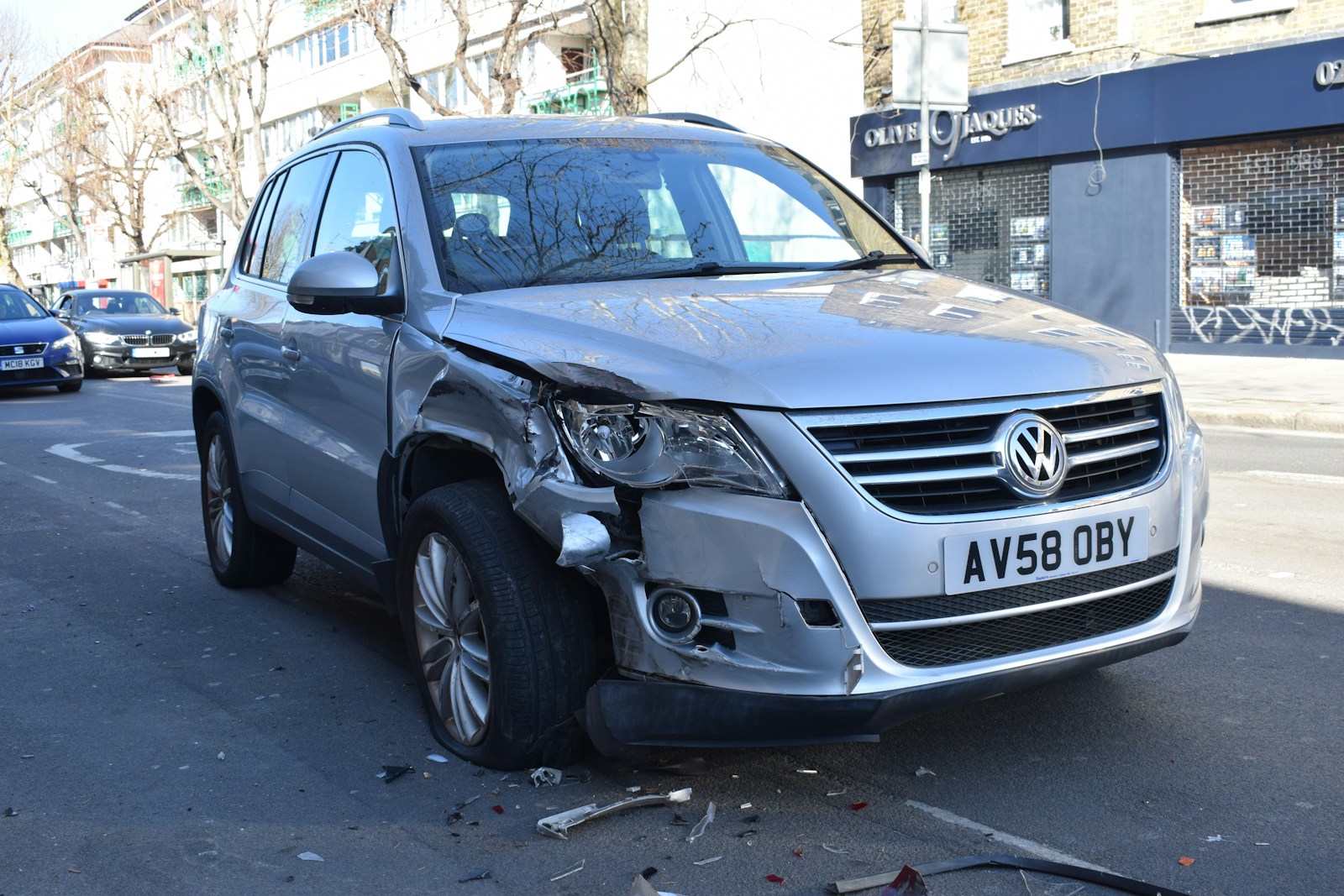
By the time his mom got the call, she already knew something was off. Her SUV wasn’t in the driveway where she left it, and her son’s last text—“going to grab something from a friend, brb”—had that overly casual vibe teens use when they’re trying to sound invisible.
Then her phone lit up with his name again, except this time it wasn’t a text. It was a shaky, breathy call full of muffled background noise, like wind and distant traffic, and he started with the kind of sentence nobody ever wants to hear: “Mom, don’t freak out, but…”
He wasn’t hurt. Nobody else was hurt. But the SUV was, in his words, “kind of messed up,” and he needed her to come get him. And before she could even ask where he was, he blurted the real reason he was calling: whatever she did, she could not tell Dad, because Dad would “never trust him again.”
The Borrowed SUV and the Video Idea
It started like a lot of bad teen decisions do: with access and boredom. His mom had left the keys on the hook by the kitchen because it was easier than digging through her bag, and she’d been letting him drive short distances with her permission. The understanding was simple—daylight, familiar roads, no friends in the car, and definitely no messing around.
But he’d been watching those driving clips online where people film themselves behind the wheel, narrating like they’re hosting a channel. The kid wanted that vibe: the casual confidence, the “look at me, I’m basically an adult” energy. So he figured he’d just take the SUV for a quick loop, record a little “driving video,” and be back before anyone noticed.
He didn’t tell his mom because asking would’ve brought questions, and questions would’ve led to a “no.” In his head it was harmless—just him, a phone, some music, and the kind of empty side roads he’d taken with his mom a hundred times. The problem with that logic is it only works until something unexpected happens.
Filming While Driving: The Moment Things Tilted
He set the phone up like he’d seen other people do it, propped at an angle that could catch his face and a slice of the windshield. At first it was probably boring footage: him talking, glancing at the camera, one hand on the wheel, the other doing that little open-palmed gesture people do when they’re explaining something. The kind of multitasking that feels manageable right up until it isn’t.
He was narrating—about the car, about how “smooth” it felt, about how he was “actually pretty good” at driving—when he missed a minor turn. Not a dramatic, high-speed miss. More like he realized late, panicked, and tried to correct it all at once.
The SUV drifted toward the curb. He jerked the wheel back, overcorrected, and the tires chirped in that sharp, warning sound that makes your stomach drop. He looked at the phone for half a second—half a second too long—and that’s when he clipped something solid.
The Crash That Wasn’t “That Bad” Until You Saw It
When his mom got there, she found him standing on the shoulder with that rigid posture teens get when they’re trying not to cry. He kept saying he was fine, he was fine, he was fine, like repeating it could rewind the last five minutes. The SUV was parked awkwardly, nose angled toward the curb as if it had given up mid-turn.
From a distance it looked like maybe a scraped bumper. Up close, it was obvious the front corner had taken the hit—plastic cracked, a headlight busted, paint scuffed down to something that didn’t match any color the car was supposed to have. There was also a fresh bite taken out of the tire, like it had met a curb at just the wrong angle.
He tried to sell it as an “oops,” as if it were the automotive equivalent of dropping a plate. “It’s not totaled,” he kept saying, too quickly, like he’d rehearsed it on the walk to the shoulder. His mom didn’t yell at first because she was doing the mom thing: scanning him for injuries, asking if anyone else was involved, checking if the police had been called.
That’s when he admitted the other part. He wasn’t just driving—he was filming. He said it in a small voice, eyes on the ground, like the words were heavy. And when she asked where the phone was, he hesitated, then pointed at it sitting in the cupholder like it had just been another passenger.
“Please Don’t Tell Dad”: The Real Panic Sets In
The moment she mentioned calling his dad, his whole demeanor changed. The kid went from embarrassed to genuinely scared, like the crash itself was secondary to the fallout at home. He started pleading in that rushed, cracking tone that makes adults realize this isn’t just teenage drama—it’s a kid watching his own future evaporate.
“He’s going to say I’m irresponsible forever,” he said, piling words on top of each other. “He’s going to take my license stuff away, and he’ll never trust me again. He always says trust is everything, and I messed it up.” The logic was messy but honest: he wasn’t afraid of punishment as much as he was afraid of becoming a permanent disappointment.
His mom asked the obvious questions—why he didn’t just pull over if he wanted to film, why he didn’t wait, why he didn’t tell her. He didn’t have a clean answer. He kept circling back to the same thing: he thought it would be fine, and he didn’t want to look like a little kid asking permission.
And then he tried one more angle: he offered to pay for it. He said he’d use savings, get a job, “do whatever,” as long as she could somehow keep Dad out of it. It was the kind of bargaining people do when they know they’re cornered, throwing offers at the problem and hoping something sticks.
The Mom’s Dilemma: Protect Him or Be Honest
His mom stood there looking at her damaged SUV and her rattled kid, and you could practically see the calculations happening behind her eyes. On one side, she had a son who made a reckless choice but wasn’t hurt, and who was clearly shaken. On the other side, she had a husband who’d been consistent about rules, consequences, and not letting “small lies” turn into bigger ones.
She asked to see the video, and that’s when the kid’s face went pale. He unlocked the phone with trembling thumbs, and there it was: footage of him talking to the camera, one hand drifting off the wheel, the moment he realized he was off-course, the sudden jerk, the awful crunch. It wasn’t just proof—it was a play-by-play of how preventable it all was.
She didn’t say much while she watched. She just handed the phone back and told him to get in the passenger seat while she drove home. The silence in that car wasn’t the calm kind; it was the thick, heavy quiet where every bump in the road feels like a punctuation mark.
Halfway home he tried again, softer this time. He said he understood if she was mad. He said he was sorry. He said, “Mom, please,” the way kids do when they’re small and scared, not when they’re trying to act grown.
She told him she wasn’t deciding anything in the car. That was all she gave him. But she didn’t promise secrecy, either, and that non-answer seemed to hit him harder than a lecture would’ve.
Home Again, With the SUV Parked Like Evidence
When they pulled into the driveway, she parked the SUV in plain sight instead of hiding it around the corner or squeezing it into the garage. It sat there with its broken headlight and cracked bumper, impossible to ignore. The kid stared at it like it was a courtroom exhibit with his name on it.
Inside, he hovered near her like a shadow, waiting for her next move. He kept trying to read her face, trying to figure out if she was going to protect him or hand him over to the consequences he’d been begging to avoid. Every few minutes he’d start to speak, then stop, as if any words might tip the scale the wrong way.
And somewhere in the background was the looming certainty that his dad would eventually come home. The kid wasn’t just worried about getting grounded—he was worried about being permanently reclassified in his dad’s mind, from “learning” to “untrustworthy.” That’s the part he couldn’t shake, the part that made the crash feel like only the beginning.
The SUV could be repaired. The insurance could be dealt with. But the bigger damage was sitting right there in the quiet space between a mother who now knew exactly how her son had gambled with safety for a video, and a son who’d made his first real grown-up mistake and wanted the kind of mercy that doesn’t always exist in a household built on trust.