

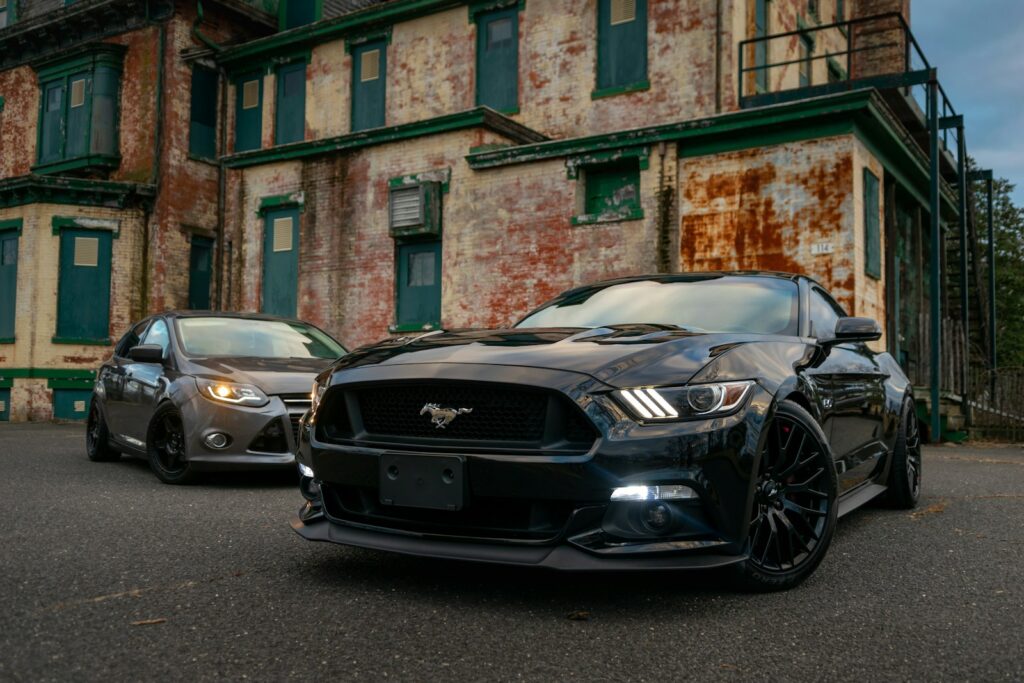
He’d been talking about it for two years like it was a place, not a car. The Mustang. Not “a Mustang,” but the one—black paint, a little rumble in the exhaust, the kind of thing he’d picture idling in the school parking lot while he walked up like he belonged there.
He wasn’t one of those kids whose parents just handed him keys on his sixteenth birthday. He worked. After school at a grocery store, weekends doing yard work, picking up every extra shift he could without his grades falling off a cliff. He watched his friends blow money on sneakers and energy drinks and he kept a running note in his phone: “Mustang fund,” with a number that climbed painfully slow.
By the time he finally bought it—used, not perfect, but clean enough to feel like a victory—he was proud in this quiet, stubborn way. His mom hugged him in the driveway and said she couldn’t believe he’d done it. His stepdad stood back with his arms crossed, looking at the car like it had shown up uninvited.
The car wasn’t the real problem—control was
On paper, the stepdad’s argument sounded almost reasonable. Too fast. Too much car for a teenager. “Those things wrap around trees,” he muttered the first time the teen backed it out, like he was reciting a public service announcement. He wasn’t yelling, exactly, but his voice had that flat certainty of someone who assumed his opinion was policy.
The teen did everything right to keep the peace. He talked about defensive driving. He promised he wasn’t going to race anyone. He even offered to take an extra driver’s safety course if it would make everyone relax. His stepdad nodded like he’d heard it all before, like none of it mattered because the conclusion had already been reached.
And that was the vibe in the house: if the stepdad felt uneasy, it became everyone’s job to solve his feelings. If he disliked something, it wasn’t just annoying—it was “not allowed.” The Mustang wasn’t just a car; it was the teen making a choice without stepdad’s permission, and that sat wrong with him.
The warnings started small, then got weirdly specific
At first it was little digs. “How’s your insurance?” “You realize you’re a target for tickets, right?” He’d ask these questions at dinner, in that way people do when they’re not actually curious. The teen would answer, show the paperwork, explain he’d priced it out, and the stepdad would grunt like the information was irrelevant.
Then came the “rules,” floated like suggestions but delivered like commands. Don’t take it on the highway. Don’t drive friends around. Don’t drive it at night. The teen pointed out he had school events, work shifts, normal teenage life that happens after dark. The stepdad’s response wasn’t compromise; it was a heavy, irritated silence that made the room feel smaller.
His mom tried to thread the needle. She’d say things like, “He earned it,” but she’d also ask the teen if he could “just be careful, for your stepdad’s peace of mind.” It was less a defense and more a request that he make the conflict disappear by shrinking himself down.
One evening, the stepdad went from vague to pointed. He told the teen the Mustang was “not staying” long term. Not “I’m worried,” not “Let’s talk,” just a statement like he was describing a weather forecast. The teen laughed because it sounded so absurd, and the stepdad didn’t laugh back.
One school day, the driveway changed
The day it happened was ordinary in the way days always are right before something gets wrecked. The teen drove to school, parked, went through the usual cycle of classes and lunchtime noise and checking the clock for the end of the day. He even texted his mom about needing to stop for gas after work, the kind of boring detail you send when you assume your car will still exist later.
When the last bell rang, he walked out with that mild relief of being done and did the thing every driver does—searched for his car without thinking. He didn’t see it at first, so he walked further, hit the other row, scanned again. His stomach tightened as the seconds started stacking up with no black Mustang in sight.
He called his mom, then his stepdad, then his mom again. The stepdad didn’t answer. His mom picked up sounding distracted, and when he said the Mustang wasn’t in the lot, she paused just a little too long. That pause told him it wasn’t stolen; it was moved.
By the time he got a ride home from a friend, he’d already half-imagined what was waiting. He just hadn’t prepared for how humiliatingly casual it would look.
The stepdad didn’t “take” it—he replaced it
In the driveway sat a minivan. Not a newer one, not even a nice one—just a plain, beige, “family errands” minivan like it had been picked specifically to extinguish joy. The teen stood on the sidewalk, staring, and his mom came out wringing her hands like she was about to tell him someone died.
The stepdad finally stepped outside, keys in hand, completely calm. He said he’d “fixed the problem.” He claimed the Mustang was too fast and too dangerous and he wasn’t going to “bury a kid because of a stupid car.” He talked in big, dramatic terms that made him sound like the hero of a story he’d written in his head.
The teen’s first words weren’t even anger; they were confusion. “Where’s my car?” Not “our car,” not “your car,” just the simple fact: it was his. He’d paid for it. He had the title paperwork in his room. He had the insurance in his name. None of that seemed to register as relevant to the stepdad.
The stepdad said he’d traded it while the teen was at school. He said he’d “got a good deal,” like he expected praise for negotiating. He even gestured toward the minivan like it was a gift, saying it was safer and more practical, and that the teen would “thank him later.”
The teen looked at his mom, waiting for her to say this was a misunderstanding. She wouldn’t meet his eyes. She kept saying she “didn’t know how to stop him,” which wasn’t the same as not knowing what was happening—it sounded like she’d watched it happen and decided it was easier to let it happen to her kid than fight.
The blow-up wasn’t just about the car anymore
The teen lost it in that contained way where your voice shakes but you’re still choosing words carefully because you don’t want to give them ammunition. He asked how the stepdad could trade something that wasn’t his. He asked what paperwork the dealership used and whether his signature was forged. He asked if the stepdad had taken the title from his room.
The stepdad didn’t deny going into his things. He brushed past the details like they were technicalities, returning to the core message: “I’m the adult,” “I’m responsible for this household,” “I’m not letting you die in that thing.” It was control dressed up as concern, the kind that sounds noble until you realize it requires stealing to accomplish.
The teen’s mom tried to de-escalate by pushing the minivan keys toward him, like giving him something would calm him down. He didn’t take them. He asked if she understood what had just happened: that his work, his savings, his ownership had been erased in a few hours because a grown man decided he could.
The stepdad’s patience snapped when the teen said he wanted the Mustang back, not “a car,” not “a safer option.” He wanted his car. The stepdad said it was already done, the deal was final, and if the teen didn’t like it he could “move out when you turn eighteen.” It landed like a threat because it was one.
That’s where things got messy in a quieter, more dangerous way. The teen went to his room and started pulling out receipts, paperwork, screenshots of the listing, proof of payment—anything that made reality solid again. Downstairs, his stepdad moved around loudly, slamming cabinets, performing irritation like he was the victim of a teenager’s “attitude.”
The mom hovered between them, not quite taking a side, asking both of them to “calm down.” The teen didn’t want calm. He wanted the truth said out loud: someone had taken his property while he was trapped in class, and now everyone was acting like he should be grateful.
By night, the teen wasn’t even arguing anymore. He was asking practical questions with a cold face: where exactly was the Mustang traded, what day, what time, who signed, and what did they get for it. The stepdad answered like he was being interrogated, defensive and annoyed, which only made it clearer he knew it was wrong.
And the worst part wasn’t the minivan sitting there like a punchline. It was the realization that the stepdad had waited until the teen was at school—until he couldn’t physically stop it—because that’s how he solved disagreements. Not with conversation, not with compromise, but with a surprise move that left no room to fight back, then a lecture about why it was for the best.
That driveway wasn’t just a driveway anymore. It was a warning: in that house, the teen could do everything right—work hard, save money, buy something legally—and still lose it the moment it made the wrong adult feel uncomfortable. And the minivan keys, sitting untouched on the counter, were less an offer than a reminder of who had the power to rewrite his life while he was gone.