

The neighbor’s car wasn’t doing anything exciting. It was just sitting there on the street like it always did, tucked up against the curb in front of their house, wheels turned slightly toward the sidewalk the way people do when they park on a mild incline. That morning, the only real drama was supposed to be a teenager getting a little practice behind the wheel.
The teen’s dad had picked the quietest part of the neighborhood for the lesson—wide enough streets, low traffic, and mostly the same familiar cars parked in the same familiar spots. He stood on the passenger side for a second, giving the kind of last-second instructions parents give when they’re pretending they’re calm. The kid looked nervous but determined, hands at the top of the steering wheel like he’d seen in old movies.
It all went sideways in the most mundane way possible: a slow, clumsy turn, a tiny misjudgment, and a sound nobody forgets once they’ve heard it—the long, gritty scrape of paint against paint. Not a crunch, not an explosion, just that dragging shhhhk that makes your stomach drop even if you’re only listening.
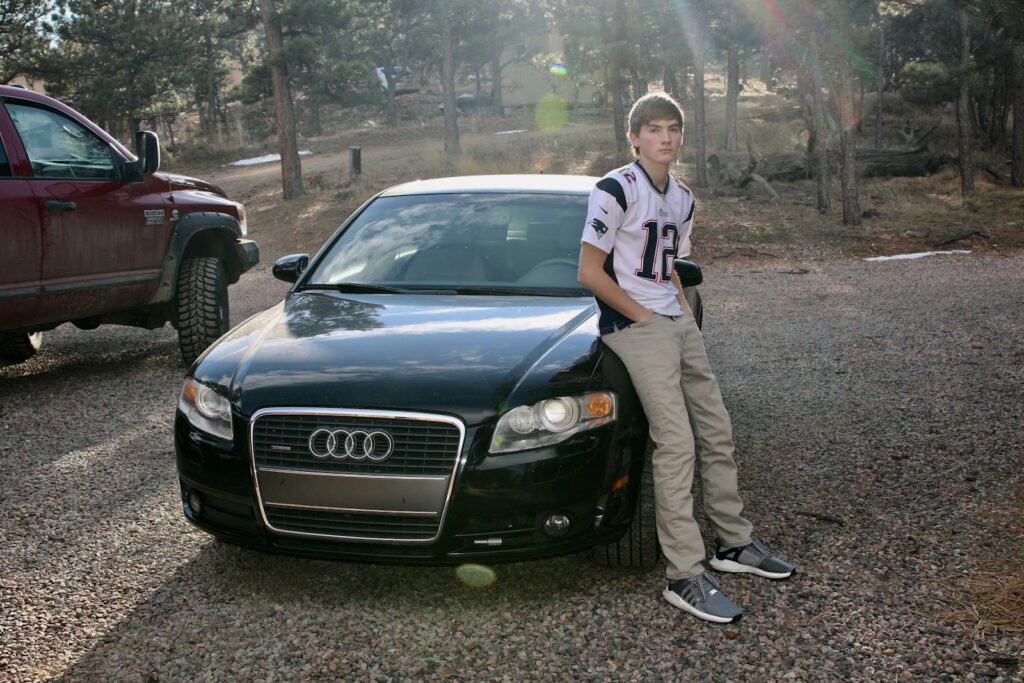
The kind of driving lesson nobody wants
The kid had been practicing basic stuff: rolling stops, gentle acceleration, checking mirrors so often it looked like he was being haunted by the rearview. His dad kept saying things like “Take it easy” and “Plenty of room,” which is exactly what parents say right before proving there isn’t plenty of room. They were making a right turn onto the teen’s street, where a couple cars were parked along the curb, including the neighbor’s sedan.
The teen started the turn too wide, then overcorrected. The car drifted toward the curb in that slow-motion way that feels avoidable until it suddenly isn’t. The side of their car kissed the neighbor’s front bumper and fender, then dragged along it for a half-second longer than anyone would admit later.
They stopped immediately—credit where it’s due. The dad got out first, shoulders tight, jaw clenched like he could un-scratch the car with sheer willpower. The teen stayed in the driver’s seat, frozen, staring straight ahead like the windshield was a courtroom and he was waiting to be sentenced.
From “Oh no” to “Actually…” in under a minute
At first, it was the normal post-accident choreography: looking at the damage, scanning for witnesses, awkwardly checking the other car’s position even though everybody knew the other car hadn’t moved. The neighbor’s sedan had a fresh streak across the paint—light-colored scuffing that stood out in daylight. The teen’s car had matching marks along the passenger side, like a signature.
The dad walked along the neighbor’s bumper, bending down to inspect it like he was examining evidence. He took a deep breath and then said the first thing that hinted this wasn’t going to be handled normally. Something along the lines of, “I mean… they’re parked pretty far out.”
It was such a weird pivot that the teen finally looked over, like, Wait—are we doing this? The mom wasn’t there at the moment, but she would arrive later like reinforcements, and the dad seemed to be warming up to an argument he’d apparently rehearsed in his head for years. The parked car wasn’t just parked, in his version—it was “too close,” “sticking out,” “basically in the lane.”
The neighbor comes outside and the temperature changes
The neighbor didn’t run out screaming. They came out the way people do when they hear a car scrape a car: briskly, suspiciously, already annoyed because they know exactly what that sound means. They looked from their bumper to the teen’s car, then to the dad, waiting for the apology that usually comes next.
For a second, it seemed like the dad might do the decent thing. He did the classic half-raise of his hands, like he was about to say “We’re so sorry,” but then he glanced again at where the neighbor’s tire sat by the curb and committed to the alternate reality. He said something like, “Your car’s parked way too close to the street. There’s barely any space to get through here.”
The neighbor blinked, because what do you even say to that? The car was parked along the curb on a residential street, not diagonally across an intersection. If anything, it was closer to the curb than most cars on the block. The neighbor pointed at the tire and said, calmly, that it was parked legally and hadn’t moved since last night.
The teen finally got out of the car, face red, shoulders curled inward. He mumbled an apology—quiet, quick, sincere in the way kids are when they know they messed up. The dad talked right over it, asking the neighbor if they “always park like this” and suggesting it was “kind of a hazard.”
Parents go into full blame-shift mode
Instead of exchanging insurance details, the dad started circling the situation like he was building a case. He gestured down the street, mentioning how cars line both sides sometimes, how people “have to” swing wide, how “it’s hard for new drivers.” It was the kind of logic that sounds almost reasonable until you remember the only reason anything happened was because their car hit a stationary object.
The neighbor tried to keep it simple: there’s a scratch, your kid did it, let’s swap information and move on. The dad kept returning to the idea that the neighbor had “parked too close” to the driving area, like the sedan had crept toward them out of spite. He suggested, with a straight face, that the neighbor was partly responsible for “not leaving space.”
That’s when the mom showed up. Somebody had called her—maybe the dad, maybe the teen in panic—and she arrived with that tight, purposeful stride of someone who thinks she’s about to protect her child from injustice. She looked at the cars, then immediately turned to the neighbor with a tone that said the conclusion had already been reached.
Her version was even more polished: “We’re teaching him to drive, and your car is parked really close to the lane.” Not “I’m sorry,” not “He’s okay, right?” Just a complaint dressed up as concern. She even asked whether the neighbor could’ve parked in the driveway instead, like that would retroactively prevent the scratch.
Insurance info, phone cameras, and the awkward stalemate
The neighbor didn’t yell, but the vibe shifted hard. You could tell they were done trying to reason with two adults determined to turn a straightforward accident into a debate team exercise. They pulled out their phone and started taking pictures: the scratch, the curb, the tire position, the street, the teen’s car, the whole scene from multiple angles.
The mom seemed offended by the photos, which is always a tell. She asked why the neighbor was “making it a big thing” and said it was “just a scratch,” like scratches don’t cost money to fix when they’re on someone else’s car. The dad hovered closer, watching the neighbor’s screen, the way people do when they’re worried the facts won’t favor them.
The teen looked miserable. He kept saying “I’m sorry” under his breath, but his parents were in front of him like a shield, talking fast and confidently as if volume could rewrite physics. At one point he tried to hand the neighbor their insurance card, and the dad intercepted it, saying they should “talk first” because it might be “cheaper to handle it informally.”
That “informally” came with strings. The mom suggested the neighbor could “buff it out” and implied that if they did pursue insurance, they’d argue the neighbor’s parking was unsafe. The neighbor, still calm but clearly irritated, said they’d be filing a claim and that they’d rather not keep arguing on the street.
And that’s when the parents pivoted again—now it wasn’t just the neighbor’s fault for parking too close, it was the neighbor being “unneighborly” for not letting it go. The dad’s voice got sharper, and he started saying things like, “We all live here,” and “Do you really want to do this over a scratch?” as if the neighbor had created the scratch out of pettiness.
They eventually exchanged information, but it wasn’t the clean, adult handoff you’d hope for. The dad wrote things down slowly, with pauses, like he was calculating the legal consequences in real time. The mom kept repeating that the teen was “only learning,” like the existence of a learner’s permit should come with diplomatic immunity.
The neighbor went back inside with their photos and a lingering look that said, This is going to be annoying. The teen climbed back into the driver’s seat, not looking at anyone, and the parents stood beside the car for a moment, still talking—still convinced the most offensive part of the day was the presence of a parked vehicle on a residential street.
Later, the scratch would be measured in estimates and phone calls and the tedious back-and-forth of insurance. But the part that stuck with everyone wasn’t the paint transfer—it was the way two grown adults watched their kid make a normal mistake and immediately tried to shove the blame onto an inanimate object that had done nothing wrong except exist within a few feet of the curb. And now the neighbor gets to live next to that, knowing the next time something goes wrong on the block, the facts won’t matter nearly as much as whoever can argue hardest that they weren’t at fault.
More from Steel Horse Rides: