

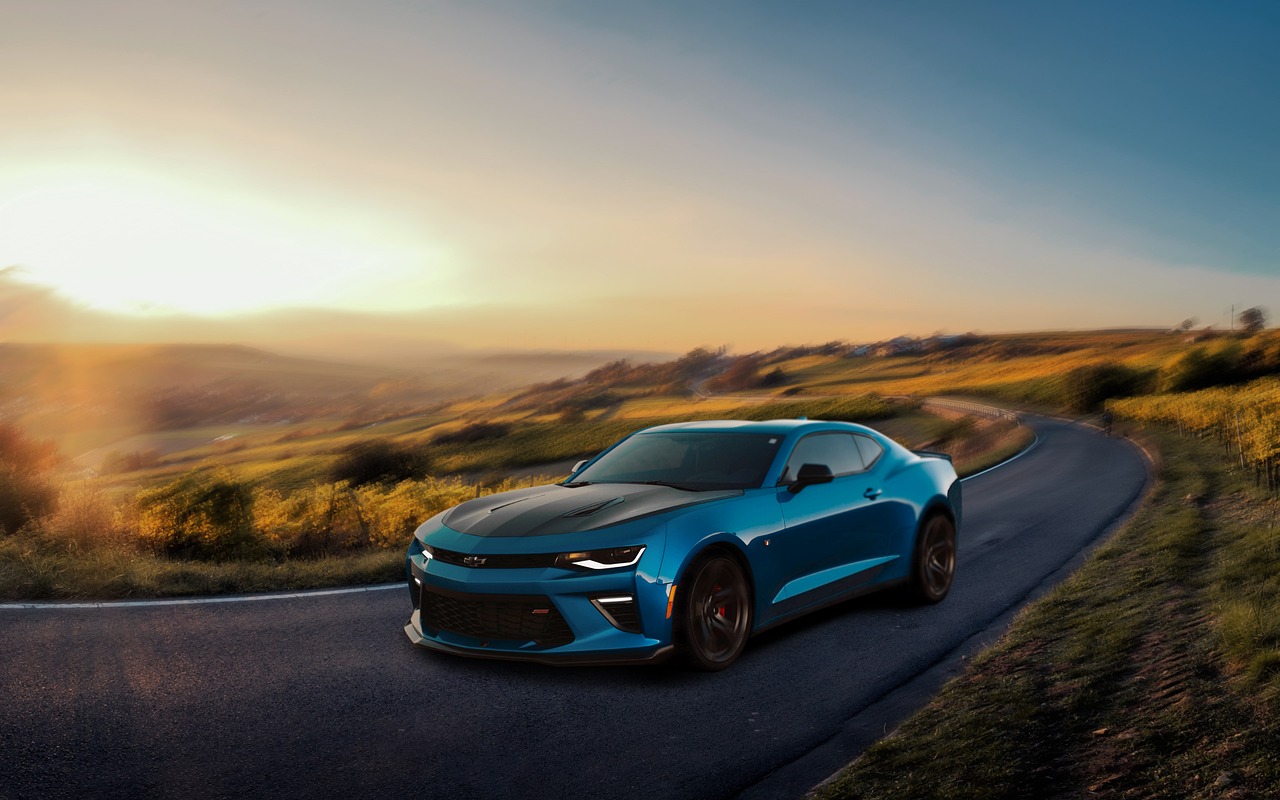
By the time his dad noticed the Camaro wasn’t in the driveway, the whole house had that weird, too-quiet feeling like something expensive had already happened. The keys weren’t on the little hook by the door, either, which was basically the only “security system” the family ever used. He stood there in socks, staring at an empty spot of concrete, doing the mental inventory of who was home and who absolutely should not have access to a V8.
The teen—sixteen, still in that phase where “responsibility” is a word adults throw around like a threat—wasn’t answering his phone. His mom tried the softer route, then the harsher one, then the “I’m not mad, I just need to know where you are” one that always means the opposite. Meanwhile, Dad was pacing in short loops, muttering about how he’d only just finished sorting out a small oil leak and how he’d told everyone, repeatedly, that the car wasn’t a toy.
And the thing about this Camaro was that it wasn’t just a car in the casual sense. It was Dad’s pride project, the one he washed even when it didn’t need washing, the one he didn’t let valet drivers touch, the one that turned a grocery run into a little parade because people would glance over at stoplights. So when it disappeared, it didn’t feel like “someone took the car,” it felt like someone reached into his life and grabbed something personal.
The keys weren’t “stolen,” they were “right there”
Later, the teen would insist he didn’t “steal” anything. He “borrowed” it, because the keys were “right there,” like that somehow made it a community resource. In his head, it wasn’t grand theft auto; it was a quick spin around the block, the kind of thing he’d probably done in video games a hundred times with no consequences beyond a respawn screen.
He’d been grounded the week before for something dumb—missing curfew, lying about where he was, a half-truth that became a full lie when his friends told on him without meaning to. So he was already in that sulky, resentful mode where every rule feels like a personal attack. And his friends had been in his ear about the Camaro for months, talking about how “sick” it looked and how his dad was “lame” for never letting anyone drive it.
That afternoon, the teen had friends over while his parents were out doing errands. It started small: one friend asking to sit in it, another joking about taking it for a “victory lap,” the teen acting like he was above it while still soaking up the attention. The moment the keys were noticed—hanging there like a dare—the whole vibe shifted into that brittle, giggly kind of momentum that makes bad ideas feel inevitable.
The “one drive” plan grew fangs fast
They didn’t set out with a plan that included wrecking it. They set out with the kind of plan teenagers think is foolproof: drive a couple streets over, turn around, come back, put the keys back, and no one will ever know. The teen even told one friend to keep watch near the window like they were running a heist out of a suburban living room.
Once he got behind the wheel, though, the car changed the temperature of the whole afternoon. The engine noise alone made it feel like an event, and the friends in the passenger seat immediately started hyping him up. The teen, who barely had any real driving experience beyond a parent hovering in the passenger seat, suddenly had a muscle car and an audience.
They rolled out of the neighborhood like they were trying to look casual, but “casual” doesn’t really exist when you’re behind the wheel of a loud car you’re not supposed to be driving. A couple blocks in, someone asked him to “give it a little,” and that phrase did what it always does. A little became more than a little, and the quiet street became a stage.
The showing off part was the point
They ended up at a nearby stretch of road where kids sometimes go to mess around because it’s wide, it feels empty, and it’s just far enough from home to feel like a different world. The teen pulled up, turned the wheel like he’d seen online, and tried to make the car do something impressive. His friends were laughing and filming, not in a malicious way, just in that reflexive way teenagers document everything like it’s proof they existed.
The Camaro didn’t respond like a forgiving little sedan. It responded like a heavy, powerful machine that assumes you know what you’re doing. He hit the gas too hard, the back end kicked out, and the “cool” moment turned into a sudden scramble for control.
There was a second—always that second—where you can almost feel the decision tree collapse. Brake too hard and you spin worse, keep your foot in it and you commit to chaos, correct too aggressively and you snap the other direction. He overcorrected, the tires grabbed, and the car lurched toward the curb like it was being pulled by a magnet.
The impact wasn’t cinematic; it was ugly and loud
When it hit, it wasn’t a graceful crunch. It was the kind of jarring impact that makes your teeth clack and your stomach drop. The front end slammed into something hard—curb, sign, maybe a low barrier—and the car made a noise that didn’t belong to something his dad had babied for years.
Airbags didn’t go off, which was probably the only reason the teen stayed in “we can fix this” mode instead of “oh my god, we’re dead” mode. But the damage was obvious immediately: the front bumper sagging, a headlight cracked, the hood slightly buckled in a way you can’t unsee. One of the friends got out, took one look, and went quiet in that instant way people do when a joke turns into a bill.
The teen tried to start it again like starting it could rewind the moment. It coughed and turned over, but the steering felt wrong and there was a scrape noise that made everyone’s face tighten. That’s when the panic arrived, not as screaming, but as a flurry of bad suggestions—“Just drive it back,” “Call your dad and say it got hit in the driveway,” “We can push it,” “My cousin knows a guy.”
He chose the worst middle option: limp it home like nothing happened. The whole ride back was tense, the teen gripping the wheel too hard, his friends suddenly experts in consequences. The Camaro, once a trophy, sounded wounded, and every stop sign felt like an interrogation.
Dad didn’t need a confession to know
Back in the driveway, the teen tried to park it in the exact spot it belonged, like lining it up perfectly would make the universe shrug. But dads who love their cars notice things the way sailors notice weather. Dad saw the sagging front end the moment he stepped outside, and whatever hope the teen had of playing dumb died right there.
The confrontation wasn’t a big speech at first. It was Dad standing very still, staring at the damage, then looking at his son with this blank expression that’s worse than yelling because it means the yelling is still loading. The teen started talking immediately, words tumbling out in self-defense: “I only took it for one drive,” “I was careful,” “It wasn’t even that far,” “I was gonna put it back.”
Dad’s voice, when it came, was controlled in that way that means he’s furious but trying not to do something he’ll regret. He asked the simplest questions like he was building a case: Who was with you? Where did you go? How fast were you going? The teen kept trying to minimize it, like reducing the timeline could reduce the damage.
The friends had already scattered, suddenly busy with dinner plans and homework and anything that wasn’t standing next to a wrecked Camaro. One of them left behind a hoodie in the backseat, which somehow made it worse—proof of the little audience this whole thing had been for. Dad opened the driver’s door, looked at the dash like it might explain itself, then closed it gently, as if slamming it would be admitting how much it hurt.
By the end of the night, the practical stuff was already turning into a knot. Insurance questions, whether to file a police report if the car was taken without permission, whether that would drag the teen into legal trouble, whether it would even be covered if Dad admitted the keys were accessible. And hovering over all of it was the teen’s insistence—still, stubbornly—that he hadn’t meant to do anything wrong because he’d “only borrowed it for one drive,” like intent should count as repair work.
The house settled into that heavy silence families get when everyone’s in their own corner, running the same scene over and over with different endings. Dad wasn’t just angry about the money; he was angry about being disregarded, about the trust gap that suddenly felt huge and obvious. The teen, meanwhile, couldn’t decide if he was more scared of punishment or more resentful that the one moment he tried to look cool ended with a crumpled hood and his dad looking at him like a stranger.