

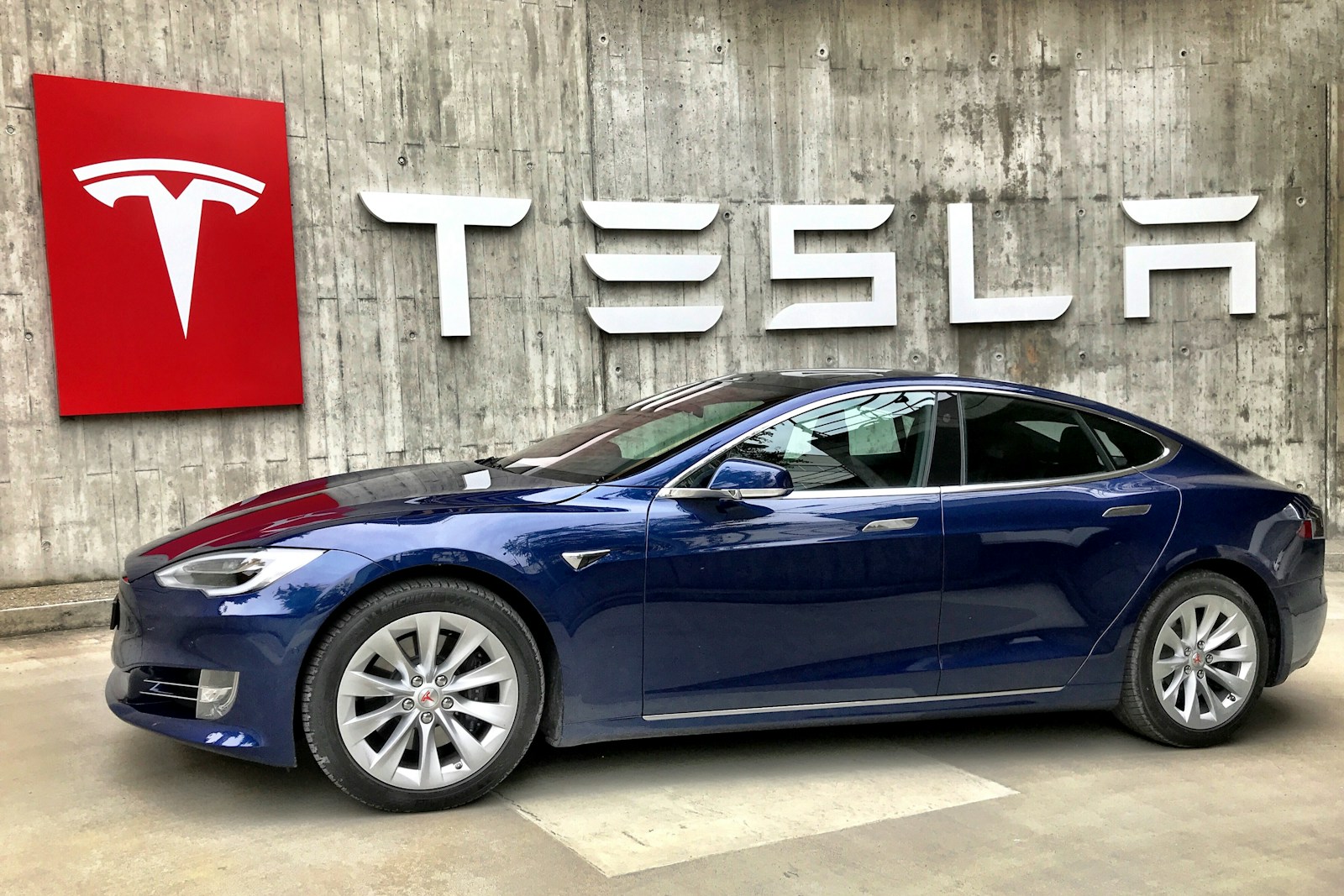
Three years and roughly 36,000 miles in, a Tesla Model 3 is still holding 95% of the range it had on day one, according to Recurrent’s analysis of real Model 3s on the road. That’s the number that built Tesla’s reputation for batteries that barely fade — and it’s a genuinely good result for a battery pack that’s been fast-charged, driven hard, and left out in the weather for three years of daily use. What doesn’t get repeated nearly as often is that it isn’t actually the best number in its own class. Recurrent tracks the same kind of real-world telemetry across other mainstream EVs, and a couple of them are aging even better than Tesla’s flagship sedan.
Tesla Model 3: 95% Retained
Recurrent’s dataset, built from telemetry on thousands of Model 3s rather than a handful of test cars, puts retention at 95% after three years and 93% after five. That’s a slow, steady curve — Tesla’s active liquid thermal management keeps the pack in a narrow temperature band whether it’s parked in Phoenix or Fargo, and the company’s own over-the-air software has spent years tuning charge curves to protect long-term capacity. It’s the number that set the industry’s expectations. It’s just not the ceiling.
Chevrolet Bolt EV: 96% Retained
Chevy’s Bolt, built on a much smaller budget than Tesla’s engineering operation, comes out slightly ahead at 96% of original range after three years, per Recurrent’s real-world data. The Bolt’s LG-sourced pack and its own liquid cooling loop have held up well across the used-EV data Recurrent has pulled from owners, even though the car’s reputation took a hit from GM’s 2021 battery-fire recall. The degradation data suggests that once a pack is replaced or was built after the fix, the underlying chemistry ages just fine.
Ford Mustang Mach-E: 97% Retained
The best three-year number in this comparison belongs to Ford’s Mustang Mach-E, which Recurrent’s data puts at 97% of original range retained. That’s despite the Mach-E carrying a heavier curb weight and a higher average of DC fast-charging sessions than the Bolt in Recurrent’s sample, both of which are typically associated with faster capacity fade. It’s a reminder that a well-managed thermal system can outweigh those disadvantages.
Nissan Leaf: 93% Retained
The Leaf is the one clear laggard, retaining 93% after three years according to Recurrent’s guide to the model — and the gap isn’t a mystery. Nissan built the Leaf without an active liquid cooling system, relying on passive air cooling instead. Recurrent’s researchers note that early packs paired with “problematic chemistries for hot climates” made the effect worse, and that the automaker’s 2015-model-year “Lizard” battery chemistry was a direct response, built to “better tolerate heat and resist degradation.” Later Leafs also gained a reputation for “Rapidgate,” a fast-charging throttle that kicks in after repeated DC sessions to protect the unmanaged pack from overheating. Recurrent’s broader dataset — pulled from what the company describes as over a billion miles of real EV driving — puts typical fleet-wide degradation at 1-2% of range per year, with the steepest drop-off in a car’s first 50,000 miles before the rate levels out. The Leaf’s numbers sit right at the rough edge of that range; the other three sit comfortably inside it.
The Warranty Floor Tells a Different Story
It’s worth comparing those real-world numbers to what automakers are actually willing to guarantee on paper. Tesla’s own battery warranty for the Model 3 Standard Range promises the pack won’t drop below 70% of original capacity through 100,000 miles or eight years — a floor Recurrent’s real-world telemetry shows the car isn’t remotely close to testing at the three-year mark. That’s typical across the segment: warranty language is written to cover a worst-case outlier pack, not the median car. The gap between “guaranteed” and “actually observed” is exactly why independent telemetry data matters more to a used-EV shopper than any single number printed in a brochure.
The Real Pattern Isn’t About Tesla
Line up all four numbers and the story isn’t that Tesla built an unbeatable battery — it’s that active thermal management has become the dividing line in this segment, and Tesla, GM, and Ford all cleared it. The Model 3’s 95% is excellent by any pre-2020 standard for EV batteries; it’s just no longer remarkable next to a Bolt or a Mach-E doing the same job slightly better. The Leaf is the outlier precisely because it’s the one car here still leaning on the older, cheaper approach to keeping a battery cool. For anyone shopping used, the lesson from Recurrent’s data isn’t “buy a Tesla for the battery” — it’s “check whether the car you’re looking at ever had a real cooling system in the first place.”