
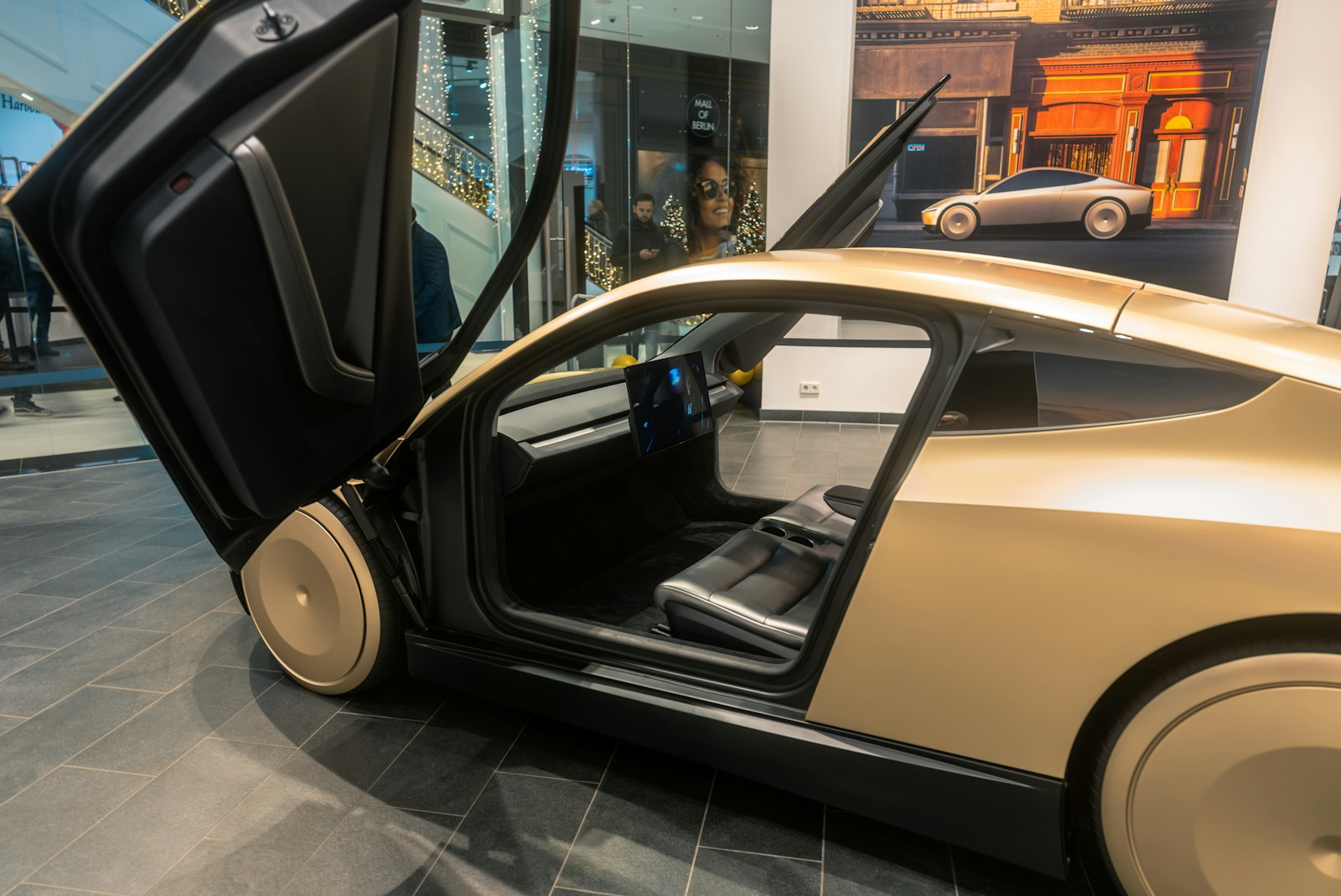

Tesla is putting a car with no steering wheel and no pedals on public roads with paying riders in it. The company’s purpose-built Cybercab robotaxi begins carrying fare-paying passengers in Austin this week, marking the first time Tesla has deployed a vehicle designed from scratch with no manual controls into commercial service, according to Electrek’s reporting on the September 3 launch event.
Key Points
- The Cybercab is a two-seat vehicle built with no steering wheel, no pedals, and minimal cargo space
- Launch riders come from Tesla’s existing Robotaxi app, plus invitees drawn from top existing riders and a mail-in sweepstakes
- It runs on the same FSD software stack already driving Tesla’s Model Y robotaxi fleet in Austin
- Tesla rates the Cybercab at roughly 165 Wh per mile, notably more efficient than the 250-280 Wh/mile the Model Y robotaxis use
- Tesla’s active unsupervised fleet has held at roughly 20 to 30 vehicles operating at any given time since the service launched in June 2025
A Purpose-Built Car, Not a Retrofit
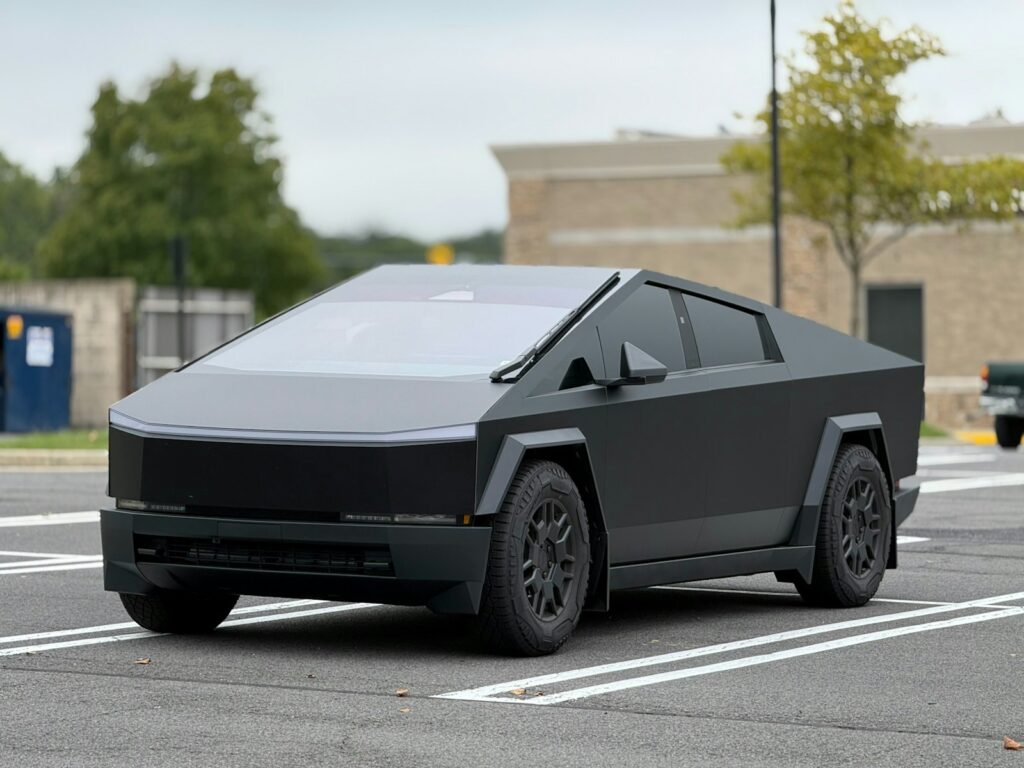
Every robotaxi Tesla has operated in Austin up to now has been a modified Model Y, a mass-market crossover never designed around driverless operation. The Cybercab is different by design: a 3,113-pound, 48 kWh two-seater built with autonomy as the entire premise rather than an added feature. It shares Tesla’s Full Self-Driving software stack with the existing fleet, so the software behind the wheel, or lack of one, isn’t new. What’s new is a vehicle that was never built with the option of a human driver in the first place.
Small Fleet, Big Symbolic Step
Tesla’s robotaxi operation has expanded methodically rather than explosively since its June 2025 debut, adding small geofenced zones in Dallas and Houston in April, per Electrek’s separate reporting, while keeping Austin’s active fleet in the same rough 20-to-30-vehicle range for months. Adding the Cybercab doesn’t immediately change that scale, Tesla has said it will run “alongside, or in place of” existing Model Y robotaxis rather than replacing them outright, but it does mark the first time riders can climb into a Tesla with genuinely no manual controls at all, not just a driver’s seat nobody is using.
The stakes go beyond one new vehicle. CNBC has tracked the broader robotaxi race among Tesla, Alphabet’s Waymo, and Amazon’s Zoox as all three companies chase scale in driverless rides, and independent filings reviewed by CNBC earlier this year showed Tesla’s Texas fleet running at a fraction of Waymo’s size in the same state. A polished, purpose-built vehicle rolling out to real riders is Tesla’s clearest answer yet to the fleet-size gap, even if the number of cars on the road hasn’t caught up to the ambition behind the hardware.
Access starts invite-only, with Tesla capping the September 3 event to top existing riders and sweepstakes winners age 21 and up, before presumably widening to the broader Robotaxi app waitlist in the weeks that follow.