
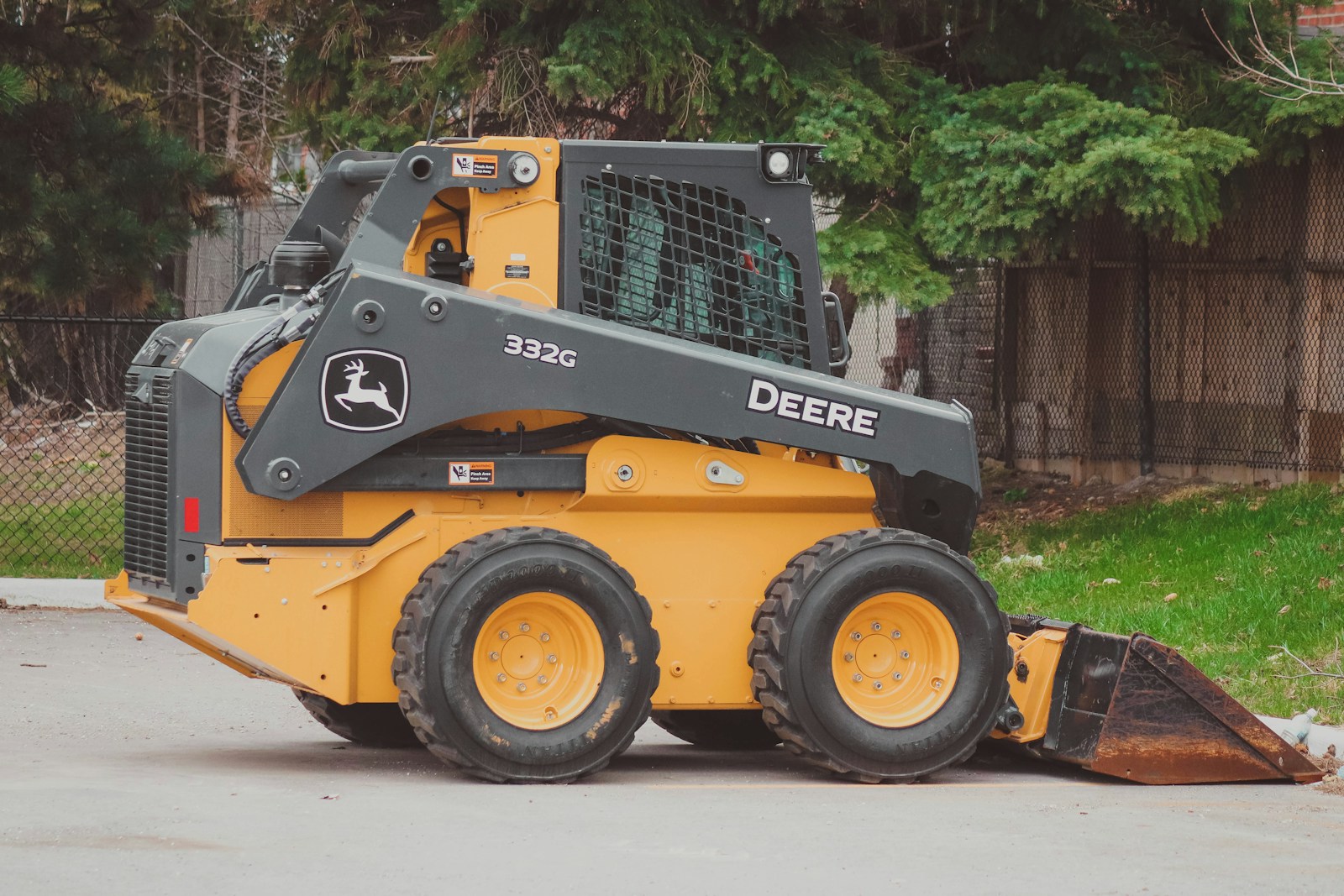

He was doing everything “normal” for a Saturday in Texas: half-ton pickup, gooseneck-style confidence with a bumper-pull trailer, and a skid steer that absolutely did not care what the sticker on the driver’s door jamb said about payload. The plan was simple—hook up, grab the machine, take the highway back before the heat got stupid.
The truck wasn’t some clapped-out farm rig either. It was the kind of clean, late-model half-ton that still got washed, still had a decent interior, still made its owner feel like he was on the responsible side of the “guys with trailers” spectrum. He’d towed plenty before, and he’d done the math the way most people do it: “It pulls it fine.”
They were cruising along at speed when he heard it—one sharp, wrong sound from behind him. Not a pop like a tire. Not the rattle of a chain. A snap. And in the mirror, the trailer stopped following the truck’s line like it belonged to him.
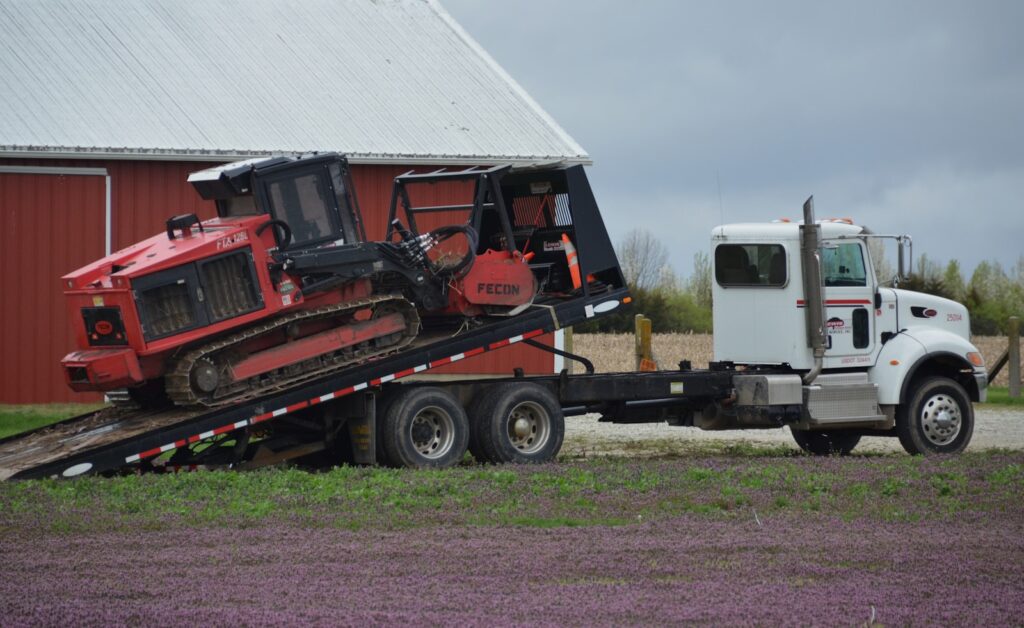
The load that “felt fine” until it didn’t
The skid steer was on a low deck equipment trailer, heavy enough that every bump turned into a little push on the back of the truck. The owner had tightened everything the way he always did: coupler down, safety chains crossed, wiring plugged in. He’d even done the little ritual of tapping the hitch and giving the trailer a tug like that proved anything.
It wasn’t sketchy in the obvious ways. No bald tires on the trailer, no sparks, no “this is probably illegal” banner flapping in the wind. The only hint was how busy the rear suspension looked—squatting just enough to say the truck was working.
Inside the cab, it was that familiar towing hum: engine steady, wind noise, trailer brakes doing their thing when he eased off. He wasn’t flying. He wasn’t weaving. He was just trying to get home without having to stop twice for fuel.
The snap, the drift, and the split-second math
The snap landed like a cue from a horror movie: one clean sound and then a weird, silent lag as his brain tried to match it to a problem. He glanced in the mirror and saw the trailer’s nose dip and wander. Not whipping yet—just drifting, like it had decided to start its own lane choice.
He lifted off the throttle and felt that sick change in the truck’s attitude, the rear end suddenly lighter, like someone had unhooked a backpack he didn’t realize he was leaning against. The steering got floaty in a way that didn’t match the road. Behind him, the trailer wasn’t centered anymore; it was tracking toward the median at a shallow angle, too smooth to be a blowout.
He didn’t stomp the brakes, because he’d towed enough to know that’s how you turn a problem into a YouTube clip. He eased, tried to keep the truck straight, tried to get to the shoulder without inviting the trailer to swing. The whole time he’s watching the coupler area in the mirror and realizing he can’t actually see what’s happening under there—only the fact that whatever used to be connected now wasn’t doing its job.
The trailer’s tongue dropped just a hair, then the whole rig crab-walked like it was being pulled by a different vehicle. It crossed the lane line, kissed the edge of the median, and started climbing up that sloped concrete like it had picked an exit nobody asked for. Traffic around him did the usual dance: the car behind him vanished backward, somebody in the next lane surged ahead, and someone else slowed just enough to create a pocket of confusion.
What kept it from becoming a full-blown catastrophe
Those crossed safety chains that people love to treat as decoration ended up being the only reason the trailer didn’t become a free-range missile. They caught the tongue and held it close enough that it couldn’t spear all the way into the road. The coupler was no longer married to the ball, but the chains kept them in a grim, dysfunctional situationship.
The trailer ground along in that half-attached state, its weight shoving sideways while the truck stayed mostly pointed forward. The skid steer didn’t go anywhere—its tie-downs held—but the trailer’s tires scrubbed hard, leaving that telltale rubber smear. The driver managed to coax the whole mess to a stop with the kind of slow, controlled deceleration that looks calm from outside and feels like holding a lid on a boiling pot from inside.
When they finally stopped, it wasn’t clean. The trailer was cocked toward the median, the truck angled slightly, and the whole scene looked like the ending of an argument between physics and optimism. He sat for a second with both hands on the wheel, staring like he expected the trailer to try something else.
Then he stepped out into the heat and the noise and did that thing everyone does after they almost lose a trailer: walk back slowly, like the problem might change if you approach it from a different angle. The coupler wasn’t on the ball. The tongue was low. The chains were stretched and dusty, doing their best impression of a last-second save.
The ugly discovery inside the receiver
At first he thought the pin must’ve come loose. That’s the comforting explanation because it suggests human error you can fix with a new pin and a little shame. But the pin wasn’t missing—it was still there, kind of. What was left of it looked like a snapped bone, sheared clean through where it should’ve been solid.
The hitch setup used a receiver tube with a pinned drawbar, the standard arrangement most half-tons live with. The pin had failed at the point where it passed through the receiver tube. And when he looked closer, the receiver itself didn’t look like the stout square steel he thought he owned.
The outside wasn’t terrible—some surface rust, a little crust, nothing you’d freak out about at a glance. But the inside of the receiver tube was another story. It had rusted from within, a hidden rot line that had thinned the metal where the pin carried its load, like a bad tooth that looked fine until you bit down.
He poked at it with a screwdriver and watched flakes fall out, more than he wanted, more than made sense for a truck that didn’t look ancient. The receiver tube had basically been corroding in the dark, collecting moisture and road grime, losing strength year after year while still looking “fine” from the outside. The pin had been doing all the work it always did—right up until the moment it couldn’t.
How the argument started once the adrenaline wore off
Once the rig was safe and the immediate danger passed, the conversation shifted from “holy hell” to “how did this happen” to “who’s responsible for this.” The owner blamed the equipment, because that’s where the failure was: the hitch receiver and the pin. Someone else—depending on who was there—started orbiting the weight question, the half-ton question, the “you were towing a skid steer with that?” question.
There’s always that one person who can’t let the moment stay focused. They don’t say it like they’re trying to help; they say it like they’re filing evidence. You can practically hear the tone: you were asking for it, you overloaded it, you don’t maintain your stuff, you cheaped out.
The owner wasn’t in the mood for a lecture, especially not in the shoulder heat with cars blasting past. He kept pointing at the broken pin and the rotten receiver tube like it was Exhibit A. He wasn’t wrong—metal failed because metal was compromised—but he also couldn’t escape the fact that heavy towing magnifies every weak link in the chain.
And then the more uncomfortable detail surfaced: the receiver wasn’t some aftermarket piece he installed last month. It had been on the truck for a long time, possibly original, possibly replaced at some point by someone who didn’t treat “rust inside the tube” as a thing worth checking. The kind of part you only look at when you’re hooking up, and even then you’re staring at the hole for the pin, not the steel around it.
By the time the tow truck showed up—because yeah, they weren’t just slapping it back together on the shoulder—the mood had turned sour. He was lucky in the way people hate admitting: lucky the chains held, lucky the trailer drifted into the median instead of across lanes, lucky no one was beside him at the wrong moment. But “lucky” doesn’t feel like a win when you’re looking at the receiver tube and realizing it could’ve been prevented by noticing something you didn’t know you needed to notice.
Later, when he was replaying that snap in his head, the part that stuck wasn’t even the sound. It was the image of the trailer drifting away from his line like it had stopped belonging to him, and the slow dawning realization that the failure point wasn’t some dramatic blowout or obvious mechanical disaster. It was a hidden rust scar inside a square tube—quiet, boring, and waiting—until one hard pull finally made the pin shear right where the metal had been eaten thin.
More from Steel Horse Rides: