

A 16-year-old behind the wheel is involved in a fatal crash at a rate more than three times higher, per mile driven, than any driver 20 or older. That’s not an estimate, it’s what the Insurance Institute for Highway Safety calculated from the National Household Travel Survey, and the risk isn’t spread evenly across the teen years either. It peaks hard at 16 and 17, and the single highest mortality rate of any teen group belongs to 19-year-old male drivers. In 2024, 2,899 teenagers aged 13 to 19 died in motor vehicle crashes, accounting for 7% of all crash deaths nationwide, and 73% of those deaths were male, a gap wide enough that insurers build sex into teen premiums right alongside age.
The steep drop nobody argues with
The teen numbers look worse in isolation than they actually are in trend. IIHS data shows the fatal crash rate per 100,000 people for drivers aged 16 to 19 fell 64% between 1975 and 2024, a far steeper improvement than older age brackets have posted over the same stretch. Better graduated licensing laws, safer vehicles, and stricter enforcement all get credit, but the baseline teens are falling from was so high that even a 64% drop still leaves them the single riskiest age group on the road today. Put another way, the group that improved the most over fifty years is still the group you’d least want to hand the keys to on a given Friday night.

Middle age is the real floor, and older drivers closed in on it
Risk bottoms out somewhere in middle age, and that’s the benchmark IIHS uses when measuring how much older drivers have actually improved. Comparing 1995-98 crash data to 2005-08 data, drivers aged 75 to 79 cut their crash risk by 22% and their death risk by 11% relative to drivers 35 to 54. Drivers 80 and older did even better, posting a 31% drop in crash risk and a 12% drop in death risk over that same decade, according to IIHS’s own analysis. The drop in how often older drivers crashed at all, not just how survivable those crashes were, drove 68% to 74% of that overall improvement, and by 2015 the fatal crash rate per licensed driver for ages 70 to 79 had fallen below the rate for middle-aged drivers for the first time on record. Vehicle safety tech gets real credit here too: death risk in side-impact crashes fell 18% for older drivers over that period, more than triple the 5% improvement seen in frontal crashes, a gap IIHS attributes largely to the spread of side-curtain airbags.
Where the curve turns back upward
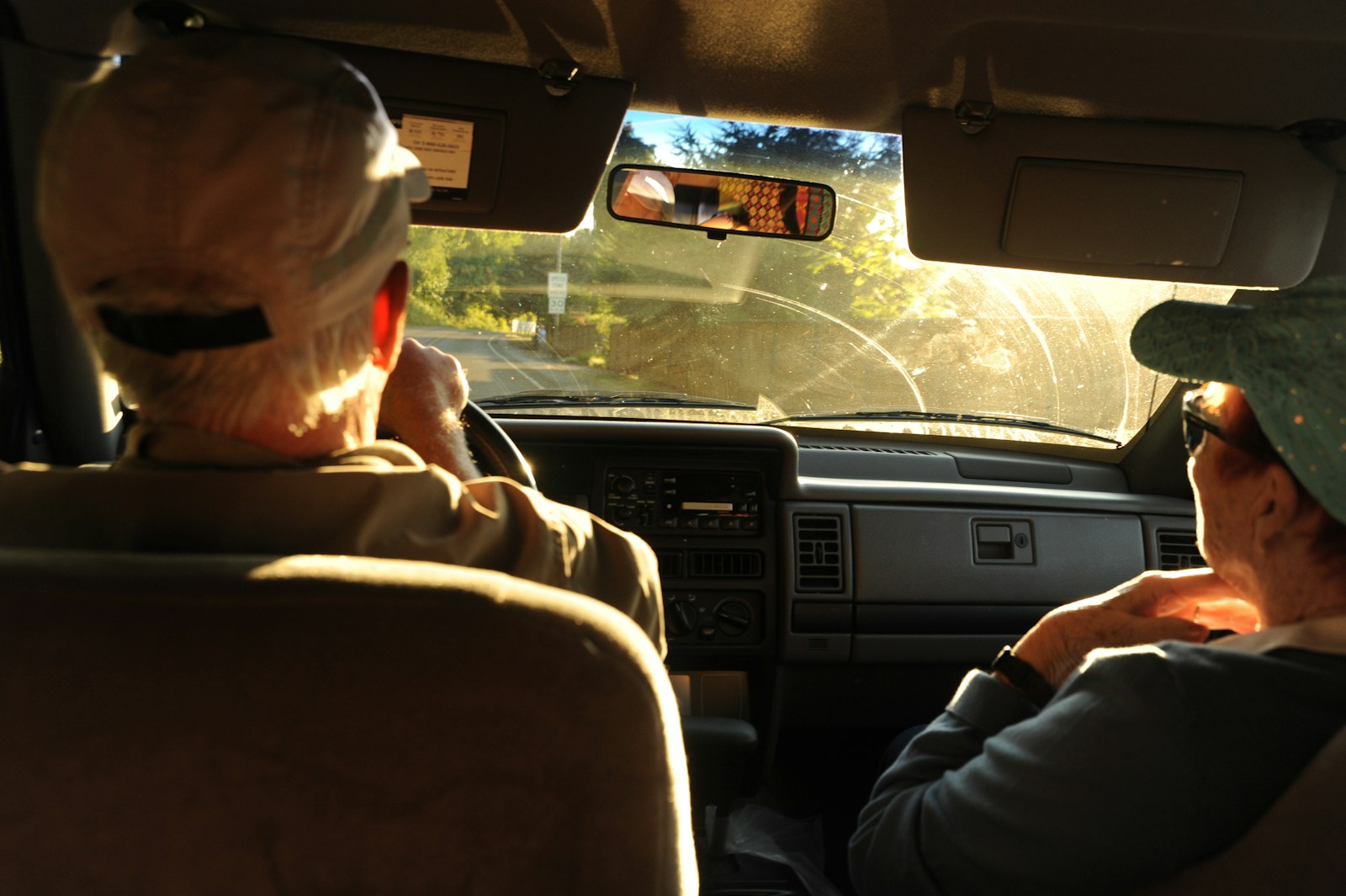
Here’s the reversal the headline promises: measured per mile driven rather than per licensed driver, risk climbs substantially again starting around age 70, according to IIHS’s older-drivers research summary. Part of that is simple math. Older drivers log far fewer annual miles than middle-aged drivers, and the miles they do log are disproportionately short, local trips through intersections and city traffic, the exact conditions where crash risk concentrates. It’s also worth noting older drivers have been driving more, not less: average annual mileage for drivers 75 to 79 rose 60% and for drivers 80 and older rose 51% over roughly a decade of IIHS tracking, meaning more exposure even as per-trip risk improved. The bigger factor behind the reversal is fragility: the odds of dying in a crash of any given severity rise sharply with age, independent of how the crash happened. In 2024, 5,679 people aged 70 and older died in motor vehicle crashes, and 70% of those fatalities were either the older drivers themselves (57%) or their passengers (13%), a distribution that reflects how much of the risk for this group now comes from surviving the impact rather than from causing it.
Line the three stages up and the real shape isn’t the simple “teens bad, elderly good” story the headline number suggests, it’s a curve that falls off a cliff after the teenage years, flattens through middle age as the safest stretch of anyone’s driving life, and creeps back upward in the senior years for an entirely different reason than it did for teenagers. Teens die because of how they drive. The oldest drivers increasingly die because of how their bodies hold up once a crash, any crash, actually happens.