
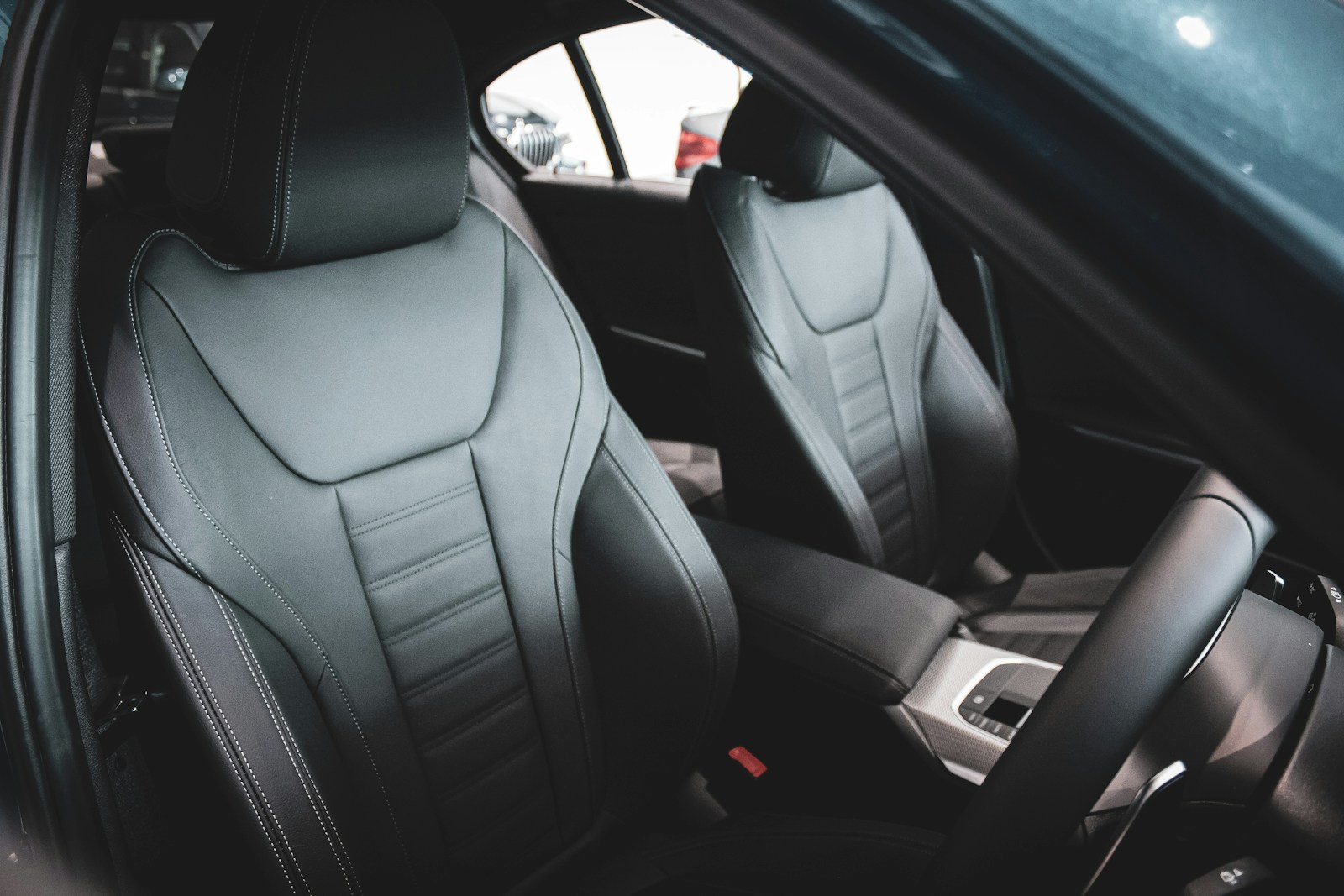

Four small SUVs earned a Good rating and three flunked outright in the first results from a completely rebuilt whiplash-prevention evaluation that the Insurance Institute for Highway Safety launched on January 27, 2026. The new protocol replaces a test so outdated that nearly every seat on sale was earning top marks even as neck-injury claims kept piling up.
What Changed and Why It Matters
The old head-restraint test, largely unchanged for two decades, had stopped separating good seats from bad ones — pass rates crept toward 100% while insurers kept processing whiplash claims by the hundreds of thousands every year. The rebuilt test fixes that by getting tougher and more specific. According to IIHS’s own release, engineers now strap a midsize male crash-test dummy into the actual seat and fire it down a sled track to simulate rear-end impacts at both 20 mph and 30 mph, rather than a single moderate-speed pulse. Sensors track how quickly the head makes contact with the restraint, how the torso and neck load up during the impact, and whether the seatback lets the pelvis slide forward — the combination that turns a fender-bender into months of physical therapy.
Vehicles are sorted into four tiers: Good, Acceptable, Marginal, and Poor, mirroring the same scale IIHS already uses for structural crashworthiness.
The Body Style Getting Penalized Hardest
IIHS ran 18 small SUVs through the new gauntlet first, and the split was stark, according to reporting on the results from Cars.com. Only four vehicles — the 2025 Audi Q3, 2025-26 Hyundai Ioniq 5, 2025-26 Subaru Forester, and 2025 Toyota RAV4 — earned the top Good rating, described as providing “excellent protection across nearly all the metrics at both impact speeds.” Nine more landed in the middle with Acceptable scores and two more came in Marginal.
Three small SUVs bottomed out with Poor ratings: the 2025-26 Ford Bronco Sport, 2025-26 Hyundai Tucson, and 2025-26 Mazda CX-50. Each one failed to keep the head and spine moving together during impact — the seat let the head snap forward or sideways relative to the torso, the exact motion that tears neck ligaments. That’s a notable pattern: three mainstream compact and crossover SUVs, not budget subcompacts or stripped work trucks, are the ones getting flagged.
Key Points
- New test debuted January 27, 2026, replacing a two-decade-old evaluation that had lost its ability to discriminate between seats.
- Sled tests now run at 20 mph and 30 mph with a midsize male dummy, tracking head, neck and pelvis motion.
- Only 4 of the first 18 small SUVs tested — Audi Q3, Hyundai Ioniq 5, Subaru Forester, Toyota RAV4 — scored Good.
- Ford Bronco Sport, Hyundai Tucson, and Mazda CX-50 scored Poor, the lowest tier.
- IIHS plans to expand testing across more segments in the coming months.
What Buyers Should Do This Fall
Whiplash almost never shows up in the safety-rating headline number most shoppers glance at — it’s buried in a separate seat-and-head-restraint category that most buyers never click into. Anyone cross-shopping a small SUV this fall should pull up the specific model’s page on IIHS’s site before assuming a “Top Safety Pick” badge covers this, since that award doesn’t yet require a Good whiplash score. It’s a cheap five-minute check against an injury type that’s rarely fatal but is consistently one of the most expensive and drawn-out to recover from.