
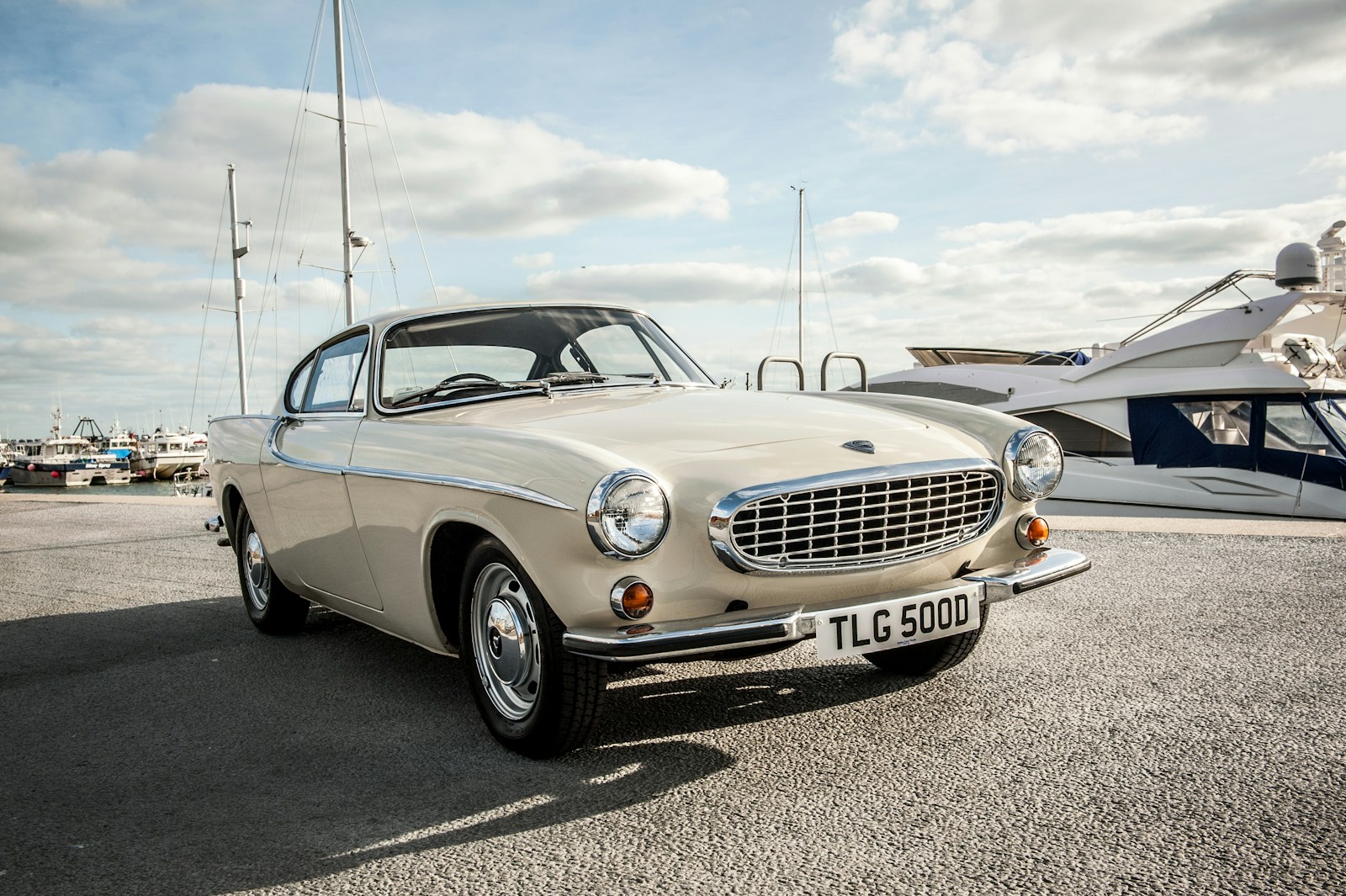

Guinness World Records credits a 1966 Volvo P1800S with 3,039,122 documented miles as of May 1, 2014 — the official record for highest vehicle mileage ever verified. Its owner, a retired Long Island science teacher named Irv Gordon, kept driving the same car after the record was certified, and by the time he died in November 2018 at age 78, the odometer had climbed to roughly 3,260,257 miles. He bought that car new for $4,150 in June 1966. It never got a replacement engine block.
The Record, Verified
Guinness doesn’t hand out this title casually, and Gordon’s case is unusually well documented for exactly that reason. According to Guinness World Records’ own listing, Gordon’s 1966 Volvo 1800S is officially recognized for reaching 3,039,122 miles, with the milestone tied to a specific location and date — he crossed the three-million mark near Girdwood, Alaska, in September 2013, and Guinness finalized the documented total the following May. That’s not the first time Gordon set the record, either: Wikipedia’s biography of Gordon notes he first earned Guinness recognition back in 1998, when the same car had already covered 1.69 million miles, meaning he held the title for the better part of two decades and kept extending it against his own previous record the entire time.

How a Schoolteacher Racked Up Three Million Miles
Gordon wasn’t a professional driver or a fleet operator — he taught high school science on Long Island and treated the P1800 as his everyday car for most of his adult life. A profile from Fox News, published as Gordon closed in on the three-million mark, described him averaging between 85,000 and 100,000 miles a year — a pace that took roughly 21 years to reach his first million miles and about 15 more to double that total, driving the car across all 49 continental states, Canada, and much of Europe along the way. That’s not a car kept in a garage for weekend cruises — it’s a genuine daily driver that happened to rack up a documented, verifiable mileage total most cars never approach even across multiple owners and multiple decades of use.
What Kept the Engine Alive That Long
Distance alone doesn’t explain the record — maintenance discipline does. Gordon’s P1800 needed two full engine rebuilds over its lifetime, the first around 680,000 miles and a second in 2009, and mechanic Nino Gambino handled major mechanical work on the car starting in 1979 while Gordon did much of the routine maintenance himself. Two rebuilds across more than three million miles is a remarkably low number relative to the mileage covered — most engines built to mainstream 1960s tolerances would have needed a great deal more intervention than that to survive even a fraction of the distance. The P1800’s inline-four, borrowed from a design lineage with a reputation for over-engineering relative to what buyers actually needed, turned out to be exactly the kind of mechanically simple, conservatively stressed engine that rewards obsessive maintenance rather than punishing it.
Why the Rebuild Count Matters
Two engine rebuilds across more than three million miles works out to roughly one major rebuild every 1.5 million miles — a ratio that would sound implausible applied to almost any other production car from the same era, and one that still sounds implausible applied to most cars built today. That figure is the actual engineering substance behind the record, more than the total mileage number itself: a car that requires only two major internal interventions across five decades of near-continuous daily use is demonstrating something real about the tolerances Volvo built into that specific engine family, not simply benefiting from one unusually lucky example.
What the Record Actually Proves
It would be easy to credit the car alone, but Gordon’s own routine was just as essential to the outcome as anything Volvo’s engineers built into the P1800. A car this durable still needed someone willing to change its oil on schedule for over fifty years, address small problems before they became expensive ones, and keep driving it daily instead of retiring it to a collection once it became famous. Modern cars carry far more complexity — electronics, emissions equipment, and drivetrains tuned for efficiency rather than raw mechanical simplicity — and it’s an open question whether any of today’s vehicles could survive the same maintenance regimen long enough to approach a similar number, or whether their added sophistication makes that kind of longevity structurally less likely from the start.
The Real Takeaway From Three Million Miles
What Gordon and his P1800 actually demonstrated wasn’t that one car was miraculous — it’s that mechanical simplicity paired with relentless, unglamorous maintenance can outlast almost any assumption about how long a car is supposed to last, a lesson that gets harder to test with every generation of increasingly complex vehicles that follows it.