
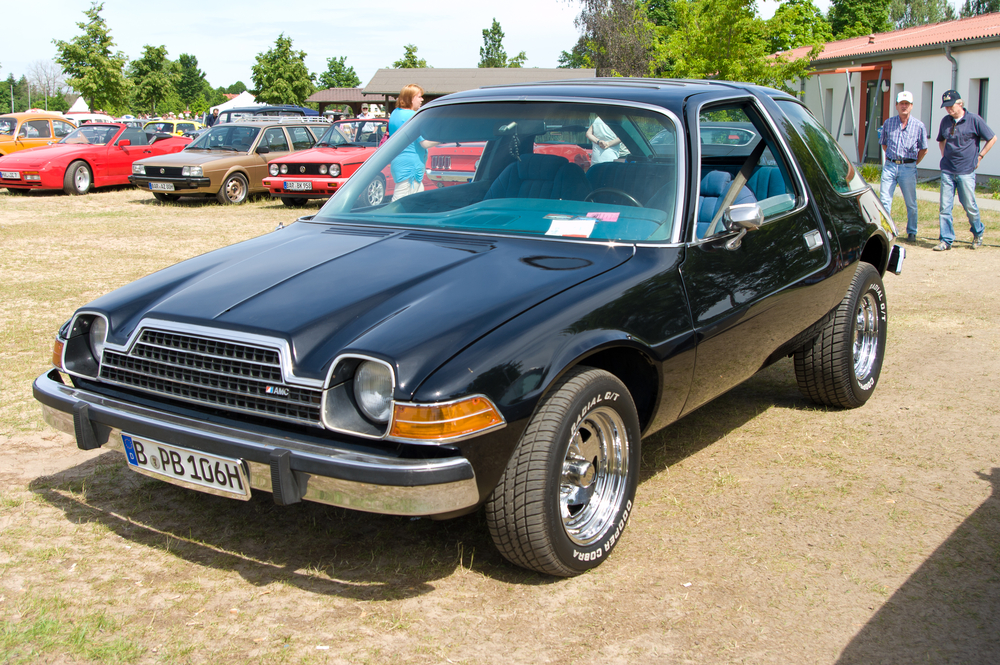

Beauty is in the eye of the beholder, but some cars have tested that principle more than others. Vehicles like the Pontiac Aztek, Fiat Multipla, and AMC Pacer have earned spots on nearly every list of the ugliest cars ever made, yet they still found buyers who looked past their questionable aesthetics.
Despite their unconventional designs that sparked widespread criticism, these automotive oddities managed to sell thousands of units because they offered practical features, affordability, or unique capabilities that mattered more to buyers than curb appeal. The automotive industry has produced countless vehicles over the decades, and not every design has been a winner in the looks department.
What makes a car truly ugly is subjective, though certain design choices consistently draw criticism from enthusiasts and casual observers alike. From awkward proportions to bizarre styling elements, these vehicles have become infamous for their appearance, yet their sales figures tell a different story about what really drives purchasing decisions.

Defining the Ugliest Cars Ever Made
Beauty standards in automotive design have always been subjective, yet certain vehicles consistently appear on lists of the most hated cars. These designs often share specific characteristics that make them universally unpopular, though many still managed to find their way into driveways across the world.
What Makes a Car Ugly?
The ugliest cars ever made typically suffer from poor proportions, awkward styling details, or design elements that clash with each other. Cars like the 1970 Marcos Mantis M70 exemplify how lumpy lines and disconcerting details can create what some call a “visual crime scene.”
Excessive ornamentation can ruin an otherwise decent design. The 1958 Ford Thunderbird transformed from a clean two-seat roadster into an oversized, chrome-laden vehicle that dripped with 1950s excess. Other common issues include mismatched front and rear styling, strange window treatments, and bodies that appear squeezed or stretched.
Design failures often stem from trying too hard to be innovative or futuristic. The Chevrolet Lumina APV and its Dustbuster van siblings attempted to make minivans look forward-thinking with an anteater nose, but buyers preferred traditional boxy shapes. Sometimes manufacturers simply get the proportions wrong, as American Motors did with the Marlin, which looked awkward from every angle.
How Ugly Cars Still Found Buyers
Despite their controversial looks, many ugly cars succeeded because they offered practical benefits buyers couldn’t ignore. The Subaru 360 was marketed with commercials that actually called it “cheap and ugly,” yet it sold because it met Japanese kei car standards and offered affordable transportation.
Economic factors often trumped aesthetics. The Crosley CC looked more like a toy than a car with its squashed face and undersized wheels, but it found buyers during post-war gas rationing when fuel economy mattered more than appearance.
Some vehicles became popular despite their looks because they delivered innovation or performance. The 1976 Aston-Martin Lagonda featured a futuristic interior with electronic gadgets that distracted from its exterior, which resembled a Chevrolet Caprice that had been flattened. Brand loyalty also played a role, as customers trusted manufacturers enough to overlook questionable design choices.
Iconic Ugly Cars People Still Bought
Some vehicles became famous precisely because they looked so strange. The Pontiac Aztek earned mockery for its awkward proportions, while the Fiat Multipla confused buyers with its bizarre front end, yet these cars found their audiences and sold in surprising numbers.
Pontiac Aztek: The Poster Child for Bad Design
The Pontiac Aztek arrived in 2001 as one of the most polarizing vehicles ever created. Its chunky plastic cladding, mismatched proportions, and awkward rear end made it an instant target for criticism. The front fascia featured a split grille design that looked like two different cars welded together.
Despite appearing on lists of the ugliest cars ever made, the Aztek sold over 119,000 units during its production run from 2001 to 2005. Buyers appreciated its practical features, including a built-in tent camping system, removable cooler, and versatile cargo space. The vehicle offered genuine utility even if it couldn’t offer beauty.
Pop culture eventually gave the Aztek unexpected fame when it became Walter White’s ride in Breaking Bad. The show’s choice of this particular vehicle for its protagonist added layers to the Aztek’s legacy, transforming it from automotive punchline to cultural icon.
Fiat Multipla: Italy’s Quirky Minivan
The Fiat Multipla debuted in 1998 with a face only a mother could love. Its bulbous design featured two rows of three seats in a compact footprint, but the styling choices baffled observers. The windshield sat above a separate lower section containing the headlights, creating a two-tier front end that looked unfinished.
Italian buyers initially embraced the Multipla for its space efficiency and six-seat configuration in a car barely longer than a Golf. The interior offered remarkable room, with three full-size seats across both rows. Fiat sold the original design until 2004, when they finally redesigned the front to look more conventional.
The Multipla proved that functionality could overcome aesthetics in certain markets. European families prioritized the clever packaging over the awkward appearance, making it a commercial success despite international ridicule.
AMC’s Weirdest Rides: Pacer, Gremlin, and Marlin
American Motors Corporation produced some of the strangest designs of the 1970s. The AMC Pacer launched in 1975 with its distinctive fishbowl-like greenhouse and disproportionately wide body. The asymmetrical doors—with the passenger side longer than the driver’s—added to its odd appearance. Despite being wedge-shaped and particularly unusual, AMC sold over 280,000 Pacers in its first year alone.
The AMC Gremlin took a different approach to ugly. Designers essentially chopped the rear end off an existing car, creating a truncated hatchback that looked unfinished. It debuted in 1970 and ran through 1978, selling over 670,000 units. Buyers wanted cheap, fuel-efficient transportation during the oil crisis, and the Gremlin delivered affordability if nothing else.
The AMC Marlin attempted to create a fastback coupe from a sedan platform in 1965. The result looked bloated and awkward, with proportions that never quite worked. It lasted only three model years with disappointing sales, proving that even AMC’s tolerance for unusual styling had limits.
Retro Fails: Ford Edsel, Chrysler PT Cruiser, and More
The Ford Edsel became synonymous with automotive failure when it launched in 1958. Its vertical grille resembled a horse collar or toilet seat, depending on who you asked. Ford invested heavily in the Edsel brand, but buyers rejected the styling and questionable quality. The company killed the brand after just three model years and massive financial losses.
The Chrysler PT Cruiser arrived in 2000 as a retro-styled compact that divided opinion sharply. Some buyers loved the throwback hot rod styling, while others found it cartoonish and overwrought. The bulbous proportions and exaggerated curves made it instantly recognizable but not universally admired.
Chrysler sold over 1.3 million PT Cruisers between 2000 and 2010, making it a commercial success despite aesthetic complaints. The car offered practical interior space and unique styling at an affordable price point. Its popularity proved that “ugly” remains subjective, and plenty of buyers saw charm where critics saw awkwardness.
More from Steel Horse Rides: