

A tense private-party negotiation caught on camera by @greggotcars has drawn 7 million views, largely because it leaves viewers arguing over who’s actually in the right. In the clip, the buyer directly confronts a private seller about the car’s rough condition and a prior accident history, using both points to justify an aggressively low cash offer on the spot.
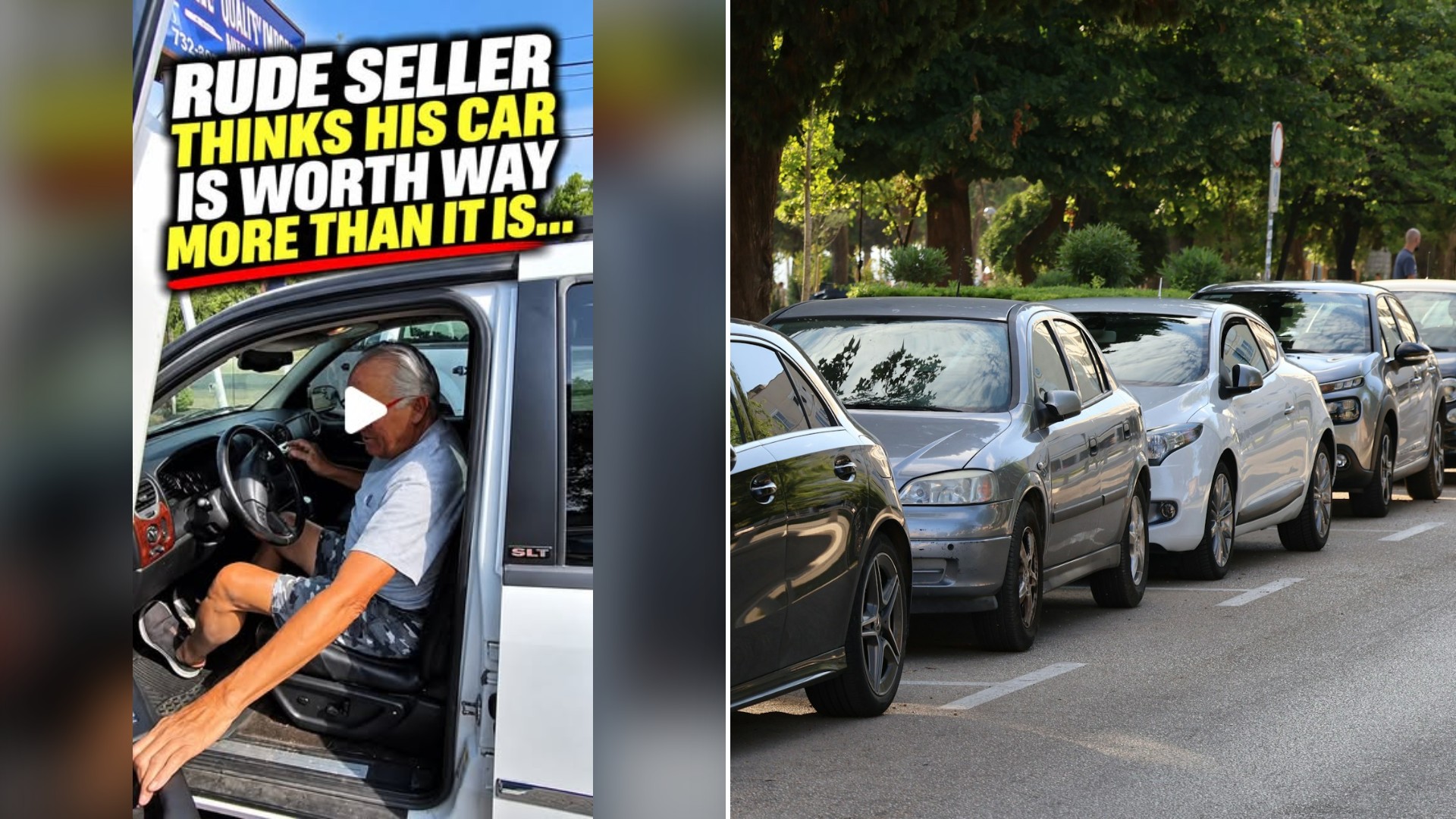
The exchange works as content precisely because it doesn’t resolve cleanly. Some viewers side with the buyer for doing the legwork to catch problems a seller may have hoped would slide by unnoticed; others see the tactics as needlessly harsh for a private seller who may not fully understand their own car’s history. That built-in disagreement is a large part of why the video keeps generating comments and shares.
Private-party car sales sit in a different legal and practical category than dealership purchases, and that difference is exactly what gives a confrontation like this its leverage. Most states don’t require a private seller to disclose every known mechanical issue the way a licensed dealer in many jurisdictions must, which means due diligence falls almost entirely on the buyer. A vehicle history report — typically $20 to $40 per lookup from services that pull data from insurance claims, state title records, and accident databases — is one of the few tools a buyer has to independently verify whether a seller’s description of a car’s history matches its paper trail.
A prior accident, even one that’s been properly repaired, affects a car’s value in ways that go beyond cosmetic condition. Structural repairs can be harder to assess visually than a repainted panel, and even expertly repaired frame damage can leave a vehicle with a permanently lower resale value simply because of the “accident” flag that follows it on any future history report. That’s part of why buyers who do their homework often feel justified pushing hard on price — the diminished value isn’t a negotiating trick, it’s a real, documented hit to what the car is worth on the open market.
At the same time, negotiation norms matter for how an offer actually lands. A lowball number delivered as a flat statement of fact, backed by specific evidence, tends to be received very differently than the same number delivered as a public confrontation. Experienced private-party negotiators generally recommend raising concerns privately and calmly before naming a number, both because it preserves the seller’s willingness to negotiate at all and because an ambushed seller is far more likely to simply walk away from the deal out of frustration rather than engage with the actual numbers.
For sellers watching a video like this, the practical lesson is less about this specific buyer and more about preparation. Getting a car’s own history report and a basic pre-sale inspection done before listing it — and being upfront about whatever those documents reveal — removes most of the leverage a confrontational buyer would otherwise have. A seller who already knows and discloses their car’s accident history can’t be caught off guard by it on camera, and buyers are generally far more willing to pay closer to asking price for a seller who’s been transparent from the start.
Ultimately, clips like this spread because they put a very ordinary transaction — one that happens thousands of times a day with no cameras rolling — under a spotlight that makes its usually invisible power dynamics suddenly obvious. Every private car sale involves some version of this tension between a seller’s asking price and a buyer’s assessment of real value; most of them just never end up as a debate in someone else’s comment section.
More from Steel Horse Rides
- A Truck Flipper Was Mid Inspection On A Suspicious Facebook Marketplace Truck When It Suddenly Started Smoking And Leaking Fluid All Over The Parking Lot
- A Buyer Risked Five Hundred Dollars On A Mercedes GL450 Worth Close To Fifteen Thousand Dollars And Is Revealing Every Hidden Mechanical Flaw One By One
- A Weekly Bank Repo Auction Just Sold An Entire Running Car For Only Three Hundred And Fifty Dollars And The Crowds Reaction Says Everything About How Shocked They Were