

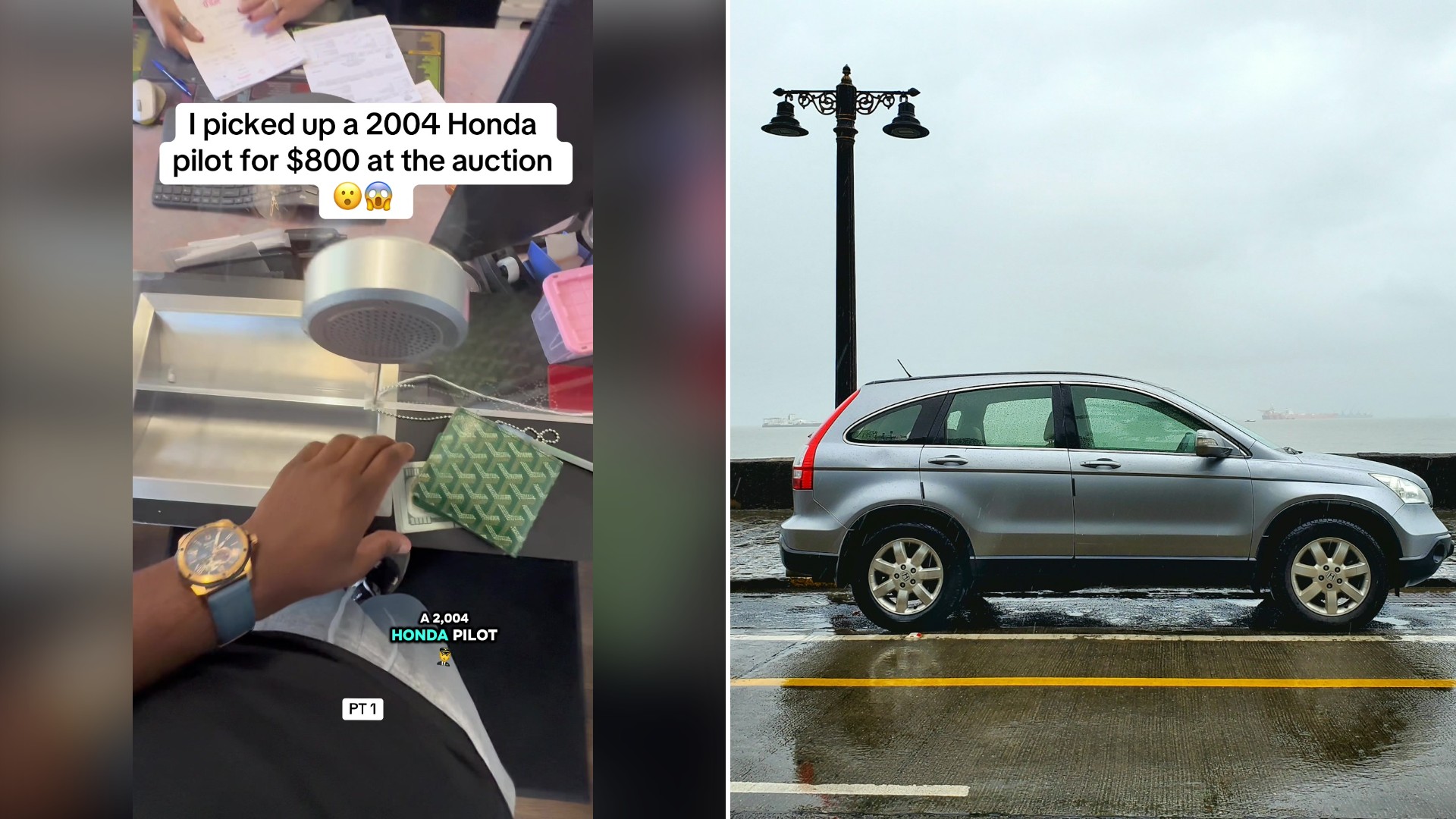
An auction win on a twenty-year-old SUV has turned into a public referendum on whether the price was actually a deal. In the video from @thegoldenwealth, the creator documents picking up a 2004 Honda Pilot at auction for $800, then walks through a detailed inspection of the vehicle before turning to the camera and asking viewers directly whether he overpaid. The transparency is the whole appeal here, since most buyers never find out whether an auction purchase was smart money or a mistake until long after the gavel falls.
@thegoldenwealth
Vehicle auctions, whether run by a local impound lot, a dealer-only wholesale auction, or a public salvage auction, operate under a different set of rules than a typical used car purchase. Vehicles are usually sold as-is, with no test drive and often limited time to inspect before bidding opens, which means buyers are making a decision based largely on a visual walkaround and whatever auction notes are provided. For a car in the $800 range, the stakes of a bad guess are relatively low in dollar terms, but the condition gamble is just as real as it would be on a more expensive vehicle.
The first-generation Honda Pilot, which the 2004 model year falls into, built a reputation over the years as one of the more dependable midsize SUVs of its era, largely thanks to Honda’s well-regarded V6 engine and a build quality that tends to age better than many competitors from the same period. That reputation is exactly why a clean example at this price can be a genuine win: parts availability is strong, independent mechanics are familiar with the platform, and a Pilot with reasonable mileage and a documented maintenance history can realistically deliver several more years of reliable use for a fraction of what a newer vehicle would cost.
Where the math gets shakier is in what an inspection like this one is actually able to catch. A visual check can reveal obvious rust, worn tires, interior wear, and surface-level engine bay issues, but it can’t confirm transmission health, catch an intermittent electrical gremlin, or guarantee the timing belt and water pump haven’t been neglected, both of which are critical, known maintenance items on this generation of Pilot that can cause expensive engine damage if ignored. A buyer weighing whether $800 was a win or a loss really needs to know what’s underneath those surface details before rendering a final verdict.
For anyone considering a similar auction gamble, a few practical steps improve the odds significantly. Checking the VIN against any available auction history or public records before bidding can flag salvage titles, flood damage, or a history of frequent ownership changes, all of which are red flags worth knowing before committing money. Bringing a portable code reader to check for stored diagnostic trouble codes, when the auction allows pre-bid access to the vehicle, adds another layer of information beyond what the eyes alone can catch. And setting a hard budget ceiling before the auction starts helps prevent the adrenaline of live bidding from pushing a buyer past the point where the purchase still makes financial sense.
Even with all of that homework done ahead of time, auctions carry inherent uncertainty that a traditional dealership or private-party purchase doesn’t, and that’s precisely the trade-off buyers are making in exchange for the chance at a steep discount. A $800 SUV that needs a few hundred dollars in maintenance to get fully road-ready can still be an excellent deal. The same vehicle needing a transmission rebuild or major engine work quickly turns into money lost rather than money saved.
Whether this particular Pilot turns out to be a bargain or a headache, putting the full inspection on camera and asking the audience to weigh in gives viewers a useful, real-world case study in what an auction gamble actually looks like once the bidding is over.
More from Steel Horse Rides
- Weekly Bank Repo Auction Just Sold An Entire Running Car For Only Three Hundred And Fifty Dollars And The Crowds Reaction Says Everything About How Shocked They Were
- Buyer Risked Five Hundred Dollars On A Mercedes GL450 Worth Close To Fifteen Thousand Dollars And Is Revealing Every Hidden Mechanical Flaw One By One
- Truck Flipper Was Mid Inspection On A Suspicious Facebook Marketplace Truck When It Suddenly Started Smoking And Leaking Fluid All Over The Parking Lot