

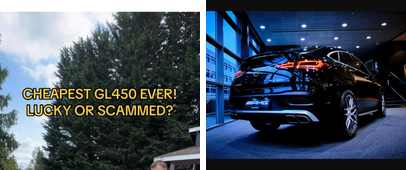
A five hundred dollar cash deposit does not sound like much next to the sticker price of a Mercedes-Benz GL450, but for @bybtim, it was the entire bet. The creator put that deposit down sight unseen on a GL450 listed around $15,000, essentially staking a few hundred dollars on the hope that the SUV would turn out to be the deal it looked like on paper, rather than a money pit waiting to happen.
What followed was a full inspection filmed step by step, with the creator walking viewers through every flaw the GL450 turned up along the way. That kind of transparency has become the backbone of inspection-style car content: rather than a polished reveal, the audience gets the messy, honest middle part where a buyer actually has to decide whether a vehicle is worth the risk.
The Mercedes GL450, sold under the GLS nameplate after a 2016 refresh, is a three-row luxury SUV that originally stickered well north of $60,000 when new. That steep depreciation curve is exactly why used luxury SUVs like the GL450 attract so much attention from both bargain hunters and flippers: a vehicle that cost tens of thousands of dollars a decade ago can show up on the used market for a fraction of that, loaded with features that would be unaffordable new. The catch, as any experienced mechanic will say, is that luxury brands build luxury-priced repair bills to match.
Air suspension is one of the first systems inspectors check on an aging GL-Class, since the air struts are expensive to replace and prone to leaks as they age. Buyers are also well advised to look closely at the air suspension compressor, the electronics modules notorious on this generation of Mercedes for throwing codes, and the transmission’s service history, since these SUVs were built to be driven, not babied, and often show it by the time they hit six figures on the odometer.
Buying a vehicle sight unseen with only a deposit on the line is a strategy some flippers use deliberately: it lets them reserve a promising listing before someone else scoops it up, while limiting their exposure if the in-person inspection turns up a dealbreaker. The $500 figure in particular is a common threshold in the used-car flipping world, large enough to signal serious intent to a seller but small enough that walking away from a bad inspection does not sting too badly.
Inspections like this one typically follow a checklist: fluid levels and color, undercarriage rust, evidence of prior accident repair, tire wear patterns that can hint at alignment or suspension problems, and a test drive that pays close attention to how the SUV rides over bumps, since a failing air suspension often reveals itself in a harsh or uneven ride before any warning light appears. Buyers who skip this step on an SUV this complex are gambling with far more than a $500 deposit.
Whether the gamble pays off ultimately comes down to the cost of whatever flaws the inspection reveals weighed against the deal’s asking price. A GL450 with a tired air suspension and an overdue transmission service might still be a smart buy at the right number, provided the buyer goes in with eyes open and a realistic repair budget. The appeal of this kind of content is watching that math get worked out in real time, flaw by flaw, instead of after the fact.
For now, @bybtim’s followers are left waiting to see whether the $500 risk turns into a profitable flip or a lesson learned the expensive way — exactly the kind of suspense that keeps this corner of car content so addictive.
More from Steel Horse Rides
- Weekly Bank Repo Auction Just Sold An Entire Running Car For Only Three Hundred And Fifty Dollars And The Crowds Reaction Says Everything About How Shocked They Were
- Truck Flipper Was Mid Inspection On A Suspicious Facebook Marketplace Truck When It Suddenly Started Smoking And Leaking Fluid All Over The Parking Lot
- Builder Turned An Ordinary Volvo Sedan Into A Full Blown Off Road Trophy Truck And The Transformation Is Almost Completely Impossible To Recognize