

A used truck deal turned chaotic in a recent viral post from @daytonflipswhips, who was in the middle of inspecting a suspicious-looking pickup found through Facebook Marketplace when the situation took a turn for the worse. Partway through the inspection, the truck suddenly started billowing smoke and leaking fluid, forcing the flipper into a frantic, unplanned scramble to assess the damage and clean up on the spot.
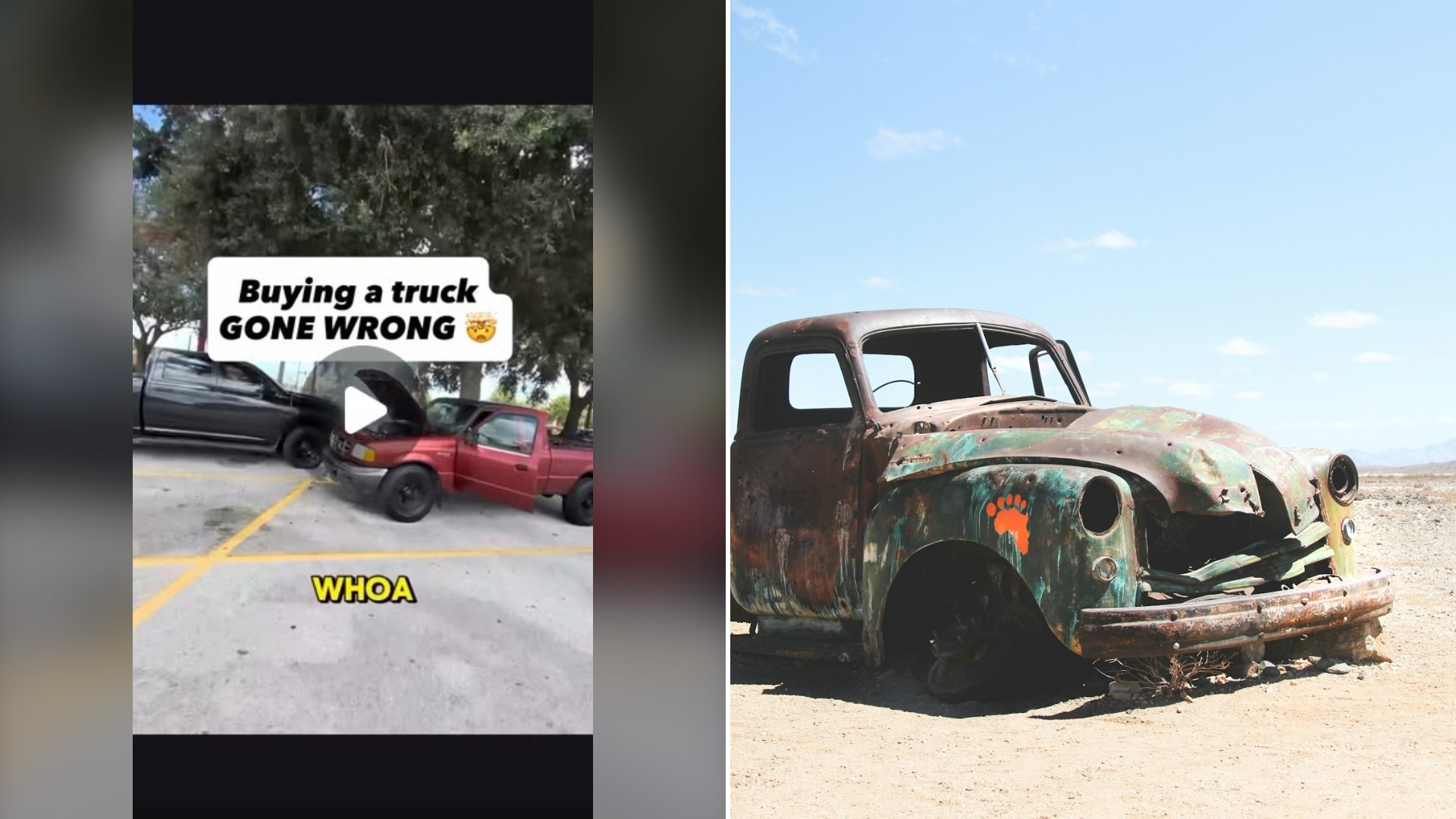
The clip pulled in roughly 2 million views, driven largely by the sheer unpredictability of the moment. Rather than a calm walk-around followed by a verdict, viewers got a real-time mechanical failure unfolding on camera, the kind of dramatic near-miss that resonates strongly with anyone who has ever bought, or almost bought, a used vehicle from a private seller.
Buying a used truck through a private marketplace listing carries inherently more risk than buying from a dealership, since there’s no lemon law protection, no dealer reconditioning, and frequently no paper trail of maintenance history to review beforehand. Smoke pouring from under the hood during an inspection, as happened here, can point to several different failures depending on its color and smell. White smoke with a sweet odor often signals coolant burning off inside the engine, typically from a blown head gasket or a cracked cylinder head, while thick blue-gray smoke usually means the engine is burning oil, often due to worn piston rings or failing valve seals. Black smoke, by contrast, generally indicates the engine is running too rich, burning more fuel than it can properly combust.
Fluid leaks discovered mid-inspection deserve the same level of scrutiny as smoke, since the color and consistency of the fluid can narrow down the source quickly. A reddish, oily leak usually points to transmission or power steering fluid, a greenish or orange puddle typically means coolant, and a dark, thick drip is most often engine oil. Any of these leaks, especially one that shows up suddenly during an inspection rather than as a slow existing stain under where the truck was parked, is a strong signal that a seller either wasn’t forthcoming about a known problem or genuinely didn’t know the extent of what was wrong with the vehicle.
For buyers browsing private listings on platforms like Facebook Marketplace, a handful of precautions can dramatically reduce the odds of an ambush like this one. Asking for the vehicle identification number ahead of time and running a vehicle history report can flag past accidents, title issues, or odometer discrepancies before a buyer ever travels to see the truck in person. Requesting that the seller not start the engine before the buyer arrives is another common tip, since a cold start reveals far more about a vehicle’s true condition than one that has already been idling and warmed up, which can mask rough starts, white exhaust smoke, and certain fluid leaks that only show up once an engine briefly runs.
Bringing a mechanically inclined friend, or better yet paying for a mobile pre-purchase inspection, is consistently cited by consumer advocates as the single best way to avoid an expensive surprise. A trained eye can often spot warning signs, fresh fluid spots on the driveway, mismatched paint suggesting prior bodywork, or an engine bay that’s suspiciously clean, long before a problem becomes as dramatic as smoke and fluid pouring out mid-inspection. It’s also worth remembering that most private-party sales are final, with no return policy and no recourse once cash changes hands, which makes a thorough look before buying far more valuable than any negotiating leverage gained afterward.
Stories like this one have become a genre unto themselves across car-flipping social media, serving less as entertainment and more as a cautionary public service for anyone shopping the used truck market on a budget. Whether the specific issue is a blown gasket, a failed transmission cooler line, or something else entirely, the broader lesson holds: a vehicle that looks fine parked in a driveway photo can reveal its true condition only once it’s actually started, driven, and inspected in person, and sometimes that reveal comes with far more drama than a buyer bargained for.
More from Steel Horse Rides
- Buyer Risked Five Hundred Dollars On A Mercedes GL450 Worth Close To Fifteen Thousand Dollars And Is Revealing Every Hidden Mechanical Flaw One By One
- Motorcycle Mechanic Uses a Yellow Zip Tie as a Temporary Third Hand to Line Up a Broken Chain, Then Fits the Master Link Pins, Plate and Spring Clip in a Narrated Clip
- Mechanic Pours Molten Metal Into a Damaged Spark Plug Hole, Sands It Flat, Drills It Out, Cuts Fresh Threads With a Tap and Screws the Plug Back In Over Three Minutes