

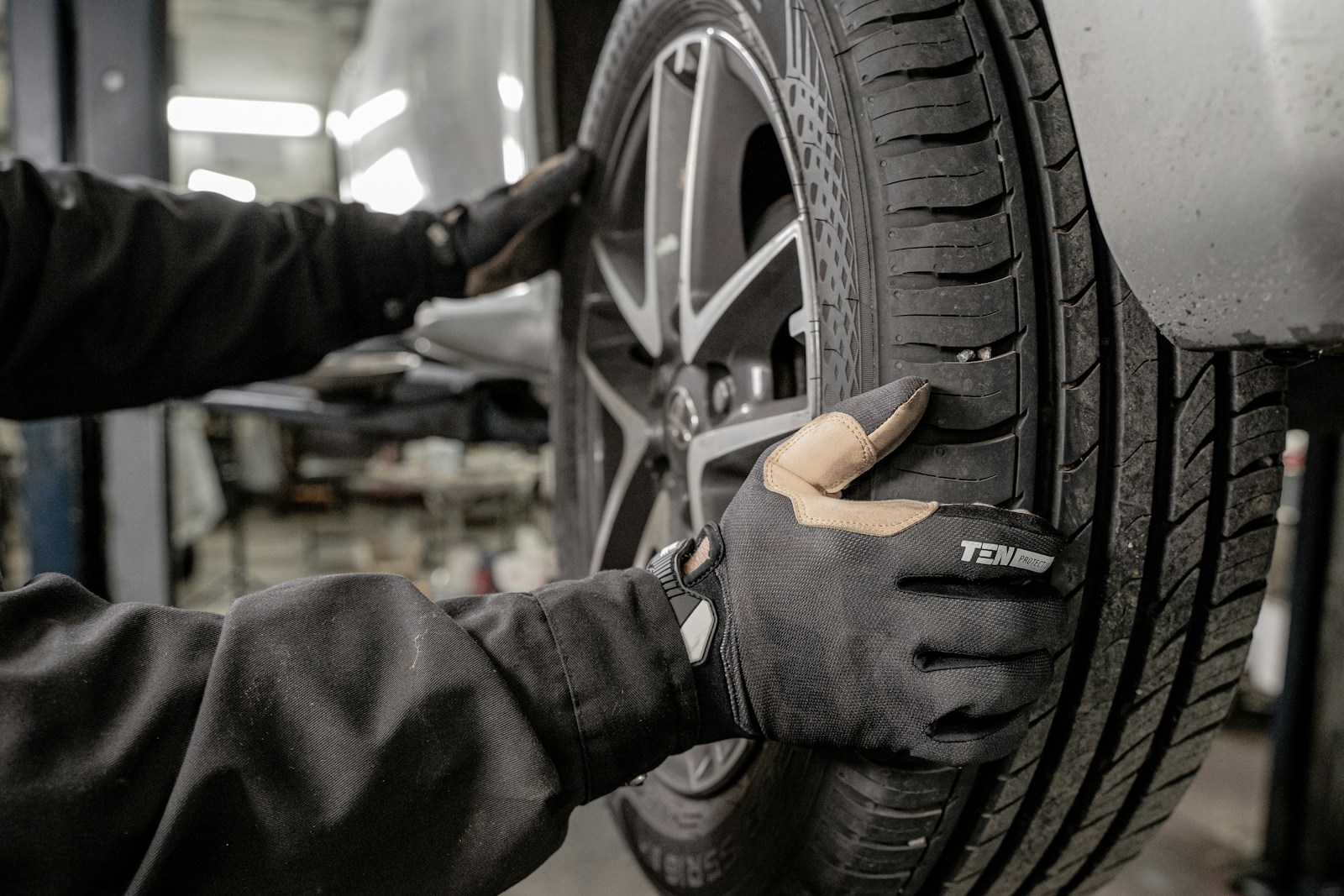
It started like the most boring errand on earth: a midweek tire rotation on a family crossover, the kind of vehicle that lives on crushed Goldfish crackers and school pickup lines. The owner dropped it off in the late morning, told the counter guy they just wanted the tires rotated and a quick check because the steering wheel had a faint shimmy on the highway. Nothing dramatic. No warning lights, no weird noises, no “my car did a thing” mystery.
The shop was one of those national chains where the waiting area smells like burnt coffee and rubber, and the TV is always tuned to something loud. The tire tech assigned to the job was young, moving fast, and doing that confident, slightly annoyed thing techs do when they’re juggling too many cars and too few lifts. He pulled the crossover in, popped the lugs, and started the rotation like he’d done a thousand times.
Somewhere in that routine, the day went sideways in a way you don’t find out about until you’re rolling along a side street at 45 mph and you feel the steering go light for half a second, like the car just stepped on a banana peel.
The Routine Job With a Weird Extra Step
The crossover came in with a spare mounted underneath—one of those temporary spares most people forget exists until it’s raining and they’re stranded. The owner had mentioned, almost as an afterthought, that a different shop had put the spare on for a flat a couple months earlier and then swapped it back. The tech nodded, like “cool story,” and kept moving.
When he got the wheels off, he noticed something that should’ve triggered a pause: the spare wheel didn’t match the set. Not just “the tire is smaller,” but the wheel itself looked different—different stamping, different offset, and the lug holes looked… off. Instead of stopping to check the bolt pattern and stud size, he did what rushed people do: he assumed it was fine because it was “for that car.”
The shop’s rotation process was basic: fronts to rear, rears to front, maybe cross if it’s non-directional. But the spare ended up getting dragged into the mix because the tech apparently thought he was doing the customer a favor by “cycling it in” or verifying fitment. That’s where the first small mistake turned into a stack of mistakes.
Mixing Up Lug Patterns Like They’re Interchangeable
There are bolt patterns that look close enough to tempt someone who isn’t paying attention. Five-lug patterns especially can be deceptive if you’re eyeballing them instead of measuring. The tech lined up the spare on a hub that didn’t match its pattern and forced it to work the only way it can “work” in that situation: by starting the lug nuts anyway and letting the wheel get pulled into place.
On the rack, with the vehicle in the air and the wheel spinning freely, you can miss the subtle wobble. You can also miss how the lug nuts don’t thread on smoothly when the studs and seats aren’t meant for that wheel. But you can’t miss it if you’re paying attention, because it feels wrong in your hands—like trying to screw a cap onto the wrong bottle.
He tightened them down with an impact, because that’s what you do when you’re moving fast and the foreman keeps walking by. The wheel seats aren’t designed to be “persuaded,” but impact guns are very good at persuading. In a couple seconds, the spare was bolted to a hub with different studs, held there by pure clamping force and a prayer.
The Pickup, the First Clues, and the Denial Phase
When the owner came back, the car was parked out front like everything was normal. The receipt showed the usual rotation and torque check, and the service writer did the cheerful script: “All set, you’re good to go.” The owner asked if they found anything on the shimmy, and the writer shrugged and said the tires looked fine.
Within a few blocks, the owner felt something that didn’t match the usual “my tires need balancing” vibration. It was more of a rhythmic thump, like a shoe in a dryer, and it got worse as the speed came up. They turned off the main road, thinking they’d loop back and complain, but didn’t want to be that person who storms right back over a phantom noise.
The crossover hit about 45 mph on a side street—nothing wild, just cruising between lights. That’s when the noise changed from “something’s off” to “something is actively coming apart.” A sharp crack, a violent shake through the steering column, and the whole front end suddenly felt like it was trying to hop sideways.
The Moment the Wheel Gave Up
It didn’t blow like a tire. It failed like metal fails: a harsh snapping sound and a jolt that made everyone in the cabin go silent at once. The driver instinctively eased off the gas and held the wheel steady, heart hammering, trying not to overcorrect and put the car into a curb or a parked truck.
When they got it stopped, they stepped out and saw the front wheel didn’t look round anymore. The rim had cracked at the lug area—spiderweb fractures radiating out from where the lug nuts sat. It was the kind of damage that makes your stomach sink because you don’t need a mechanic to tell you this isn’t “normal wear.”
They called the shop from the side of the road with that tight, controlled voice people use when they’re trying not to scream. The service writer started with the standard troubleshooting questions, until the owner said, “No, I’m looking at a cracked wheel. It’s the spare. Why is the spare on the front?” There was a long pause that said more than any apology could’ve.
The Shop’s Backpedal and the Ugly Details
A tow truck brought the crossover back on a flatbed, which is a special kind of humiliating for everyone involved because the car is literally arriving as evidence. In the bay, with the wheel off, the mistake was obvious in a way that made people suddenly talk quieter. The studs showed fresh, angry-looking wear, and the lug seats didn’t match the wheel’s holes—wrong taper, wrong mating surface, wrong everything.
The tech tried to explain it like a misunderstanding. He said the spare “looked like it matched,” and that he “got it to seat,” like that was the goal. The senior guy in the shop didn’t even argue; he just had that exhausted expression of someone mentally replaying the last hour and calculating how expensive it’s about to get.
The owner, standing there with their arms folded, wasn’t yelling so much as asking extremely pointed questions. Why did the shop install a wheel that wasn’t already on the car when they were only paid for a rotation? Why wasn’t fitment checked? Why was an impact used if it didn’t thread smoothly? The answers weren’t satisfying, because there wasn’t a good answer that didn’t boil down to “we were rushing and didn’t check.”
Then came the more unsettling part: the wheel didn’t just crack for fun. It cracked because it was under stress it was never designed to handle, clamped onto studs it didn’t properly center on, being forced to run true at speed. The owner kept saying, quietly, that their kids ride in this car, and each time they said it the room got tighter.
Fallout: Money, Blame, and the Part They Can’t Undo
The shop offered to replace the damaged wheel and cover the tow, but it wasn’t immediately clear what “replace” meant when the spare wasn’t even the right wheel for the vehicle. The owner wanted OEM, not “something that fits,” and they wanted the hub and studs inspected for damage. The manager nodded a lot, using careful language about “making it right” without admitting, on paper, that someone bolted the wrong pattern to the wrong hub.
The tech got pulled off the floor, and you could see him hovering near the back like he wanted to disappear into the tire rack. The owner watched every movement now, like they didn’t trust the shop to put air in a balloon without supervision. The manager was stuck in that awkward middle ground: trying to keep a customer from calling corporate while also trying not to throw his employee under a bus in front of everyone.
By the time the crossover was back on proper wheels, the owner wasn’t relieved so much as rattled. A cracked wheel at 45 mph on a side street is a warning shot; it’s easy to imagine the same failure on the highway, in rain, next to a concrete barrier. They drove away with paperwork, a promise of reimbursement, and that lingering, unresolved anger that comes from realizing how thin the line is between “routine service” and “catastrophic mistake,” especially when nobody in the shop seems able to say, out loud, the part that’s hardest to swallow: it happened because someone decided “close enough” was good enough on the one thing holding the car to the road.