
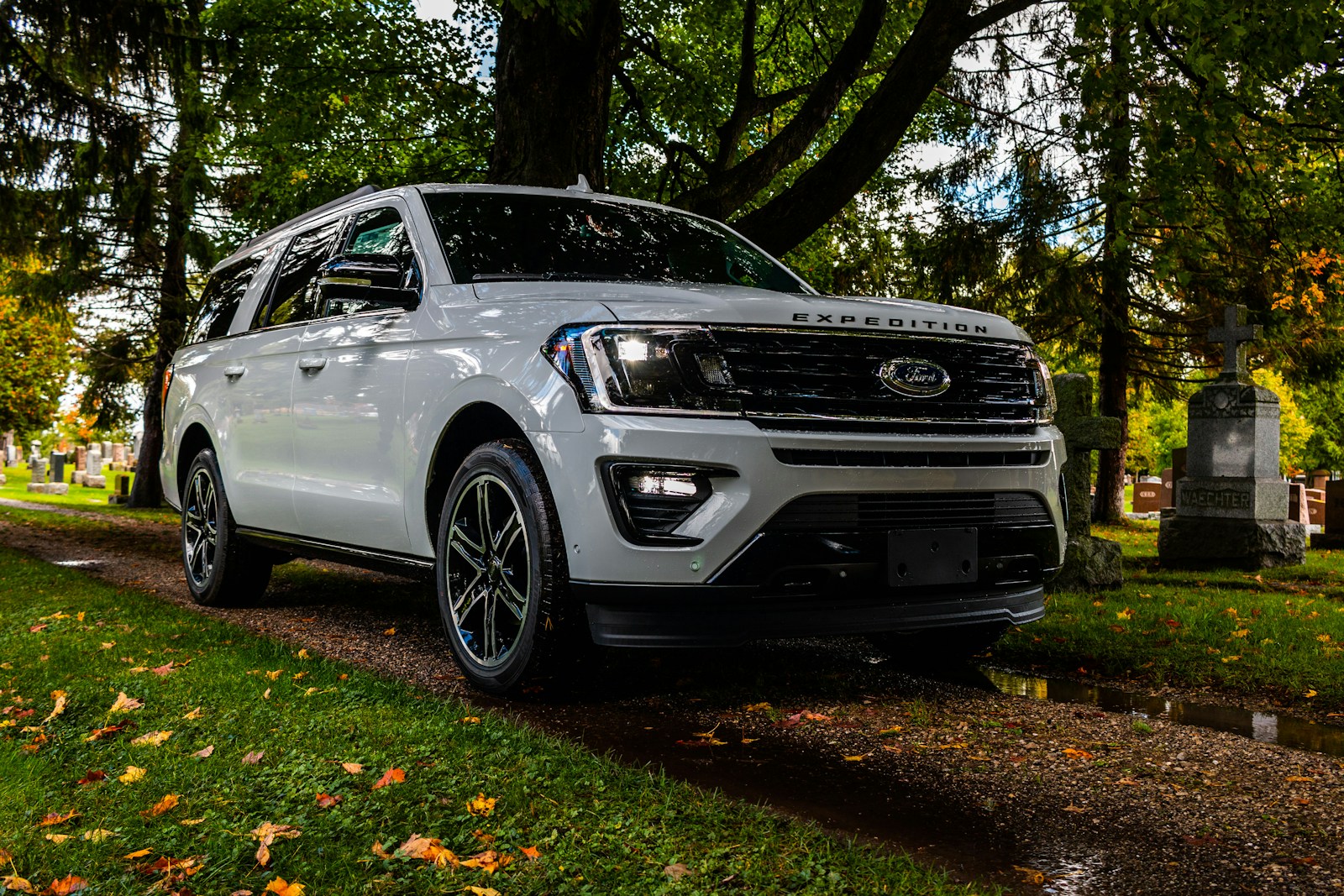

The full-size SUV segment has two heavyweights battling for family dominance, and both promise space, power, and capability. The 2026 Ford Expedition and 2026 Toyota Sequoia each bring distinct advantages to families who need a vehicle that can handle school runs during the week and trail adventures on weekends. For families prioritizing off-road capability with fuel efficiency, the Toyota Sequoia’s hybrid powertrain and available off-road packages give it an edge, while the Ford Expedition offers superior cargo flexibility and a more refined highway ride.
Choosing between these two prominent full-size SUVs isn’t straightforward since both excel in different areas. The Sequoia leans into rugged capability with its standard hybrid system and Toyota’s off-road pedigree. The Expedition counters with multiple engine options, class-leading interior space, and technology features that make daily family life easier.
Understanding how these vehicles perform beyond the pavement helps families make the right choice. Both SUVs offer three rows of seating and robust towing capabilities, but their approaches to handling rough terrain, managing fuel consumption, and integrating modern technology differ significantly.
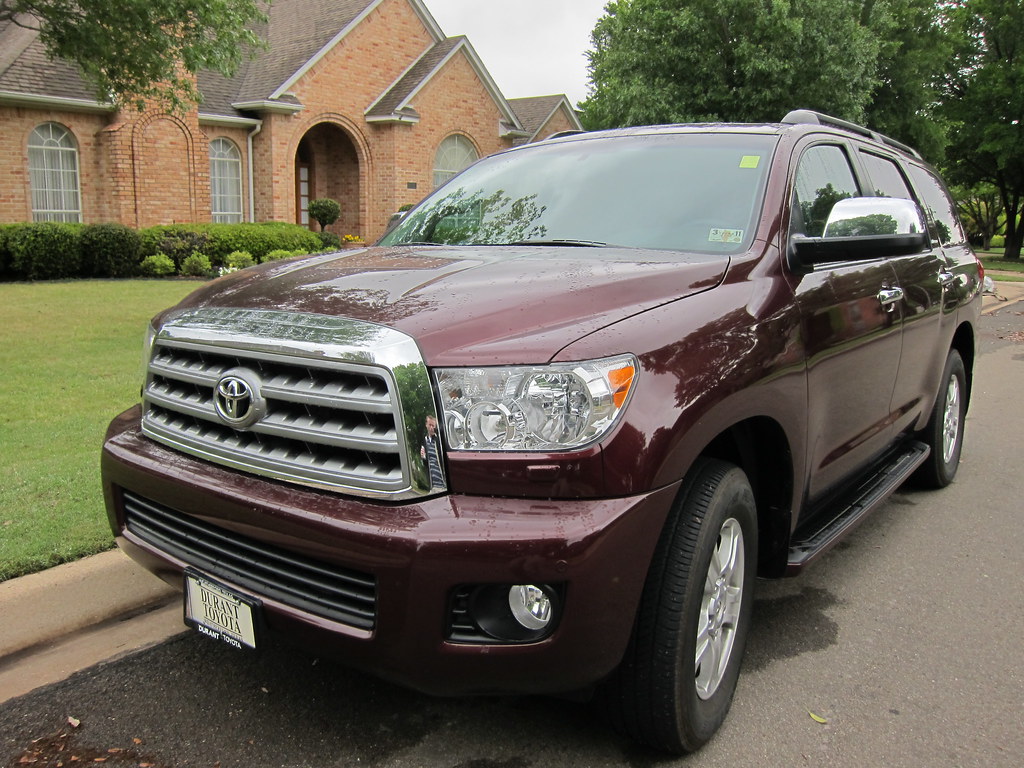
Toyota Sequoia vs Ford Expedition for Off-Roading Families
The Toyota Sequoia and Ford Expedition each deliver distinct approaches to family adventures beyond the pavement, with differences in ground clearance, powertrain philosophy, and interior versatility that matter when the trail gets rough and the passenger count climbs.
Off-Road Capabilities and Adventure Trims
The Ford Expedition Timberline stands out with 10.6 inches of ground clearance, compared to 9.1 inches on the Toyota Sequoia TRD Pro. That extra clearance translates to better obstacle navigation on rocky trails and deeper rut crossing.
Approach and departure angles favor the Expedition Timberline as well, with 28.5 degrees up front and 23.7 degrees at the rear. The Sequoia TRD Pro manages 23 degrees and 20 degrees respectively. These measurements determine how steep a hill families can climb or descend without scraping bumpers.
Both vehicles offer dedicated off-road trims with upgraded suspensions and underbody protection. The Timberline rides on specially tuned shocks, while the TRD Pro features Toyota’s FOX internal bypass shocks. Families who regularly tackle trails will notice the Expedition’s superior breakover angle of 21.9 degrees, though the Sequoia counters with proven reliability in harsh conditions.
Performance Powertrains and Towing Strength
The Toyota Sequoia’s i-Force Max hybrid system pairs a twin-turbo V6 with an electric motor to produce 437 hp and 583 lb-ft of torque. The Ford Expedition uses a non-hybrid 3.5-liter twin-turbo V6 making 440 hp and 510 lb-ft.
That torque advantage helps the Sequoia when hauling camping gear up mountain grades. However, the lighter Expedition hits 60 mph in 5.3 seconds versus 6.2 seconds for the heavier Sequoia.
Towing capacity sits nearly identical, with the Expedition pulling 9,200 pounds and the Sequoia managing 9,050 pounds. Both handle travel trailers, boat rigs, and toy haulers without strain. The Sequoia’s hybrid drivetrain delivers better fuel economy during daily commutes between weekend adventures.
Family Space, Seating, and Cargo Flexibility
The Ford Expedition provides 104.6 cubic feet of cargo volume behind the first row, significantly more than the Sequoia’s 86.9 cubic feet. That difference matters when packing camping gear, coolers, and sports equipment for a family of six or seven.
Both full-size SUVs seat up to eight passengers across three rows. The Expedition Max stretches the wheelbase for additional legroom, though this variant isn’t available in Timberline trim. Third-row access proves easier in both vehicles than mid-size competitors.
Families appreciate the Sequoia’s available captain’s chairs in the second row, which create a center aisle to the third row. The Expedition offers similar configurations across its trim levels, including the upscale King Ranch. Storage cubbies, charging ports, and cup holders throughout both cabins keep devices powered and drinks secure on bumpy trails.
Daily Driving Comfort, Efficiency, and Tech for Modern Families
Both SUVs deliver hybrid power and advanced technology, but the Toyota Sequoia’s turbo hybrid powertrain offers better fuel economy while the Ford Expedition provides more cargo space and a responsive 10-speed automatic transmission.
Fuel Economy and Powertrain Comparisons
The Toyota Sequoia uses a 3.5-liter twin-turbo V6 hybrid system producing 437 horsepower and 583 lb-ft of torque. This turbo hybrid powertrain achieves 18 mpg combined, making it more efficient than most full-size SUVs. The hybrid system provides instant torque for passing and merging on highways.
The 2024 Ford Expedition uses a 3.5-liter twin-turbo V6 without hybrid assist, generating 440 horsepower and 510 lb-ft of torque. Paired with a 10-speed automatic transmission, the Expedition delivers smooth shifts and strong acceleration. However, it returns approximately 17 mpg combined, slightly less than the Sequoia.
For families covering long distances, the Sequoia’s improved efficiency translates to fewer fuel stops. The 2025 Ford Expedition maintains the same powertrain setup. Both vehicles require premium fuel for optimal performance, though regular unleaded remains acceptable.
Infotainment, Connectivity, and Driver Assistance
The Expedition features a 12-inch touchscreen with SYNC 4 software, offering wireless Apple CarPlay and Android Auto. The interface responds quickly to inputs and includes split-screen functionality. Ford Co-Pilot360 comes standard, bundling adaptive cruise control, blind-spot monitoring, and automatic emergency braking.
The Sequoia includes a 14-inch touchscreen with Toyota’s latest multimedia system. It also supports wireless smartphone integration and voice commands. Toyota Safety Sense 2.5 provides similar driver assistance features, including lane-keeping assist and road sign recognition.
Both systems integrate well into daily routines. Parents appreciate the ease of switching between navigation, music, and phone calls. Rear-seat entertainment systems are available on higher trims, keeping kids occupied during road trips.
Ownership Costs, Safety, and Value
The 2024 Ford Expedition starts around $57,000, while the Sequoia begins near $60,000. The Expedition’s lower entry price appeals to budget-conscious families, though comparable trim levels often price similarly.
Both vehicles earn top safety ratings from federal crash tests. The Sequoia’s hybrid components carry an 8-year/100,000-mile warranty, providing extra peace of mind. The Expedition offers a standard 3-year/36,000-mile bumper-to-bumper warranty.
Maintenance costs remain comparable between the two. The Sequoia’s hybrid system requires less frequent brake service due to regenerative braking. Insurance rates vary by location and driver history but typically align closely for these vehicles.
More from Steel Horse Rides: