


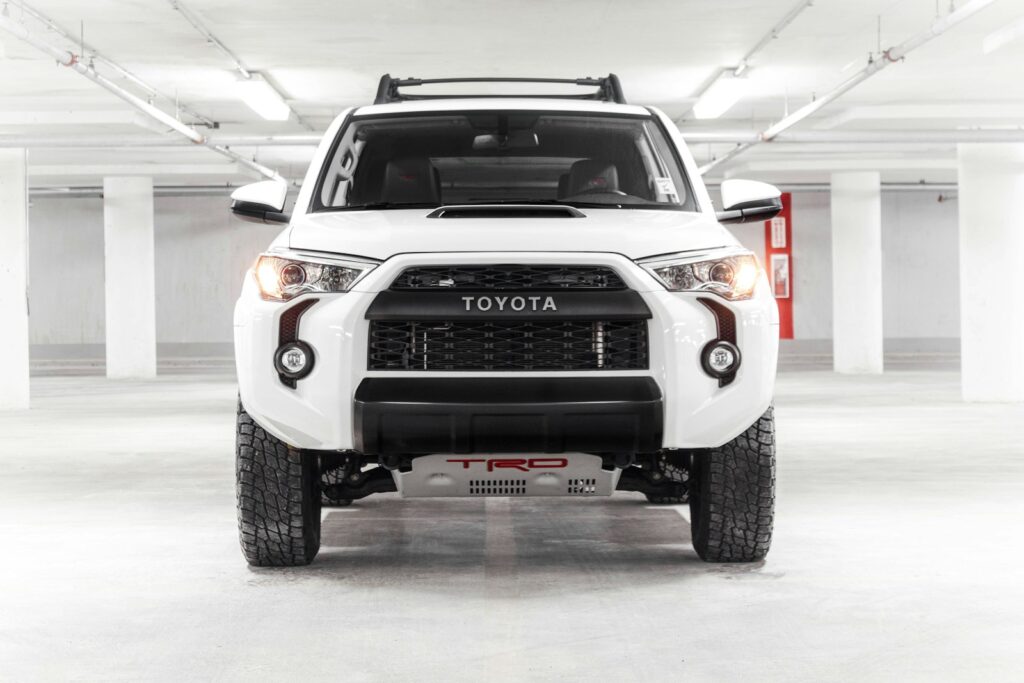
Toyota’s half-ton pickup is once again coming out on top in the two most closely watched cost-of-ownership benchmarks in the industry, while a very different truck is winning the argument over which one holds up best once the warranty runs out. Kelley Blue Book’s ownership-cost analysis put the Toyota Tundra ahead of every other full-size truck, projecting a five-year cost to own of $48,254, nearly $11,000 below the segment average once insurance, fuel, maintenance, repairs, and depreciation are factored in against the vehicle’s projected resale value (Kelley Blue Book). Vincentric, the ownership-cost analytics firm that fleet buyers and manufacturers both rely on, reached a similar conclusion in its 2025 awards, naming the Tundra the lowest-cost full-size half-ton pickup to own and reporting that its total ownership costs ran $1,719 below its nearest competitor across eight cost categories: depreciation, fees and taxes, financing, fuel, insurance, maintenance, opportunity cost, and repairs (Vincentric).
Ram 1500 dominates the broader fleet data
Zoom out to a wider set of configurations and a different truck takes over. Automotive Fleet’s review of Vincentric’s segment study, which scored 349 half-ton pickup configurations from the 2024 model year over a five-year, 15,000-mile-per-year ownership cycle, found six Ram 1500 trims occupying the top spots for lowest overall cost per mile, led by the Ram 1500 Tradesman Regular Cab at roughly 79 cents per mile. Three Ford F-150 variants and a single Tundra configuration rounded out the rest of the top ten (Automotive Fleet). The gap between Ram’s strongest showing here and Toyota’s award-winning results is a reminder that cost of ownership swings heavily by trim and cab configuration within the same truck line, not just between brands.
What Edmunds’ 2026 figures show trim by trim
Edmunds’ True Cost to Own tool, which projects five-year ownership expenses including depreciation, taxes and fees, financing, fuel, insurance, maintenance, and repairs on 15,000 annual miles, shows just how close the current-generation trucks run against each other when comparing their most accessible trims. The 2026 Toyota Tundra Double Cab SR comes in at $43,415 over five years, helped by relatively low projected depreciation of $9,798. The base 2026 Chevrolet Silverado 1500 Work Truck regular cab lands at $45,535, and the 2026 Ram 1500 Crew Cab Express projects to $50,778. The 2026 Ford F-150 XLT SuperCrew, a more heavily equipped configuration than the other three, comes in highest at $57,562 (Edmunds Tundra, Edmunds Silverado, Edmunds Ram 1500, Edmunds F-150). None of these are apples-to-apples trims, so the totals say more about how equipment level moves the number than about which nameplate is inherently cheaper.
Maintenance costs alone tell a narrower story
Isolating just maintenance removes some of that trim noise. A Vincentric lifecycle analysis of six 2026 half-ton pickups over three years and 60,000 miles, reported by Work Truck Online, found the F-150 PowerBoost hybrid projected at $4,296 in maintenance spending, the lowest of the group, with the standard F-150, Ram 1500, and Tundra each requiring six scheduled service visits over that span. The two Silverado configurations studied needed eight visits and averaged roughly $5,982, a spread of nearly $1,700 against the PowerBoost (Work Truck Online).
Long-term dependability complicates the picture
Cost-of-ownership models are actuarial projections built from depreciation curves, insurance-rate tables, and manufacturer service schedules, not lived owner experience, and that distinction matters most once a truck passes the five-year mark these studies are built around. J.D. Power’s 2026 U.S. Vehicle Dependability Study, based on responses from more than 33,000 original owners of three-year-old vehicles collected between December 2024 and November 2025, ranked the Ram 1500 first in the large light-duty pickup segment after a 13-point year-over-year improvement, with the Chevrolet Silverado 1500 second and the Ford F-150 and GMC Sierra 1500 tied for third; the Tundra, despite its strong showing in the cost studies above, finished last in the segment (J.D. Power, MoparInsiders).
None of the organizations behind this data publish a true ten-year total, since five years and 75,000 miles is the industry-standard window both Vincentric and Edmunds use to keep depreciation and financing assumptions reliable. But the pattern that emerges from stacking these studies together holds useful signal for a buyer thinking a decade out. The Tundra’s resale strength and low projected repair costs give it a real head start through the years these studies actually measure, while the Ram 1500’s combination of the lowest per-mile fleet costs and now the best dependability score in its class suggests its advantage may compound rather than fade once a truck is out of its factory warranty. The F-150 PowerBoost’s maintenance edge and Silverado’s higher service frequency point toward similar trends past year five, even without a published number to prove it. Shoppers running the numbers over a true decade of ownership are best served treating these five-year figures as a floor, then weighing which brand’s reliability data gives them the most confidence the trend continues once the odometer passes 75,000 miles.