
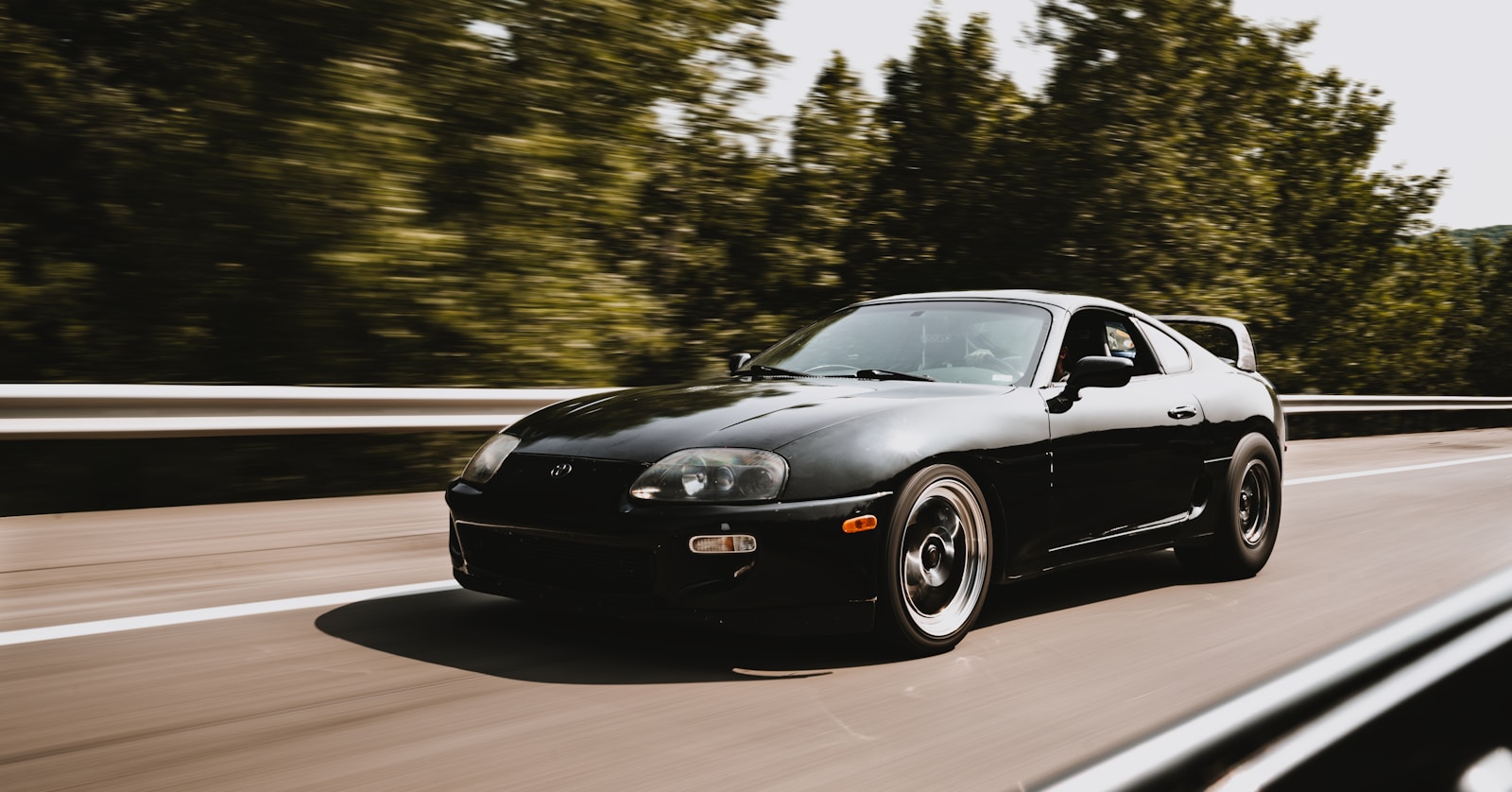

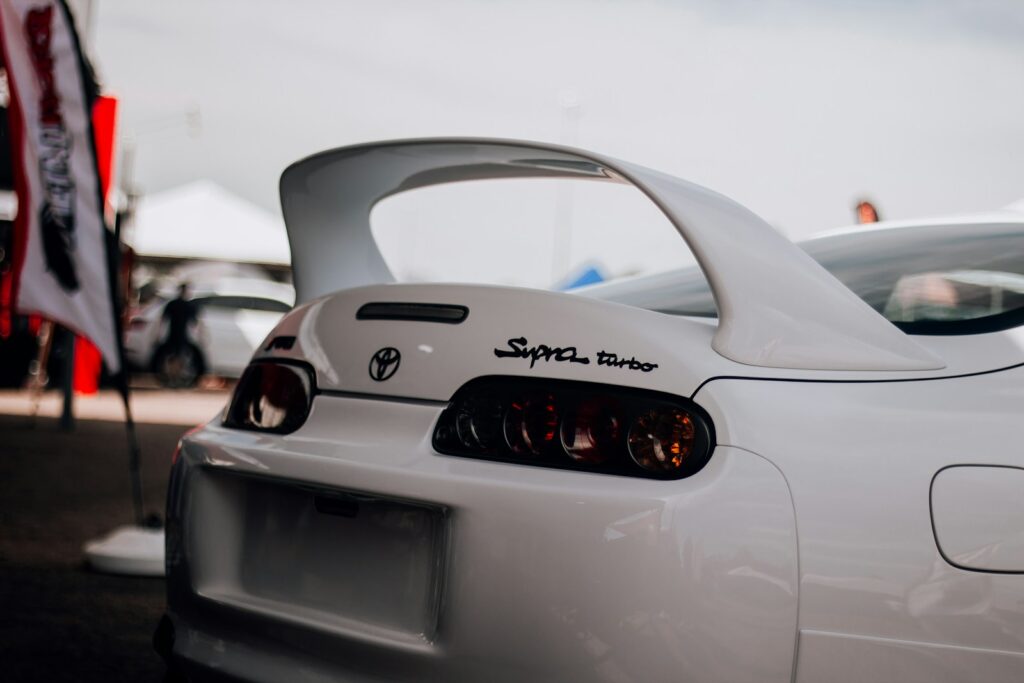
A 1998 Toyota Supra Turbo with 9,000 miles on the odometer sold for $220,000 at Mecum’s Kissimmee auction in January 2026 — nearly four times what Toyota is currently asking for a brand-new 2026 GR Supra wearing the same badge. That wasn’t a fluke bid or a one-off collector’s whim. A seven-thousand-mile 1994 Supra Turbo sold for $121,000 on Bring a Trailer, at the time the highest price ever paid for a factory Supra in an online auction. Toyota’s new GR Supra starts at $58,300 and tops out at $69,350 for the run-out MkV Final Edition. The car built in the 1990s, without a single component borrowed from another automaker, is now worth more than the car currently trading on its name.
A Nine-Thousand-Mile Time Capsule Outbid the New Car Three Times Over
Mecum’s January 2026 Kissimmee sale wasn’t even a record for a fourth-generation Supra — the auction house’s own listing notes at least two Bring a Trailer sales have gone higher. What it confirms is that $220,000 for a clean, low-mile, six-speed-manual Mk4 Turbo is now a normal outcome, not an outlier. Toyota only imported about 6,651 Supra Turbos to the U.S. across the entire 1993-1998 run, according to retail sales figures compiled by MKIV.com (11,239 Supras total once the naturally aspirated versions are included). The ones that survived unmodified with sub-10,000-mile odometers have effectively become a different asset class than the ones that got tuned, tracked, and eventually parted out.
Bring a Trailer Has Been Charting This Climb for Nearly a Decade
The $121,000 sale of a 7,111-mile 1994 Turbo didn’t happen in a vacuum. According to Hagerty’s coverage of the auction, a comparably low-mile 1994 Supra sold for $80,500 back in March 2018, and a 20,000-mile example brought $70,000 that October — both also on Bring a Trailer. That’s a jump of roughly 50 percent in under a decade for essentially the same car in the same condition bracket, on the same platform that keeps setting its own records. Hagerty’s writeup pegged the $121,000 result at roughly 30 percent above the concours-condition value estimate for the car at the time, which is the market openly telling appraisers they’re behind.
The ceiling goes even higher once you leave Bring a Trailer specifically. A 1998 Supra Turbo seized from a convicted Massachusetts drug trafficker sold for $308,725 including buyer’s premium at a Stanley J. Paine Auctioneers sale, according to Fox News. That car had just 22,962 miles on it and was one of 13 Supras the defendant had owned. It wasn’t a Bring a Trailer sale, and it came with a criminal-forfeiture backstory that goosed the bidding, but it shows six-figure Mk4 results aren’t confined to one auction platform or one buyer demographic.
Scarcity Stopped Accumulating for One of These Cars in 1998
Toyota has sold roughly 32,131 GR Supras in the U.S. across the entire 2019-2026 run, per sales data tracked by GoodCarBadCar — more total units than the original Mk4 sold across its whole production life, and Toyota is still adding to that count every model year. The Mk4’s scarcity is fixed: production numbers that stopped accumulating in 1998 can’t grow back no matter how much demand shows up decades later. The GR Supra’s relative rarity, by contrast, is a choice Toyota keeps making on purpose, which is a fundamentally different thing to a collector market than a car that simply cannot be manufactured again.
The New Supra Isn’t Even Fully a Toyota
Here’s the part that makes the price gap sting more for purists: the current GR Supra doesn’t stand entirely on its own the way the Mk4 did. According to BMW Blog’s reporting, the A90-generation GR Supra shares its inline-six engine, chassis, and electronics with the BMW Z4, and both cars are built side by side at Magna Steyr’s contract plant in Graz, Austria. Toyota didn’t have to build a six-cylinder engine from scratch to bring Supra back in 2019 — it borrowed BMW’s B58. That arrangement is also ending: Z4 production wraps in March 2026, and Toyota’s next Supra, due for the 2027 model year, moves to an in-house turbocharged hybrid four-cylinder making roughly 400 horsepower, dropping the BMW straight-six entirely.
The Mk4 earned its six-figure prices from a 2JZ-GTE straight-six that Toyota engineered, built, and over-engineered entirely in-house — durable enough that tuners routinely doubled its factory output without opening the block. The GR Supra earned its comparatively modest MSRP wearing a name that car built, on a chassis it shares with a roadster from a different company. That’s not a knock on how the new car drives; reviewers generally like it. It’s just a reminder that Bring a Trailer bidders aren’t paying up for a badge. They’re paying for the specific, unrepeatable combination of engineering and scarcity that made the badge worth reviving in the first place — and thirty years later, the market is still pricing that difference in real dollars.