

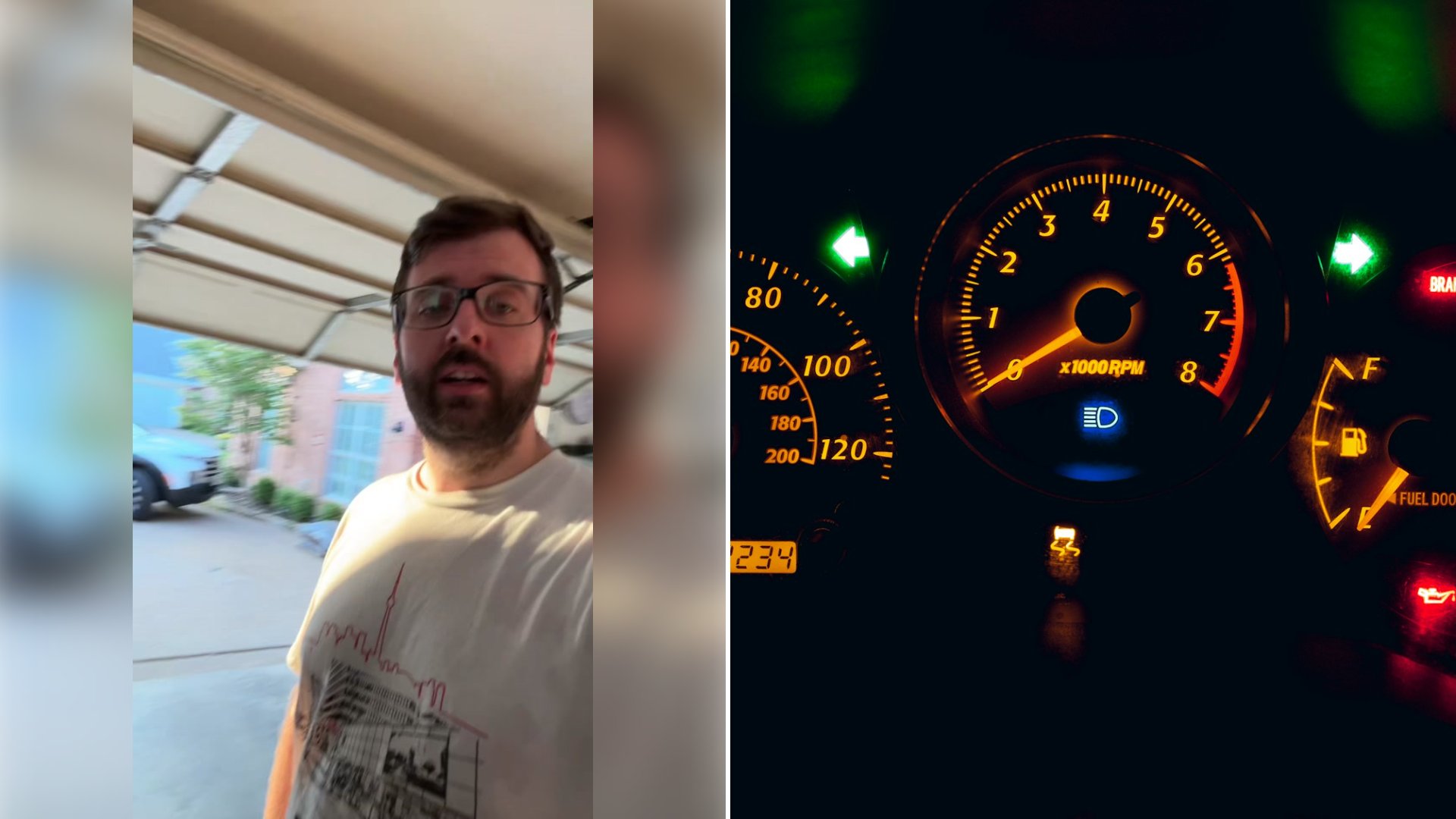
A hand reaches up under the dashboard of a white pickup, tugs on a wire and comes back holding a black plastic module with a printed label on one side. “Oh my god,” says the owner, laughing. “And that confirms it.”
The man posts on TikTok as @totouchanemu, and the video, posted on July 10, 2026, carries the on screen title “How I found a hidden GPS tracker in my truck.” He starts in his garage with the truck parked in the driveway behind him. “The other day I bought this truck,” he says, “and I’m pretty sure my dealer hid a GPS tracker in there and didn’t tell me.”
What tipped him off, he says, was an email. The message he shows on screen is headed “Welcome to CarRx!” and tells him to download the CarRx app, with a QR code and a registration step below it. In his words, the company told him, “Your dealer paid for a year of our service. Congratulations. Just sign up on the website and you’re good to go.”
Instead of signing up, he read the terms and conditions. He says they allow the company to pass customer data to marketing firms, and he scrolls through the page on screen. The list he shows covers the vehicle identification number, mileage, oil and battery status, fuel or charging history and diagnostic trouble codes, followed by speed, crash detection alerts, impact data and braking and cornering events. His summary: “They can track everything about your car. Everything. Location, mileage, braking events, all of it.”
That list is what made him look for hardware. “How do they know all that information about my car if they don’t have some sort of GPS tracker on it?” he says. He says a search told him trackers of this kind usually sit around the OBD port, the diagnostic socket under the dashboard on the driver’s side.
His first look turns up nothing. “Well, there’s nothing plugged in it,” he says, with the camera pointed up under the dashboard. Then he feels behind it and pulls a gray connector with a bundle of wires down into view. “So this looks like some sort of Y cable,” he says. One set of wires, he explains, is the pass through that feeds the OBD port itself. A second branch splits off from it.
He pulls on that branch, and the black module drops into his hand. Reading the label, he says it carries an IMEI number, which he takes to mean the unit has a SIM card and “can track you anywhere.”
Sitting in the driver’s seat with the module in his hand, he makes his complaint. “This was not sitting out for me to see,” he says. “It was tucked away and hidden. They didn’t want me to find this.” His caption reads, “The length companies go to track every little thing we do will never cease to surprise me.” He does not name the dealer, and the video ends before any conversation with it.
For a buyer who wants to run the same check, start with the inbox. His only notice was a welcome email from a company he had not signed up with, saying the dealer had already paid. If one of those arrives after a purchase, read the terms before registering and look for the list of vehicle data the service collects.
Then check the OBD port, and do not stop at an empty socket. His port had nothing plugged into the front of it. The splice was behind it, so reach up and feel for a connector with two sets of wires coming off it, then follow the set that does not lead to the port.
If you find a module, photograph it where it sits, photograph the label and keep the welcome email before you touch anything else. Those three things show what was installed, where it was placed and which service it reports to.
Then go back through the purchase paperwork line by line for the service or the device, and put the questions to the dealer in writing: who installed it, whether you were charged for it, whether it is active, and whether they will remove it and confirm that the service has been cancelled.
More from Steel Horse Rides
- 7 Things Car Dealers Love That Buyers Should Look at Carefully
- One Buried Clause Inside Ordinary Car Financing Paperwork Can Quietly Strip Away Your Right to Ever Sue the Dealer, and Almost Nobody Reads That Far Down
- One New Jersey Body Shop Owner Hid a Twenty Nine Dollar Apple AirTag Inside His Own Lamborghini Urus, and That Cheap Little Tracker Is Exactly What Ended a High Speed Police Chase