


He’d barely made it ten miles out of the truck stop before he noticed it again: that heavy, metallic bark every time he rolled into the throttle. It wasn’t just “a little loud for a diesel.” It was the kind of exhaust note that made people in sedans glance up from their coffee and look irritated before they even saw the rig.
The driver—mid-30s, steady work history, the type who kept his logbook neat and his cab cleaner than most—had bought the truck used a few weeks earlier. The previous owner had pitched it as “well-maintained, runs strong,” and it did. The only downside was the noise, and the driver figured it was a fix he could schedule once he cleared a couple loads and got ahead on cash.
Then the lights came on behind him: red and blue, close and insistent. He wasn’t speeding, wasn’t weaving, wasn’t even doing anything interesting. But the officer’s hand gesture was unmistakable—pull it over, now—and the driver felt that small cold drop in the stomach that comes with getting singled out for something you can’t talk your way around.
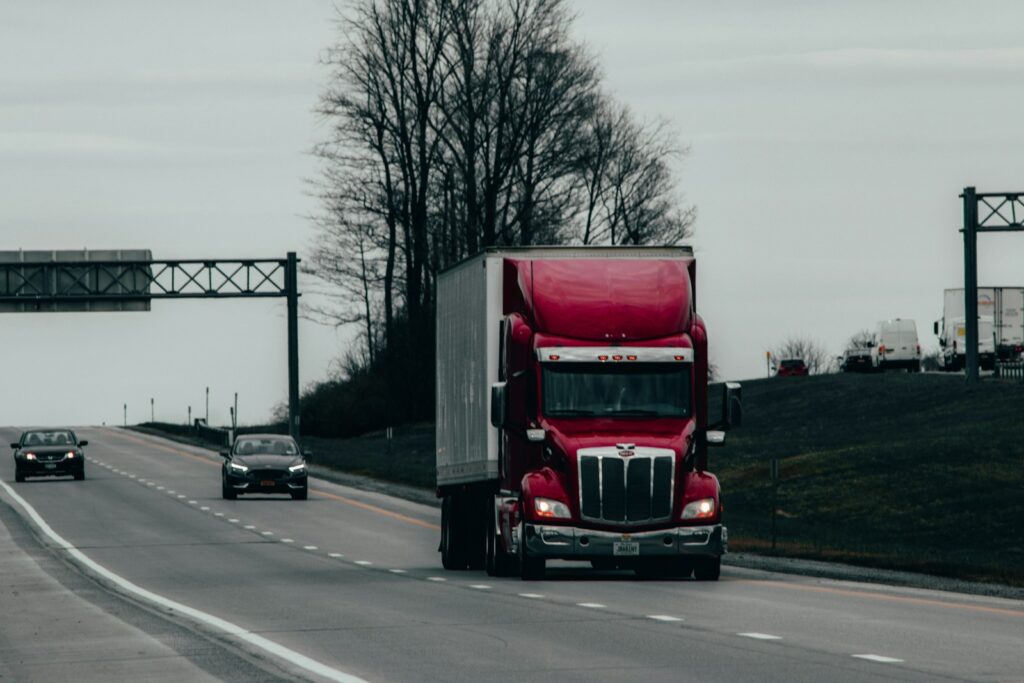
The Stop Starts Like a Routine Hassle
The shoulder was narrow, and the driver eased the truck down like he’d done a hundred times, hazards on, hands visible on the wheel. The officer walked up slow and cautious, not aggressive, just alert. Before he even got to the window, the driver could see him glance toward the stacks like he was listening for a rattle or trying to place the sound.
“You know why I stopped you?” the officer asked, and it wasn’t a trick question. The driver didn’t pretend innocence; he nodded toward the exhaust and said, basically, “Yeah. It’s louder than it should be.” He expected a warning or a ticket, maybe a “get it fixed within X days” kind of deal.
Instead, the officer asked for paperwork and started doing that quiet, methodical scan: registration, insurance, the VIN sticker, the little details drivers forget can suddenly become the whole day. The driver watched him walk back to the cruiser, and the rig sat there idling like a drumline. Cars passing by slowed just enough to rubberneck, like the stop was part entertainment, part cautionary tale.
“Pop the Hood” Turns Into “Where’s the Equipment?”
When the officer came back, he wasn’t holding a ticket. He was holding that look officers get when something doesn’t add up, the “this isn’t just loud” face. He asked if the driver could pop the hood and then requested access to the underside if possible, like he’d done this exact dance with this exact issue more times than he cared to count.
The driver complied, mostly because refusing only makes the moment sharper. He climbed down, released the latch, and the officer leaned in with a flashlight, not poking around randomly but checking specific areas. Then the questions started getting weirdly technical: emissions system, aftertreatment, whether the truck had ever thrown a check engine light, whether any work had been done recently.
The driver’s answers were honest and increasingly uncomfortable. He’d only owned it a few weeks. The previous guy said it was “deleted,” but the driver assumed that meant tuned or de-governed, not stripped. He’d heard people talk about deletes the way they talk about cutting corners—common, hush-hush, and always done by someone else, not you.
The officer straightened up and said something that immediately changed the temperature of the stop: “I think you’re missing components that are required for this truck to be legal.” The driver blinked, because a loud exhaust is annoying, but “illegal” is a different category. Illegal doesn’t mean “fix it later.” Illegal means “you might not be driving away.”
The Driver Realizes He Bought Someone Else’s Problem
The officer explained it in plain terms: it wasn’t just a muffler issue. Parts that were supposed to be there—emissions-related components, sensors, and the systems that keep the truck compliant—looked like they’d been removed. Not broken. Not replaced. Removed on purpose, with the kind of confidence that says whoever did it didn’t plan on answering for it later.
The driver tried to do the math out loud. He’d bought the truck in good faith. He had a bill of sale. The seller had mentioned “work done” but never said the thing was no longer road legal. He kept repeating, “I didn’t do this,” not as an excuse, but as a desperate statement of fact, like reality itself should care.
That’s when the officer hit him with the worst part: responsibility didn’t vanish just because the previous owner had dirty hands. The truck on the road was the truck on the road. If it was noncompliant, the driver behind the wheel was the one in the crosshairs, even if he’d never touched a wrench.
You could practically hear the driver’s internal calendar ripping apart—loads scheduled, payments coming due, the new-to-him truck that was supposed to be his ticket to stability. He asked if he could just limp it home. The officer didn’t say no immediately, which is sometimes worse, because it means the decision is going to be complicated and expensive.
Phone Calls, Receipts, and the Seller Who Suddenly Can’t Talk
The driver stepped away from the cab and started making calls like a man trying to stop a bleeding pipe with his bare hands. First was the seller. It rang and rang. Then it went to voicemail, the kind with a generic greeting that sounded like someone who expected to dodge people.
He texted, too—screenshots of the officer’s explanation, a blunt “Did you delete the emissions equipment?” message, then another asking if the seller would help pay to restore it. The reply, when it finally came, was slippery and infuriating: vague denial, “sold as-is,” and a suggestion that the driver “should’ve inspected it.” No apology. No acknowledgment that maybe selling a noncompliant commercial vehicle was a bigger deal than forgetting to mention worn tires.
The driver tried the shop the seller claimed had done the work. The shop either didn’t answer or claimed they had no record, which might’ve been true or might’ve been the safest thing to say on the phone. Meanwhile, the officer was patient but not sympathetic in a way that helped. He wasn’t there to mediate a bad deal; he was there because a truck was roaring down the highway missing equipment it needed.
At some point, the driver’s frustration turned into that hollow silence people get when they realize this isn’t a misunderstanding. This is a trap that already snapped. He stared at the truck—his truck—and it suddenly looked less like a tool and more like evidence.
The Roadside Decision: Ticket, Tow, or Something in Between
The officer eventually laid out the options, and none of them sounded good. There was the possibility of citations for equipment violations. There was the chance the truck could be placed out of service, meaning it couldn’t continue operating until it was brought back into compliance. And there was the practical reality that “bring it back into compliance” wasn’t a quick stop at an auto parts store.
The driver asked what it would take. The officer wasn’t a mechanic, but he’d clearly seen enough to know it wasn’t cheap: reinstalling deleted components, undoing tuning, making sure sensors and systems read correctly again. It’s not just bolting on a part; it’s reintroducing a whole chain of systems that were intentionally removed.
What made it extra brutal was the timing. The driver was working. He had a trailer. He had freight. Whatever happened next didn’t just affect him—it affected the customer waiting on that load, the dispatcher expecting a check-in, the entire thin margin of a job where one dead day can knock you off balance for weeks.
In the end, the officer did what officers sometimes do when they know the punishment is going to be felt either way: he made the situation official without turning it into a spectacle. The driver was issued citations and given a clear warning about continued operation. Whether he was allowed to move the truck under limited conditions or forced to arrange a tow depended on specifics, but the message was loud in its own way: this couldn’t just be ignored until the next oil change.
The Fallout Doesn’t Fit Neatly on a Ticket
After the stop, the driver’s day turned into logistics triage. Calls to his dispatcher, to a local shop, to anyone who could tell him whether he was looking at a couple grand or something that would eat an entire month’s income. Every answer came with a pause, a whistle through teeth, or that careful tone people use when they don’t want to say “You’re screwed” but also don’t want to lie.
He also had to face the reality of the paperwork he’d signed. “As-is” doesn’t mean “you get to sell a problem you created without consequences,” but it does mean the buyer’s options can shrink fast. And going after the previous owner is its own exhausting job—proof, lawyers, time off the road, a target that may already be planning to disappear behind a new phone number and a different marketplace listing.
The ugliest part was the embarrassment. Not because he’d done something reckless, but because he’d gotten played. A loud exhaust that seemed like a minor annoyance turned out to be the audible symptom of a bigger scam—one where the previous owner got the fun and the savings, and the next guy got the roadside interrogation and the bill.
By the time the truck was back in motion—whether limping to a shop, parked for repairs, or waiting on the next step—the driver was left with a kind of anger that doesn’t burn hot. It sits there, steady. Not just at the seller, but at himself for trusting a handshake and a “runs great” pitch, and at the system that doesn’t care who deleted what when the wheels are already turning.
The story doesn’t end with a neat resolution, because it rarely does. The truck is still his problem, the seller is still hard to pin down, and every mile he drives now comes with a new paranoia: another stop, another inspection, another officer who hears that exhaust and decides to take a closer look. The loudness that first seemed like a cosmetic flaw has turned into a countdown clock, and he’s the one listening to it tick.
More from Steel Horse Rides: