

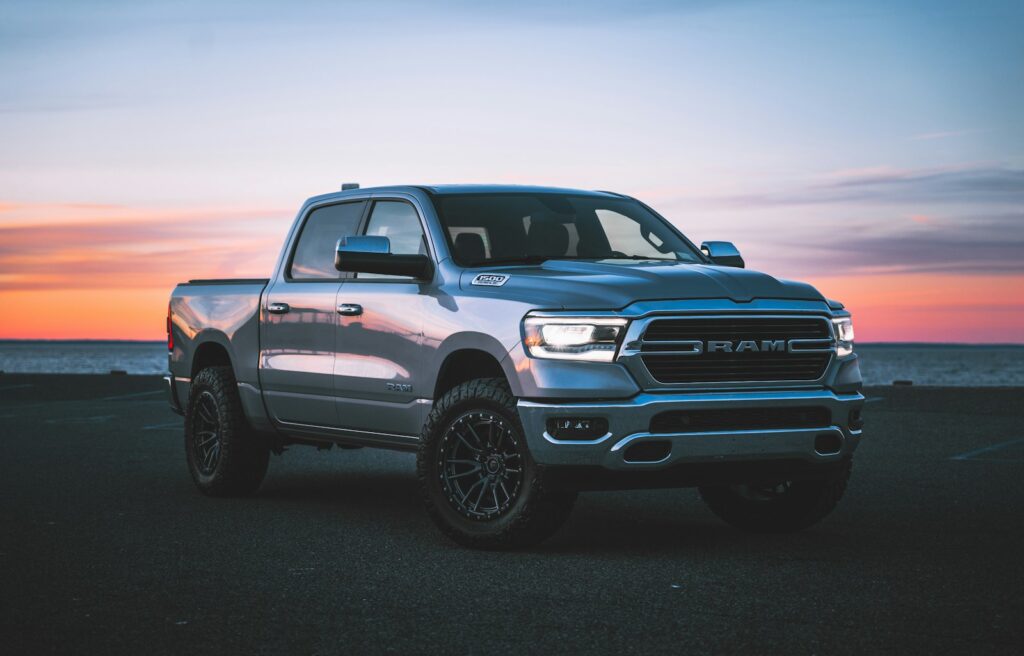
He bought the truck the way a lot of people buy trucks now: half for the work, half for the promise. It was supposed to be the grown-up purchase that paid for itself—reliable, capable, the kind of vehicle you keep for a decade and brag about hitting 200,000 miles with “just basic maintenance.” He wasn’t babying it, but he also wasn’t out there doing neutral drops at stoplights.
So when the transmission started acting weird at around 61,000 miles, it didn’t hit him as “oh no, something’s wearing out.” It hit him as math. His warranty had just ended—close enough that the ink still felt wet—and the first major drivetrain problem showed up like it had been waiting outside the door.
The part that really sent him over the edge wasn’t even the failure at first. It was what happened when he did the responsible thing and took it to the dealer, expecting some kind of help, a goodwill repair, anything. Instead he got the corporate version of a shrug: nothing.
The first sign something was off
It didn’t go from fine to dead in one dramatic moment. It started with little things he could almost talk himself out of—hesitation when it should’ve shifted smoothly, a clunk that felt like the truck was thinking too hard, a weird flare in RPMs like it briefly forgot what gear it was in. He noticed it most when merging or climbing, those moments when a transmission can’t hide behind gentle cruising.
He did what people do when a modern vehicle feels “off”: he started tracking it. Same stretch of road, same throttle, same symptoms. He checked the dash for warning lights and got the worst kind of reassurance—nothing lit up, which made it harder to prove anything was wrong until it was really wrong.
Eventually the shifting got so inconsistent it stopped being an annoyance and started feeling unsafe. It was the kind of thing where you don’t trust the truck to do the same thing twice, and you find yourself driving with one hand tense on the wheel waiting for the next lurch.
The warranty math and the dreaded appointment
By the time he called the dealer, he already knew what the conversation was going to orbit around. Mileage. Date. Service interval. He had the maintenance history lined up like he was preparing for court, because any time a major component fails near a warranty boundary, it becomes less about mechanics and more about timelines.
He brought it in and explained the symptoms, trying to sound calm and precise. Not “it’s acting weird,” but “it hesitates on the 2–3 shift,” “it surges under light throttle,” “it clunks when downshifting.” The service writer nodded in that practiced way that doesn’t mean agreement so much as it means, “I’ve heard this from twenty people today.”
Then came the quiet part: the warranty was done. Just over the line. The service desk didn’t have to say “too bad,” because the computer already did it for them.
They kept the truck long enough to make it feel official. He waited for the call the way you wait for a verdict, and when it came, it wasn’t a small fix. The transmission, they said, had failed—needed major work or replacement, the kind of number that makes your stomach drop because it’s not “annoying expense,” it’s “why did I buy this truck” money.
The dealer’s “nothing” offer
He asked the obvious question: is there anything you can do, given how close it is? Not a demand, not a threat—just that particular tone people use when they’re trying to give someone a path to be reasonable. In his mind, a failure that close to the warranty end should at least prompt some kind of goodwill conversation, some manufacturer assistance, a split cost, something.
The answer he got felt like it was delivered from behind bulletproof glass. There was no coverage, no goodwill, no “we can submit it and see,” no partial credit for loyalty or service history. The phrase he repeated later—what stuck in his craw—was that they offered “nothing.” Pay the full amount or pick up the truck as-is.
And that’s where the story stops being about a broken part and turns into a human conflict. Because “nothing” isn’t just a number, it’s a message. It tells the owner that the boundary is the boundary and the product’s promise ended the second the odometer clicked past it.
He tried to push, not in a yelling way, but in that exhausted, polite persistence that comes from knowing the stakes. He asked if they could contact the manufacturer. He asked if there were technical service bulletins. He asked if this was a known issue. The responses, as he described them, were a mixture of vague and final: they could fix it, but it was on his dime.
Back-and-forth, paperwork, and the awkward performance of “options”
The next phase was paperwork theater. The dealership offered what dealerships often offer when they can’t help: financing. Payment plans. The ability to turn a sudden multi-thousand-dollar failure into a monthly bill you’ll feel every time you start the engine.
They also floated the option of trading it in, which is its own kind of insult when the thing you’re trading in is currently wounded. Trade-in value drops when a transmission is failing, and everyone in the room knows it, even if no one says it out loud. He described the whole thing as standing there while people tried to sell him a way to lose money more smoothly.
He asked for specifics on the failure—what exactly had gone wrong, what codes it threw, what they found in the fluid, what parts were damaged. The more details he requested, the more the conversation seemed to slide back to the invoice total and the “approved repair” checkbox. It’s hard to prove a pattern when you’re being handed a bill and a pen.
At some point he took the truck back, because paying for a repair he didn’t fully trust felt worse than limping it home. That decision had its own consequences. Every rough shift on the drive back wasn’t just a mechanical symptom; it was a reminder that he was now the proud owner of a 61,000-mile truck with a problem big enough to make him avoid highways.
Trying to get leverage without losing his mind
Once the dealer route turned into a dead end, he started looking for other forms of leverage. He gathered service records, warranty documentation, and any evidence that the issue started before the warranty expired. He replayed the timeline in his head like a prosecutor: when the symptoms began, when he first noticed them, when he called, when he got the appointment.
He also started calling other shops, because if you’re out of warranty, the dealership isn’t automatically the best place to be. Independent transmission shops asked different questions—about driving conditions, fluid changes, whether the truck towed, whether there were any prior symptoms the dealer might’ve dismissed. They talked in probabilities instead of policies, which was refreshing and also terrifying, because probabilities don’t come with corporate responsibility.
He considered escalating to the manufacturer, but that’s its own maze. Phone trees, case numbers, polite representatives who sound sympathetic while never promising anything concrete. And the whole time, the truck sits there as both transportation and hostage, because every mile driven could make the failure worse and every day parked is a day he’s figuring out rides.
What made him angriest wasn’t that machines break. He understood that. What he couldn’t get past was the timing and the coldness of the response, like the truck went from “protected product” to “not our problem” in the space of a few dozen miles.
The part that sticks: trust, not the transmission
By the time he was telling the story, the transmission itself almost felt like a prop. The real damage was to his trust—trust that buying a newer truck meant fewer headaches, trust that the brand would meet him halfway when something catastrophic happened just outside the warranty, trust that doing maintenance and playing by the rules mattered.
He kept circling back to that word: “nothing.” Not “we can’t guarantee anything but we’ll try,” not “we’ll cover labor if you cover parts,” not “we’ll submit it for goodwill and see what happens.” Just a clean, closed door.
And he was left in the worst possible middle ground: the truck wasn’t old enough to feel disposable, but it wasn’t protected enough to feel safe. He could pay the bill and resent it, fight and lose time, or roll the dice with an independent shop and hope the fix didn’t turn into another saga. The transmission failure was at 61,000 miles, but the bigger failure—at least the one he couldn’t stop talking about—was the feeling that the moment he crossed a warranty line, the people who sold him the promise stopped seeing him at all.
More from Steel Horse Rides: