

The clip opens from the driver’s seat of a pickup parked under the canopy of a gas station at night. A carbon fiber steering wheel fills the frame, a howling coyote stitched into the center where a factory badge would normally sit, and three words float across the top of the screen: “SLEEPER F150,” followed by a wide-eyed emoji and a rocket.
The video comes from @boostedcyot, and the caption sets the terms before anything happens: “Can’t tell me this is the most sleeper F150 you have seen before.” Over the next half minute he makes his case without another word appearing on screen.
First comes the start. A hand reaches past the wheel and turns a key in the ignition, and the digital gauge cluster lights up behind the rim with a graphic of a truck on it. Through the windshield, the station’s pumps and price signs sit in the dark.
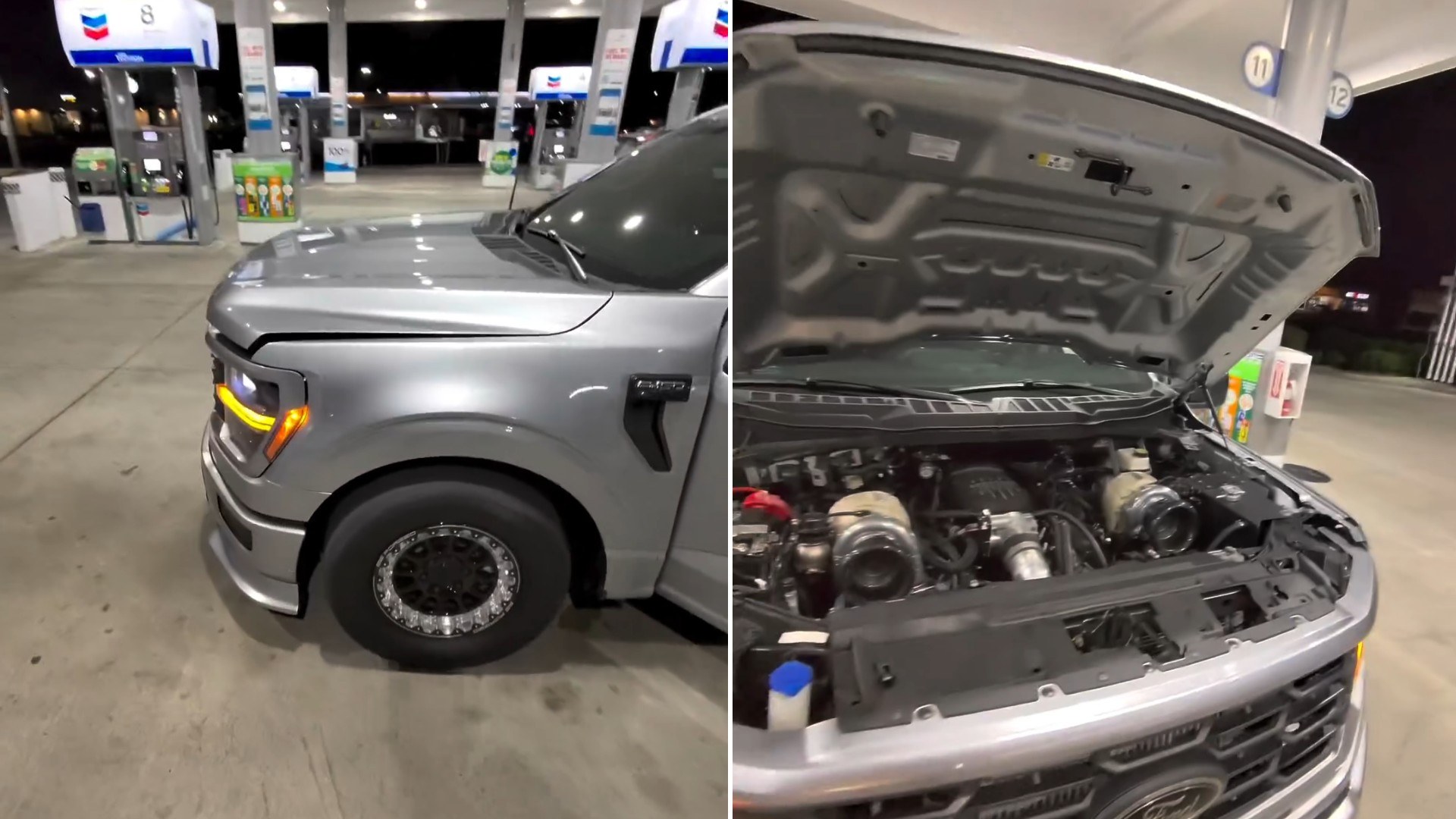
Then the door swings open. A tattooed forearm pushes it wide, a sneaker drops toward the concrete, and the camera follows its owner out and around the front fender. From the outside, the truck gives almost nothing away. It is a silver single cab with a body-colored front bumper, a dark grille, amber running lights and dark wheels, sitting a little low on the pavement. There are no stripes, no decals and no scoop cut into the hood. Parked at a pump, it could pass for a work truck with a nice set of wheels.
The camera lingers on that closed hood for a couple of seconds, looking down the factory creases in the sheet metal toward the windshield. Then the hood is up.
Two turbochargers sit in the engine bay, one on each side, tucked in behind the headlights with their inlets pointed forward. Between them, piping runs back toward the intake in the center of the engine. A hand sweeps into the frame, palm open, presenting the whole arrangement the way a host presents a prize. A few seconds later he backs away across the lot, and the video ends on a wide shot of the truck with its hood raised under the canopy lights.
That is the entire reel: 33 seconds, one location, one reveal. The hashtags do the rest of the labeling: “#f150 #ford #singlecab #turbo #twinturbo.”
What the video does not offer is a parts list. There is no power figure on screen, no turbo size, no mention of what was done to the engine to live with the boost. Ford calls its 5.0-liter V8 the Coyote, and both the account name and the animal stitched into the steering wheel lean on that word, but the clip itself never spells out a single specification. Anyone who wants the build sheet will have to ask him, and his caption invites exactly that with a request to follow the account “for more F150 content.”
Even without numbers, the reel is a tidy lesson in what makes a sleeper work, and it is worth breaking down for anyone planning one.
The first rule on display is restraint on the outside. Everything a stranger can see from the next pump over is paint, glass and a factory-style front end. The stance and the wheels are the only hints, and plenty of ordinary trucks have both. The hood has not been cut or vented to clear anything, which means the hardware underneath was packaged to fit a stock opening. That takes more planning than letting parts poke through, but it is the difference between a sleeper and a truck that announces itself.
The second is where he allowed himself to show off. The carbon fiber wheel and the coyote emblem are loud, but they live inside the cab, where only the driver and a passenger will ever see them. If you want personal touches on a build like this, the interior is the place for them.
The third is the body style. A single cab is the smallest and plainest version of a full-size pickup, the kind most people associate with fleets and job sites. Starting with the least glamorous configuration makes the surprise bigger when the hood opens.
There are practical points for the rest of us too. A truck like this is a reminder that a stock-looking exterior tells a used buyer very little, so always open the hood and look for parts the factory never installed before you agree on a price. If you are the one adding turbochargers, tell your insurer about the modification, because an undeclared engine change can complicate a claim. Check your state’s emissions and inspection rules before buying parts, since forced induction conversions on road vehicles are regulated differently from place to place. And budget for the pieces nobody films: more power asks more of the brakes, tires and driveline, and those upgrades matter more to daily safety than anything visible under a raised hood.
Finally, for owners who want to show off their own work, the format here is a good template. Start the truck, walk around it so viewers can judge the outside for themselves, then open the hood and let them look. He did it in about half a minute at a gas station, with three words of text on the screen.