

Ask a truck mechanic what the worst modification is, and you might expect a long argument. In a short answer, the mechanic behind @nucargarage gave a one-word reply: lift kits. There was no hedging, either. The verdict was that they are terrible.
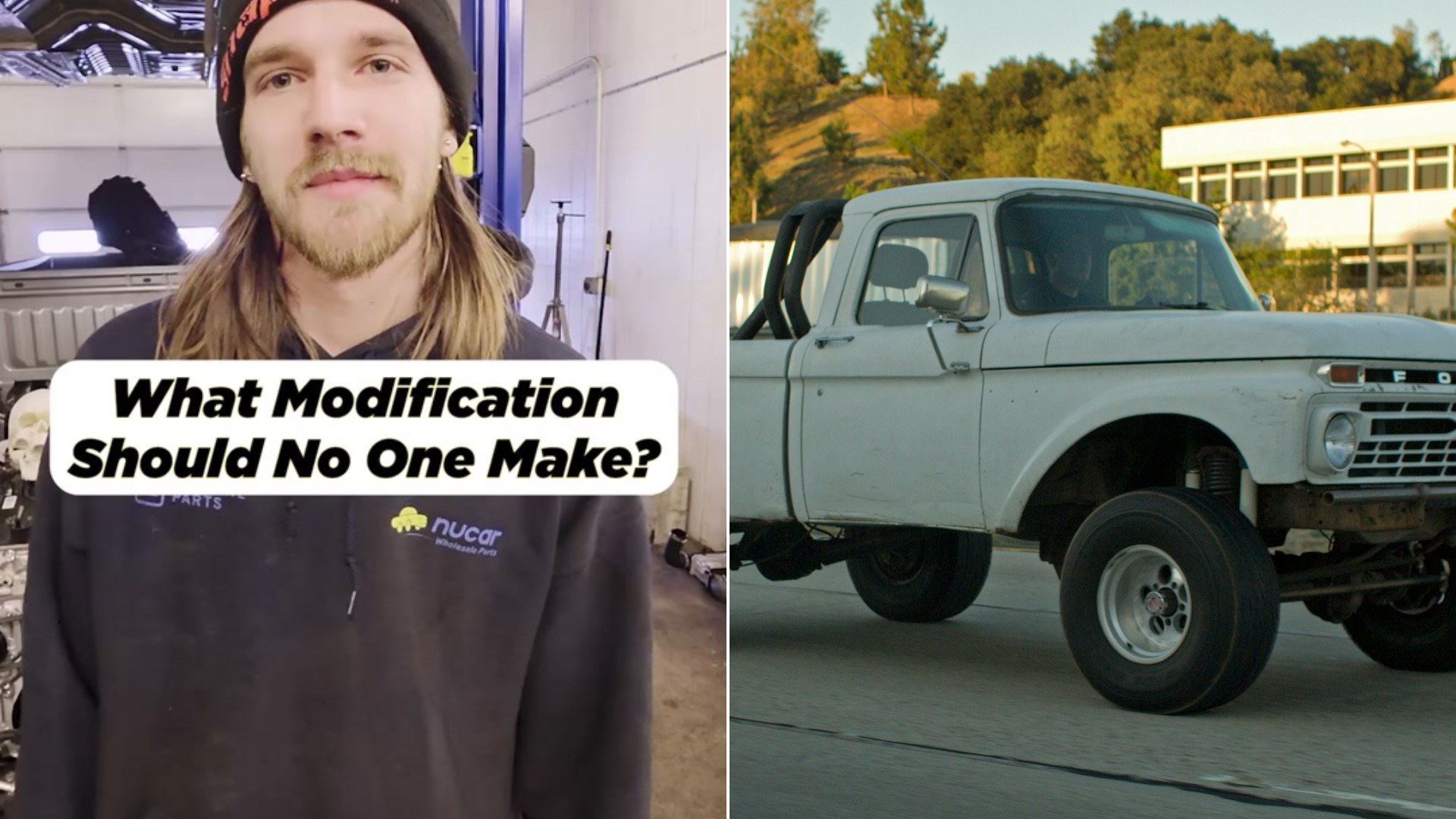
The question was what modification no one should ever make to a vehicle, and the answer packed a lot of complaints into a few seconds. If you own a pickup, or you have been thinking about raising one, it is worth understanding what the mechanic is getting at.
@nucargarage
What the mechanic said
According to the mechanic, lift kits destroy wheel bearings. They also wear out the suspension much faster than it should wear. Beyond that, lift kits are a hassle to work on, with alignments and all kinds of other issues, and they can make noise. The summary was blunt: they are just terrible, unless you go off-roading with them.
That last part matters. The point was not that anyone with a lifted truck is making a mistake. It was that if the truck never leaves the pavement, the lift brings costs without much benefit. The caption on the post, which mentions axles not being meant to live like this, hints at the same idea, though in the audio the talk is specifically about lift kits.
The mechanic did not go into detail about each problem, so here is what other sources say about why the complaints are so common.
Why a lift changes how a truck wears
A factory suspension is designed to work within a certain range of heights and angles. When you raise the truck, those angles change. According to a guide on alignment after a lift from American Fusion Wheels, lifting a truck changes the operating angles of the control arms, tie rods and linkages that connect the frame to the axles. On trucks with independent front suspension, raising the frame moves the control arms through a different part of their arc, which shifts caster, camber and toe.
The guide offers some rough numbers. On a small 2-inch leveling kit, caster can drop about 1 to 2 degrees and negative camber can increase about half a degree to a full degree. On a lift of 3 inches or more, the shift can be 3 degrees or more in caster and 2 degrees or more in camber, which the factory adjustments often cannot fix without aftermarket control arms.
The parts that take the hit
- Tires. This is the first place the cost shows up. Too much negative camber wears the inside edge, and wrong toe scrubs the tread. The same guide says badly misaligned tires can be ruined in as little as 5,000 miles.
- Ball joints and tie rod ends. When angles move outside their design range, these parts wear faster. The guide estimates a set of ball joints on a heavy-duty pickup at $600 to $1,000 installed and tie rod ends at $200 to $400 per side, though it notes those are the shop’s own estimates.
- Wheel bearings. The mechanic singled these out, and the guide lists them among the components subjected to forces they were not designed for. A lift often goes hand in hand with larger tires, and that matters a lot here.
- U-joints. According to Counterman’s look at how off-road tires affect bearings and joints, stock U-joints operate at roughly 1 to 3 degrees, and a 3-inch lift can push that to 5 or 6 degrees. The joint still works, but it wears faster.
Why bigger tires make wheel bearings work harder
Most lifts are installed so that bigger tires will fit. Counterman gives an example: a stock 31-inch all-season tire weighs about 40 pounds, while a 35-inch mud-terrain tire can weigh about 80. The article explains that the forces on the bearing and hub rise by more than the weight alone, because heavier mass multiplies the force.
Wheel offset also plays a role. Wheels are often pushed outward so that the tires clear the body, which shifts the load away from the center of the bearing. A taller tire is also a longer lever, and a heavier one adds even more force to it. Add an aggressive tread, which increases rolling resistance and vibration, and you can see why the mechanic says wheel bearings take a beating.
Warning signs to listen for
If you already drive a lifted truck, your ears can tell you a lot. The Counterman article lists these signs of a tired wheel bearing:
- Clicking on sharp turns
- A low-pitched rumble that changes with speed
- Grinding while the truck is moving
- A slight pull to one side
For U-joints, it lists a knocking sound when shifting, vibration that gets worse at highway speed and leaks from the transmission, transfer case or differential, since vibration can damage seals. Those are good reasons for the “making noise” complaint the mechanic mentioned.
If you decide to lift anyway
Plenty of owners use their trucks off-road, and for them a lift can be a real tool, not a style choice. If that is you, a few habits can reduce the downside.
- Get an alignment right after the lift. The American Fusion Wheels guide calls this non-negotiable, even if the truck seems to drive straight, because misalignment often shows up as uneven tire wear over thousands of miles instead of an obvious pull.
- Re-check it later. The guide suggests a check at 500 to 1,000 miles, then every 6,000 to 8,000 miles or six months for a lifted truck, and after any off-road trip. A standard four-wheel alignment runs about $80 to $150, and lifted trucks can cost more.
- Pick a shop that knows lifted trucks. Factory specifications may not apply at every lift height.
- Inspect parts before they fail. Counterman recommends checking wheel bearings, hubs and U-joints on vehicles with lifts or oversized tires, and choosing high-quality replacement parts.
- Keep the tires reasonable. Going up one size costs less in wear than going up three.
- Budget for upkeep. Expect to replace some suspension parts sooner than you would on a stock truck.
The bottom line
The mechanic’s message boils down to this: do not lift a truck just for looks if it will spend its life on pavement. You may end up paying for wheel bearings, suspension parts, alignments and tires long before a stock truck would need them. If you really do go off-roading, the picture changes, but the upkeep still deserves a plan. As with many modifications, the cost is not just the price of the kit. It is everything that comes after.