

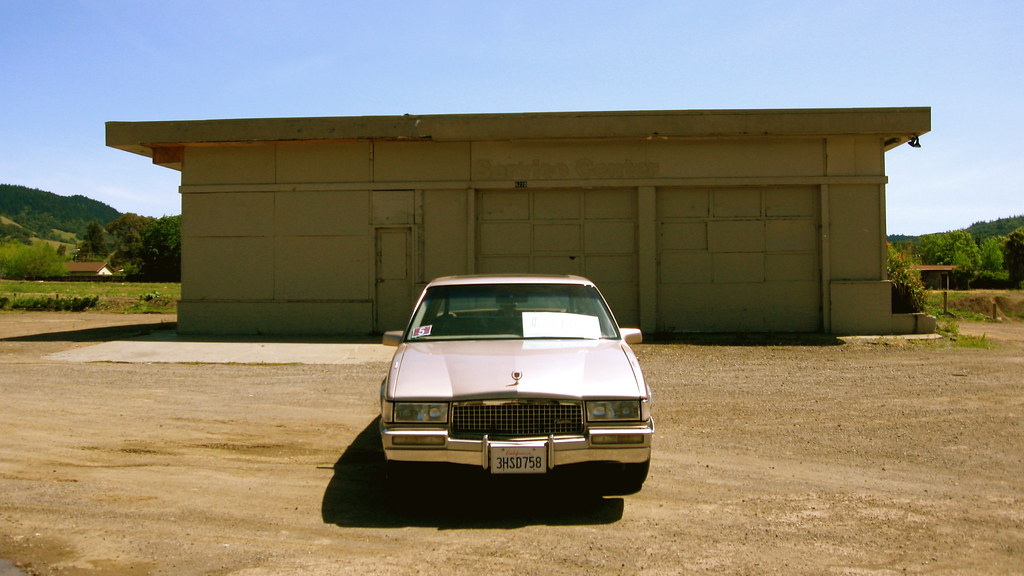
He’d picked the meetup spot because it felt safe and neutral: a big grocery store parking lot off the highway with good lighting, security cameras, and the kind of steady foot traffic that discourages anything too sketchy. The buyer showed up early with a code reader in his pocket and a buddy in the passenger seat, trying to look casual while he watched every car that turned into the lot.
The seller rolled in ten minutes late driving the car himself, which always reads as a good sign at first. He hopped out with that breezy confidence people get when they’ve already mentally spent your money, tossed out a quick handshake, and started talking over the hood like he was giving a tour. “Runs great,” he said, “just don’t need it anymore,” and then, like an afterthought, he added the line he’d apparently been practicing: “It’s an as-is sale, so… you know. As is means as is.”
The buyer didn’t argue. He just nodded, did the usual quick walkaround, and listened to the engine idle while trying to hear past the parking lot noise. Nothing sounded catastrophic, but there was something about how eager the seller was to keep the interaction moving—no dead air, no time for the buyer to get quiet and picky—that put a little grit under the buyer’s teeth.
The meetup that felt a little too rehearsed
They did the test drive with the seller riding along, which is normal enough, except the seller wouldn’t stop narrating. Every stop sign got a commentary about “smooth shifts,” every little bump in the road became proof the suspension was “solid.” When the buyer asked about maintenance records, the seller waved a hand and said he’d “always kept up with oil changes,” but couldn’t name a shop, couldn’t pull up a receipt, couldn’t even say what weight oil it took without guessing.
Back in the lot, the buyer pulled out his code reader and the seller’s posture changed just slightly—shoulders stiff, smile held a fraction too long. The scan came back clean. No stored codes, no pending codes, no history sitting there like a breadcrumb trail, which should’ve been reassuring.
The buyer still hesitated. He’d seen enough used-car weirdness to know that “clean” can mean “healthy,” but it can also mean “someone just cleared the slate.” He asked directly if the battery had been disconnected recently or if any lights had been on. The seller laughed, not offended exactly, but like the question was a little insulting, and said, “Nope. If there was a problem, I’d tell you.”
They settled on a price that felt fair for the mileage, the buyer handed over cash, and they did the quick paper shuffle—title, bill of sale, the seller’s phone flashlight held under the clipboard. The seller repeated the line one more time, slower now: “As is means as is.” Then he climbed into his other car and drove off before the buyer even merged onto the main road.
Twelve miles of false peace
For the first ten miles, the buyer actually relaxed. The car tracked straight, the temperature gauge stayed polite, and the radio worked, which always feels like a small miracle in older vehicles. He even started thinking the seller had just been one of those defensive people who’d gotten burned once and now treated every transaction like a legal deposition.
Then the check engine light blinked like it had been waiting for privacy. Not a gentle, steady glow either—an urgent, flashing warning that makes your stomach drop because it’s the car’s way of saying, “Stop pretending this is fine.” The buyer eased off the gas, and the engine stumbled, recovered, and stumbled again like it was trying to clear its throat.
He made it another mile before the power vanished in chunks. The steering got heavy, the throttle stopped responding, and the engine noise turned into a rough, metallic coughing that sounded expensive. He guided it onto the shoulder, put on the hazards, and sat there for a second staring forward like the road might offer a refund.
His buddy didn’t say “I told you so,” but he didn’t have to. The buyer popped the hood more out of ritual than optimism and got hit with that warm, cooked smell that doesn’t belong in a healthy engine. Nothing obvious was dangling or spraying, but the whole thing looked like it had just run a sprint it wasn’t trained for.
The “clean” scan that suddenly didn’t feel clean
On the shoulder, the buyer plugged in the code reader again. This time it lit up like a slot machine: multiple codes, misfire-related, and at least one that suggested serious trouble. The kind of combination that doesn’t show up from a single bad tank of gas or a random sensor hiccup.
He cleared them and rescanned just to be sure it wasn’t a glitch from the rough shutdown. The codes came back immediately, like the car was offended he’d even asked. The check engine light kept flashing, which meant driving it wasn’t just risky—it was the kind of risky that turns a “maybe” repair into “you need an engine.”
That’s when the earlier clean scan started to feel less like luck and more like timing. A code reader doesn’t lie, but it also doesn’t tell you when the memory was wiped. If someone cleared codes right before the meetup, the car could easily look perfect for a short drive, right up until the system re-ran its checks and decided to be honest again.
The buyer sat on the guardrail and looked back at the car like it had betrayed him personally. He wasn’t furious yet, not in the chest-thumping way. He was in that colder stage where you start replaying every little moment, every micro-expression, every time the seller redirected a question or tried to keep the pace fast.
The call: “As is means as is” as a shield
He called the seller, fully expecting it to go to voicemail. It didn’t. The seller picked up on the second ring, voice bright at first—until he heard where the buyer was and what had happened.
The buyer explained it cleanly: twelve miles, flashing check engine light, loss of power, codes everywhere, stranded on the shoulder. There was a pause long enough to feel like the seller was choosing his words, and then the seller went straight to the slogan. “Man, I sold it as is. As is means as is.”
The buyer asked if the seller had cleared codes before the meetup. The seller didn’t give a straight yes or no; he just said something like, “I don’t know what you’re talking about,” and then repeated the as-is line again, this time with a sharper edge. He added that the car was fine when it left and that anything could happen after a sale, like the buyer had driven it through a puddle of bad luck.
The buyer tried a different angle—less accusation, more practicality. “If this is a simple fix and you didn’t know, come help me tow it back and unwind this,” he said, basically offering the seller a chance to be a decent person without admitting anything. The seller’s tone hardened into annoyance, like the buyer was trying to scam him. “Not my problem,” he said. “You bought it.”
Where it got messy: proof, suspicion, and a dead car
By the time the tow truck showed up, the buyer had moved past confusion into determination. He took screenshots of the codes, photos of the dash with the flashing light, and a picture of the mileage to show how little he’d driven since the purchase. It wasn’t dramatic evidence, but it was the kind of documentation you collect when you can already feel the other person dodging responsibility.
The tow driver, doing that thing tow drivers do where they casually diagnose your life with one glance, asked how long he’d had the car. When the buyer said “today,” the driver made a face that wasn’t sympathy so much as recognition. He didn’t accuse the seller outright, but he muttered something about how often “fresh clears” show up right before private-party sales, and that was enough to make the buyer’s stomach twist again.
The buyer texted the seller the screenshots and asked one more time to make it right—refund, partial refund, anything. The seller responded with a short message that could’ve been copy-pasted from a bad legal podcast: “As-is sale. No warranty. Good luck.” No questions about the buyer’s safety, no curiosity about what failed, just the same phrase used like a force field.
And here’s the part that made it linger: the buyer wasn’t naïve. He knew as-is sales are common, and he wasn’t expecting dealership-level protections from a parking lot handshake. What got under his skin was the clean scan at the meetup paired with the immediate failure and the seller’s refusal to even pretend surprise, like the whole interaction had been designed to get the car past a short test drive and off his hands.
In the end, the car sat dead on a tow yard lot while the buyer tried to price out an engine problem he hadn’t budgeted for and decide whether chasing the seller was worth the time, money, and stress. The seller kept his cash and his script, leaning on three words that sounded simple until you were the one stuck on the shoulder: “as is.” The unresolved part wasn’t just whether the buyer could prove anything—it was the uglier question of how many times the seller had said that line, and how many people had believed it right up until their dashboard lit up a dozen miles later.