
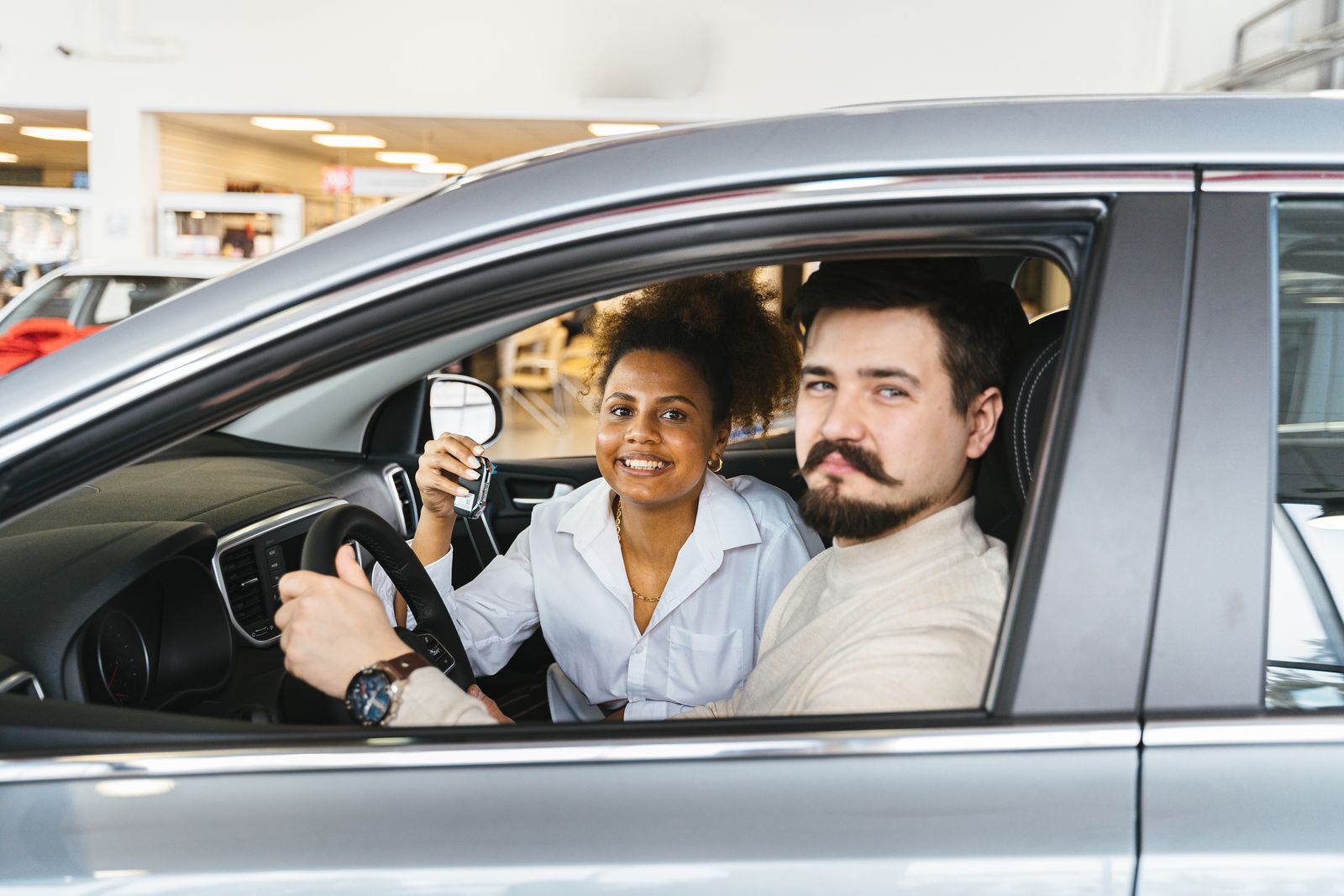

It started as one of those basic errands that’s supposed to take forty minutes, tops. A quick trip out with the baby, maybe grab a coffee, maybe swing by the store, then back home before the next nap window collapses. The wife figured the hardest part would be timing the feed, not surviving the drive.
Her husband wanted to drive, which wasn’t unusual. He liked being behind the wheel, liked deciding the route, liked doing the “we’ll get there faster if I just—” thing. She’d noticed he got irritated in traffic lately, but irritated in the normal, grumbly way people do when a light turns red right as you approach. This time, their baby was strapped into the backseat, tiny socks and all, and she assumed that alone would keep everything calm.
It didn’t. Somewhere between a merge lane and a guy who didn’t wave “thanks,” the husband flipped into that tighter, sharper version of himself. The wife didn’t fully register how bad it was until she realized she was sitting upright, one hand braced against the door, listening to the baby’s soft little noises like they were a countdown clock.

The drive that went sideways fast
They were on a multi-lane road with steady traffic, nothing dramatic—until another car edged in. Not a full-on cut-off, more like a last-second merge where everyone has to tap their brakes for half a second. The husband reacted like it was a personal attack, snapping, “Unbelievable,” and leaning forward over the steering wheel as if getting closer to the windshield would fix it.
He sped up, then slowed down, then sped up again, doing that aggressive pacing thing where he’s trying to “teach” the other driver a lesson without admitting that’s what he’s doing. The wife looked in the mirror and saw their baby’s head wobble slightly with the motion, the way it does even when the car seat is strapped in perfectly. She told him, carefully at first, “Hey, can you just let it go? We’ve got the baby.”
That should’ve been a brake check on his own behavior, but it came out as fuel. He muttered something about people being idiots and “I’m not letting them get away with that.” The wife didn’t even fully understand what “that” was supposed to be—merging? existing?—but she could feel the atmosphere in the car turning heavy and charged, the way it does when you’re suddenly aware you’re alone with someone else’s temper.
When “annoyed” turned into road rage
The other car moved ahead, and for a second it looked like the moment might pass. Then the husband honked, long and angry, and surged forward like he was going to close the gap. The wife’s stomach dropped, not because she thought they were going to crash immediately, but because she knew this was the part where rational decisions stop getting made.
He started narrating the other driver’s supposed character flaws, talking louder with every sentence. The wife kept her voice low, trying not to escalate, but she couldn’t ignore the baby in the back—quiet at first, then a small fuss, then that thin, confused cry that babies do when the world suddenly feels too fast. She told him again, firmer: “Stop. Please. We have our kid in here.”
He shot back something like, “I’m not doing anything,” while doing exactly everything—tailing too close, swerving just enough to make a point, snapping his head toward the other car as if his stare could be felt through tinted glass. At one point he rolled down his window, not to talk calmly, but to yell. The wife said she could feel her face burning, not from embarrassment yet, but from the adrenaline of being trapped in the passenger seat while someone else made reckless choices on purpose.
And then came the moment she couldn’t unsee: the baby’s cry got louder, and the husband didn’t even glance in the rearview mirror. He was locked in, focused entirely on winning a fight that only he was participating in. The wife said she realized then that the baby wasn’t the anchor she thought it would be; to him, the baby was background noise.
The silence afterward, and the decision she made
Eventually traffic shifted, the other car got away, and the husband’s body language slowly loosened like a fist unclenching. He went back to driving like a normal person, like the last five minutes hadn’t happened. The baby was still sniffling, hiccuping into calmer breaths, and the wife sat there staring at the dashboard like it had answers.
When they got home, the husband acted almost cheerful, like he’d shaken off the whole thing. The wife, meanwhile, was running on that shaky, post-stress energy where your hands feel steady but your insides don’t. She told him plainly that she wasn’t riding with him anymore, not with the baby in the car, not until he could prove he wouldn’t do that again.
He didn’t take it like a safety boundary. He took it like an insult. He laughed once, short and dismissive, and asked what she was talking about, because he “handled it.” The wife said she didn’t care whether he thought he handled it; she cared that he’d been willing to turn a routine drive into a confrontation while their child was strapped into the backseat.
How it turned into a fight about “respect”
The husband’s argument shifted fast, from denial to defensiveness to something sharper. He said she was overreacting, that she was “making him out to be some kind of monster,” and that everyone gets mad in traffic. When she repeated that she wouldn’t get in the car with him driving, he accused her of trying to control him.
Then came the line that stuck: he said she was embarrassing him. Not just privately, like she’d bruised his ego in the moment, but as if her refusal to ride with him was a public statement about his character. The wife pointed out that nobody would even know unless he told them, and he basically confirmed that he had told people—friends, maybe family—framing it like she was acting “dramatic” and “paranoid.”
She hadn’t even planned to announce it. She just started quietly adjusting her life: she drove separately, she made excuses, she said she’d meet him there. If they had to go somewhere together, she insisted on driving. The husband didn’t like that, not because it was inconvenient, but because it made him feel demoted, like she didn’t trust him with a basic adult task.
And that was the heart of it: she didn’t. She said the issue wasn’t his driving skills, it was his impulse control, his need to “win” a moment that didn’t matter. He insisted she was treating him like a child, and she said she was treating him like someone who had already shown he’d gamble with their baby’s safety over his pride.
The awkward logistics of a cracked trust
The next few days turned into a weird dance of normal life with an unresolved rupture. He’d ask if she wanted to run an errand, and she’d say yes, but she’d grab her keys first. If they were already in the driveway and he moved toward the driver’s side, she’d quietly pivot to the other car or say, “I’ll drive.”
He started making little comments that sounded casual but weren’t. Stuff like, “Don’t worry, I won’t embarrass you today,” or, “Guess I’m not trusted with my own family.” The wife didn’t want to argue in front of the baby, so she swallowed a lot of responses, which only made him act like the issue was fading because she wasn’t “bringing it up.”
But it wasn’t fading for her; it was settling. Every time she buckled the baby into a seat, she heard that honk again, saw his jaw clenched, felt the car lurch forward as if anger had weight. She didn’t need another incident to justify her boundary; one was enough, because one proved the baby didn’t automatically change his behavior.
The husband kept circling back to the idea that she was humiliating him, like her caution was a personal smear campaign. She kept circling back to the same point: she wasn’t punishing him, she was protecting their child. And neither of them could agree on which framing was true, which made every conversation feel like it was happening on two different planets.
By the time the immediate shock wore off, what remained was worse in a quieter way. The wife wasn’t scared of traffic; she was scared of the split-second where her husband decided his ego mattered more than the people in the car with him. And the husband, instead of sitting with that reality, seemed more focused on being seen as the kind of man who’d never do something like that—while still not fully admitting he did.
More from Steel Horse Rides: