

She pulled into the cul-de-sac on a Tuesday evening, running on that last thread of patience you get after work, groceries, and a day of emails that should’ve been two emails. The driveway was supposed to be the easy part. Her spot was always there, the little predictable square of concrete that meant she could unload bags without playing Tetris with the garbage cans.
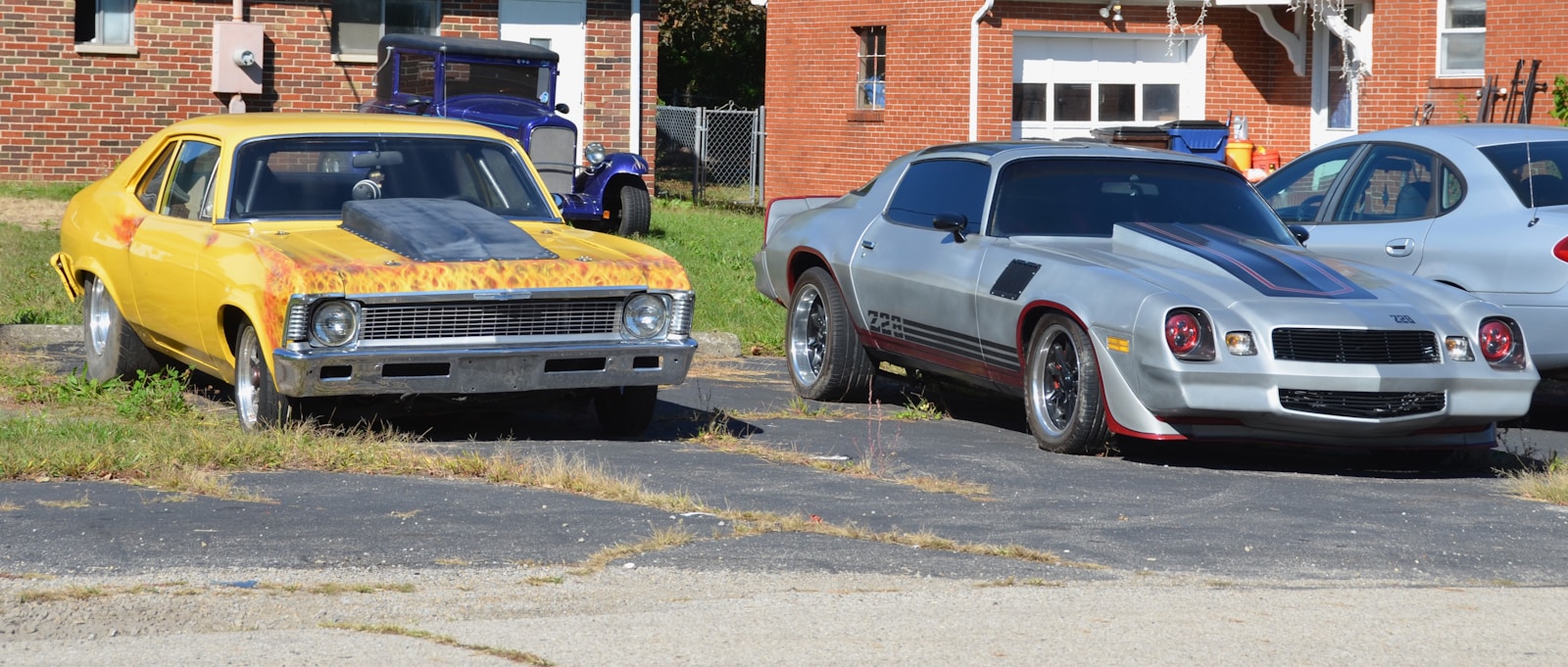
Except her spot wasn’t there. In its place sat a sun-faded, half-sanded, definitely-not-running car with a primer-gray hood and one headlight that looked like it had been rescued from a junk drawer. It was parked dead center, like it owned the property, with a tow strap still looped around the front as if it had just been dragged in and abandoned.
She sat in her car for a second with the turn signal clicking, staring at it like it might politely reverse itself out of the way. Then she noticed the cardboard sign in the passenger window: “PROJECT.” Not “for sale,” not “temporary,” not “buddy’s car.” Just “PROJECT,” written in thick marker, like that explained everything.

The driveway announcement she never agreed to
When she walked inside, her husband was in the kitchen like nothing had happened, spooning rice into a container and talking about how he’d finally found “a solid base.” He said it with that excited, boyish energy that usually meant he’d watched three hours of videos about something and had decided it was now their shared hobby. He didn’t even ask how her day went before he launched into what the car “could become.”
She didn’t start with yelling; she started with one question that was calm in the way calm people get right before they stop being calm. “Why is there a broken car in my driveway?” He blinked and corrected her—“It’s not broken, it’s a project”—as if the term changed the fact that it had arrived uninvited and was currently squatting where her car used to go.
He said he’d meant to tell her. He said it came up fast, a buddy-of-a-buddy situation, a “can’t miss” deal, and if he didn’t grab it that day someone else would. The price, according to him, was basically a gift, and he’d already arranged the tow, so it made sense to just… do it.
“I thought you’d be excited” meets “Where am I supposed to park?”
She pointed out that “just doing it” meant spending household money and taking over shared space without a conversation. He countered that it wasn’t “household money,” it was “his fun money,” said like that should end the discussion. She asked, very plainly, why the first she was hearing about it was because she physically couldn’t park her car where she always parks.
His answer was the kind that sounds reasonable until you picture the actual logistics. He said the driveway was “more convenient” for working on it and he didn’t want it on the street because “people mess with stuff.” He also said it was only temporary until he cleared room in the garage, which, she reminded him, was currently filled with the treadmill they don’t use, storage bins from three apartments ago, and a pile of “I’ll get to it” that had been there since last summer.
Then came the line that flipped the mood from annoyed to incandescent. He said, “You can just park on the street for a while.” Not “let’s swap spots” or “let’s move it tonight,” but “just,” like asking her to give up the convenient spot in front of her own house was a tiny favor instead of a daily hassle—especially when it gets dark early and she sometimes comes home late.
She told him she wasn’t doing that. He told her she was making it a bigger deal than it needed to be. The fight took on that familiar shape: her talking about respect and planning, him talking about dreams and how she “never supports” his interests.
The car wasn’t the only thing taking up space
Once the initial shock wore off, the details started stacking up in her head in a way that made her angrier. This wasn’t the first time he’d brought something home without really checking in—tools, parts, “great deals” that somehow always needed a place to live. He had a talent for turning shared space into a staging area for his latest fixation, and then acting wounded when she didn’t applaud.
She asked to see what he’d paid and what the plan actually was. He hesitated, then gave a number that sounded low enough to be believable but high enough to make her stomach drop. When she asked about ongoing costs—parts, specialty tools, the tow—he waved it off as “not that much,” the same phrase people use right before they spend hundreds in a slow drip and pretend it doesn’t count.
And the plan? The plan was vibes. He had a vision: engine swap, new suspension, paint someday, maybe track days, maybe just a weekend cruiser. When she asked timelines, he said he’d work on it “here and there,” which is marriage-speak for “this will live in your life indefinitely.”
She tried to pull him back to the actual present. The car didn’t start, it didn’t have current tags, and it was sitting where she needed to park every day. He responded like she was missing the point on purpose, telling her it was about “building something,” about having “a project,” about not letting life be all responsibilities.
The first attempt at compromise went sideways fast
She proposed something simple: move it to the street until he cleared the garage, and if he couldn’t clear the garage by the weekend, the car goes into storage or it goes back to wherever it came from. He looked at her like she’d suggested putting a pet outside. He said street parking wasn’t safe, storage was expensive, and sending it back would be “throwing away” the deal.
She asked him why his protection of the project car mattered more than her safety and convenience. He didn’t like that framing and said she was being dramatic, which didn’t help. He tried to soften it by offering to park her car behind it, blocking the project in, like he was granting her access to her own driveway while also making sure the car stayed put.
That suggestion turned into its own argument because it came with strings. If she parked behind it, he’d need to move her car whenever he wanted to work on the project, and she’d need to keep her keys available, and could she “not leave stuff in the way,” and suddenly her parking spot had become a schedule she’d have to coordinate around his hobby. She said no. He sighed like she was being unreasonable.
Then he tried charm. He started talking about taking her for rides once it was done, how she could pick the color, how it could be “their” thing. She didn’t bite, because it felt like a sales pitch for a purchase she never approved, and she was not interested in being recruited into the justification after the fact.
The night ended, but the argument didn’t
By bedtime, they weren’t really fighting anymore; they were doing that cold, logistical speaking where every sentence has a sharp edge. He said he’d move it “soon,” but wouldn’t say when. She said she wasn’t parking on the street, and if he expected her to, then he could explain why to their insurance company when something happened to her car.
He accused her of trying to control him. She accused him of treating her like an obstacle instead of a partner. At one point he said, “It’s my house too,” and she shot back, “Exactly—so act like it,” which landed hard enough that he went quiet for a while.
The next morning, the car was still there. He left for work early, and she had to do a three-point turn in the driveway to squeeze out, already imagining herself doing that in the rain, in the dark, for who knows how long. She texted him a photo of the blocked spot with a single line asking what the plan was, and he replied with a thumbs-up and “We’ll talk tonight.”
That’s the part that stuck with people who read her story: the car itself was almost secondary. It was the way it arrived like a decision she’d apparently already agreed to, and the way the solution seemed to require her to be the one who adjusted. Every time she tried to talk about practicalities—space, money, safety—he slid back into the language of passion and opportunity, like those words should override the basic courtesy of a heads-up.
By the time she got home again, she wasn’t just looking at a primer-gray project car taking up her spot. She was looking at a whole pattern, parked neatly in the driveway where her normal life used to fit. And unless one of them blinked—unless he actually moved the thing and owned what he’d done, or she decided she could live with being treated like an afterthought—that hunk of metal wasn’t going to be the only thing rusting in place.
More from Steel Horse Rides: