

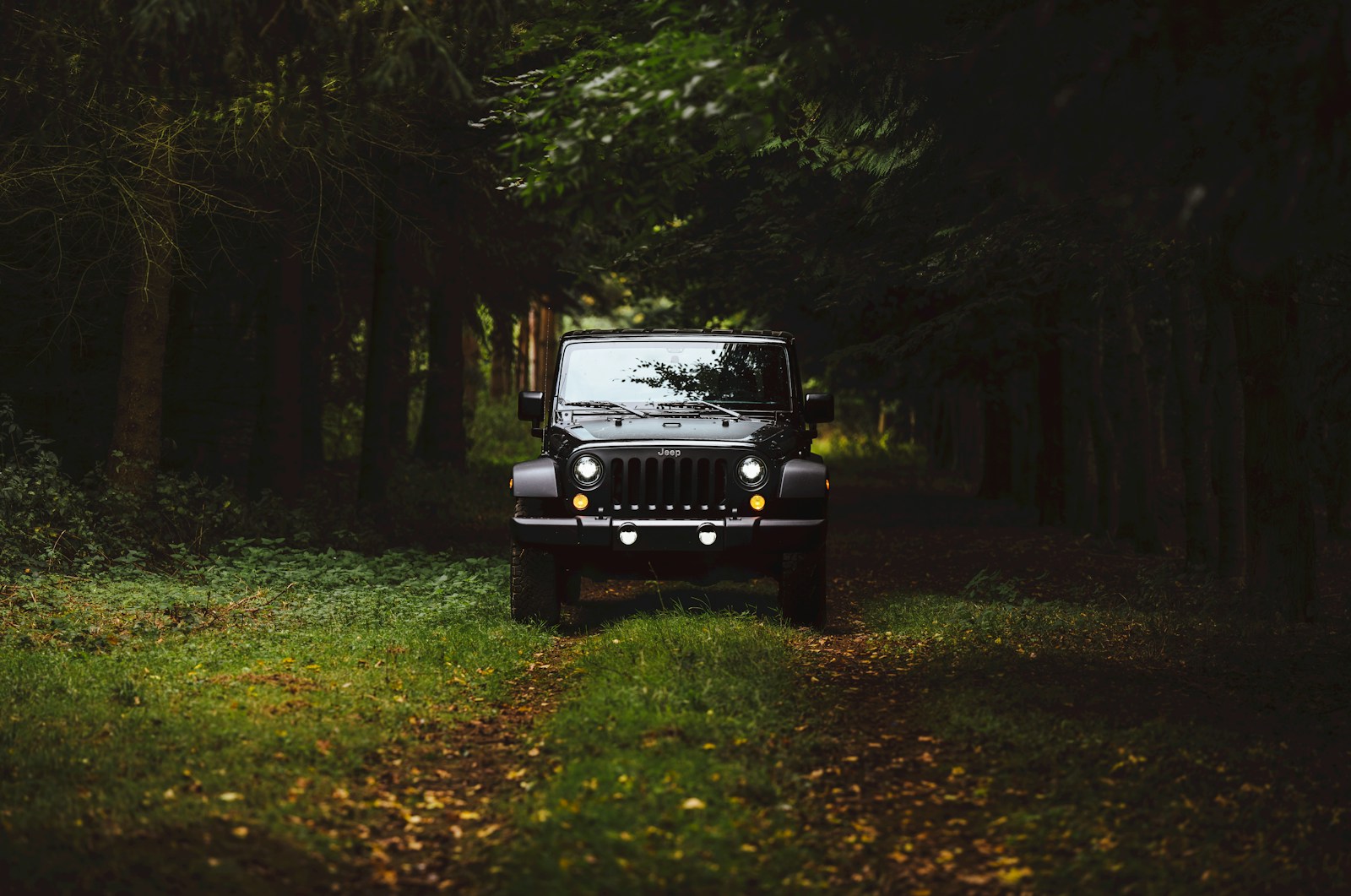
She bought the Jeep the way a lot of people do when they’re tired of scrolling and ready to start living the version of their life they’ve been daydreaming about. A used Wrangler, a little older, a little loud, priced just low enough to feel like a steal but not low enough to scream “problem.” The seller had that easy confidence of someone who’s sold a few toys before: clean title, “well-maintained,” only selling because he “doesn’t have time for trails anymore.”
Her plan was simple—weekend adventures, camp coffee, dusty tires, nothing dramatic. She’d already told friends she’d be “Jeep person now,” half-joking, half-serious, and she’d spent the week after buying it ordering small upgrades like floor mats and a phone mount. By Friday night, she’d packed a cooler, threw a recovery strap in the back because someone on a forum said you’re basically cursed without one, and pointed it toward a beginner-friendly trail a couple hours out.
The first part went exactly how she’d imagined. The Jeep felt solid on the highway, the sunset hit the windshield just right, and the whole thing had that satisfying “I did this” feeling. Then she met up with a friend who actually knew what he was doing—one of those people who can identify tire sizes at a glance and has opinions about diff lockers. He walked around it slowly in the parking lot, not saying much, and she figured he was just being his usual meticulous self.
The trail was supposed to be the easy part
The trailhead was busy in that weekend-warrior way: a few built rigs on trailers, some stock SUVs airing down, people chatting while kicking rocks and pretending they weren’t nervous. Her Jeep fit right in—mud tires, a couple tasteful accessories, nothing screaming extreme. She’d told her friend she wanted “scenic, not scary,” and he picked a route he said was basically a dirt road with a few rocky sections.
For the first mile, it was perfect. The Jeep bobbed over washboards, the suspension felt a little stiff but predictable, and she was already making plans for the next trip. Then they hit a shallow dip—nothing dramatic, just a spot where rain had carved a rut and people had stacked some rocks to make it smoother.
As the front end rolled through, she heard a sound that didn’t match the terrain. Not the normal clunk of a skid plate kissing a rock, not the harmless rattle of something loose in the cargo area. It was a wet, metallic crunch—followed by a sudden shudder through the steering wheel like the Jeep had briefly decided it didn’t like having an axle anymore.
She stopped immediately, heart hammering, trying to play it cool. Her friend didn’t even tell her to pull over; he was already out of his seatbelt and halfway to the front of the Jeep, squinting under the bumper. That’s when his vibe shifted from “let’s have fun” to “something is wrong and I’m trying not to freak you out.”
“Pop the hood” turned into “don’t move it”
At first they did the obvious checks. Tire looks fine. No smoke, no leaking fluids on the ground, nothing visibly dangling. She started to relax until her friend crouched down and stared at the undercarriage like he’d just read something offensive.
He asked her if she’d noticed any pulling on the highway, any weird tire wear, any shaking at speed. She said no—because honestly, she’d been too excited to read into normal used-car quirks. He didn’t accuse her of anything, but the questions landed with this quiet implication: this Jeep had a story she didn’t know.
He told her to turn the wheel slightly while he watched from underneath, and when she did, his face tightened. “Okay,” he said, standing up and brushing dirt off his jeans, “we’re not driving this any further.” Not “let’s be careful,” not “let’s head back.” Just a flat, final statement like he’d seen enough to call it.
She pushed back a little because nobody buys a Jeep to get lectured in the dirt five minutes into the fun part. But then he pointed under the passenger side and told her to look. She didn’t really know what she was looking at—just metal, grime, and the usual under-car chaos—until he directed her to a section that was oddly clean, like it had been freshly messed with.
The “repair” wasn’t a repair so much as a disguise
Underneath, there was a patchwork that made no sense for a vehicle advertised as “well-maintained.” A bracket that looked slightly twisted, bolts that didn’t match, and this smear of undercoating that was darker and thicker than the rest—like someone had tried to paint over a bad decision. Her friend tapped it with a knuckle and the sound was wrong, hollow in a way that suggested filler or layered mess instead of solid steel.
Then he found the line where the undercoat ended and older grime began, and it looked like a boundary. New stuff over old damage. The kind of thing you’d do if you wanted it to photograph well and survive a quick test drive, not the kind of thing you’d do if you expected it to take even mild trail flex without protesting.
He pointed out what looked like a stress crack near a mounting point—small, but placed in the worst possible spot. “This is where the load transfers,” he said, and the way he said it made her stomach drop. He didn’t have to spell out the rest: if that went, it wouldn’t be a cute little breakdown with a tow and a funny story. It could be dangerous.
She asked the question everyone asks in that moment, the one that feels childish but is really just panic looking for a handle: “How does this even happen?” He shrugged in that frustrated, knowing way. Bad accident. Hard hit. Someone jumping it. Or someone running trails, breaking something, and deciding a cosmetic fix was cheaper than doing it right.
Getting back to pavement felt like sneaking out of a bad date
They didn’t turn around immediately because turning around required moving, and moving required trusting the thing that might be failing. Her friend spotted another group with a proper jack and some tools and waved them over with that embarrassed half-smile people do when they hate needing help. The strangers were polite but their eyes did that quick scan that said, “Oh, you bought one of those.”
With the Jeep sitting still, they rocked it slightly, watched the suspicious area flex, and that was enough to convince everyone. They eased it backward at a crawl, tires placed carefully, avoiding any twist. She drove the way you drive when you’re trying to keep a glass of water from spilling—slow, stiff, overthinking every inch.
On flat ground, the Jeep almost pretended nothing was wrong again, which somehow made it worse. It felt like the vehicle had two personalities: one for the street where it could fake normal, and one for the trail where it had to tell the truth. When they finally got back to the parking area, she sat there gripping the wheel like she needed a minute to put her pride back in her chest.
Her friend didn’t rub it in, but he didn’t sugarcoat it either. He told her she needed a real inspection from someone who knows Jeep frames and suspension points, not a quick once-over from a general shop that might miss the specifics. He also told her to document everything now, while it was fresh and before anyone touched it.
The seller’s story started changing in real time
She called the seller from the driver’s seat with her friend standing outside, arms crossed, listening. At first, the guy was breezy. “What happened?” in that tone that assumes you’re being dramatic. She explained the noise, the flex, the weird patch underneath, and asked point-blank if the Jeep had ever been in an accident or had frame repairs.
There was a pause—just long enough to feel deliberate. Then he went with the classic: not that he knew of. He said he’d owned it a couple years, bought it used, and “never had an issue.” When she mentioned that the undercoating looked freshly applied and the bolts didn’t match, his patience thinned. He started asking if she’d taken it “off-roading,” like that was some reckless misuse and not the reason anyone buys a Wrangler in the first place.
She told him she’d taken it on a mild trail and it made a noise on the first obstacle. She could hear the shift in his voice—less customer-service, more defensive. He suggested maybe she hit something hard, maybe she “didn’t know what she was doing,” maybe her friend was “overreacting.” The thing that landed like a slap wasn’t even what he said, but how quickly he reached for blame instead of curiosity.
When she asked about a return, even partial help with repairs, he dodged. Private sale, as-is, he reminded her, suddenly very clear about boundaries. He said he’d “never cover anything” for a vehicle he wasn’t driving, and then he got icy, like she was trying to scam him. The call ended with her staring at the dashboard, cheeks hot, listening to the quiet hum of a cooling engine.
By the time they loaded the Jeep for a tow—because now she didn’t want to risk even the highway—she wasn’t crying, but she had that tight, furious calm that comes when you realize you’ve been played and you can’t un-play it. She had a new vehicle, a payment, and a problem hiding under a shiny layer of undercoat. And the worst part was how easily the seller slid into the idea that this was her fault for taking a Jeep onto the kind of road it was literally built to handle.
Later, after the tow truck left and she was standing in her driveway with the Jeep sitting there like a prop in a lie, she kept replaying that first crunch in her head. Not because of the sound itself, but because it marked the exact moment the dream flipped into a mess. She still didn’t know if she was looking at a costly repair, a total loss, or a fight she’d have to drag through paperwork and court—but she did know the cover-up wasn’t an accident, and whoever did it had counted on the trail never being the place where the truth showed up.