
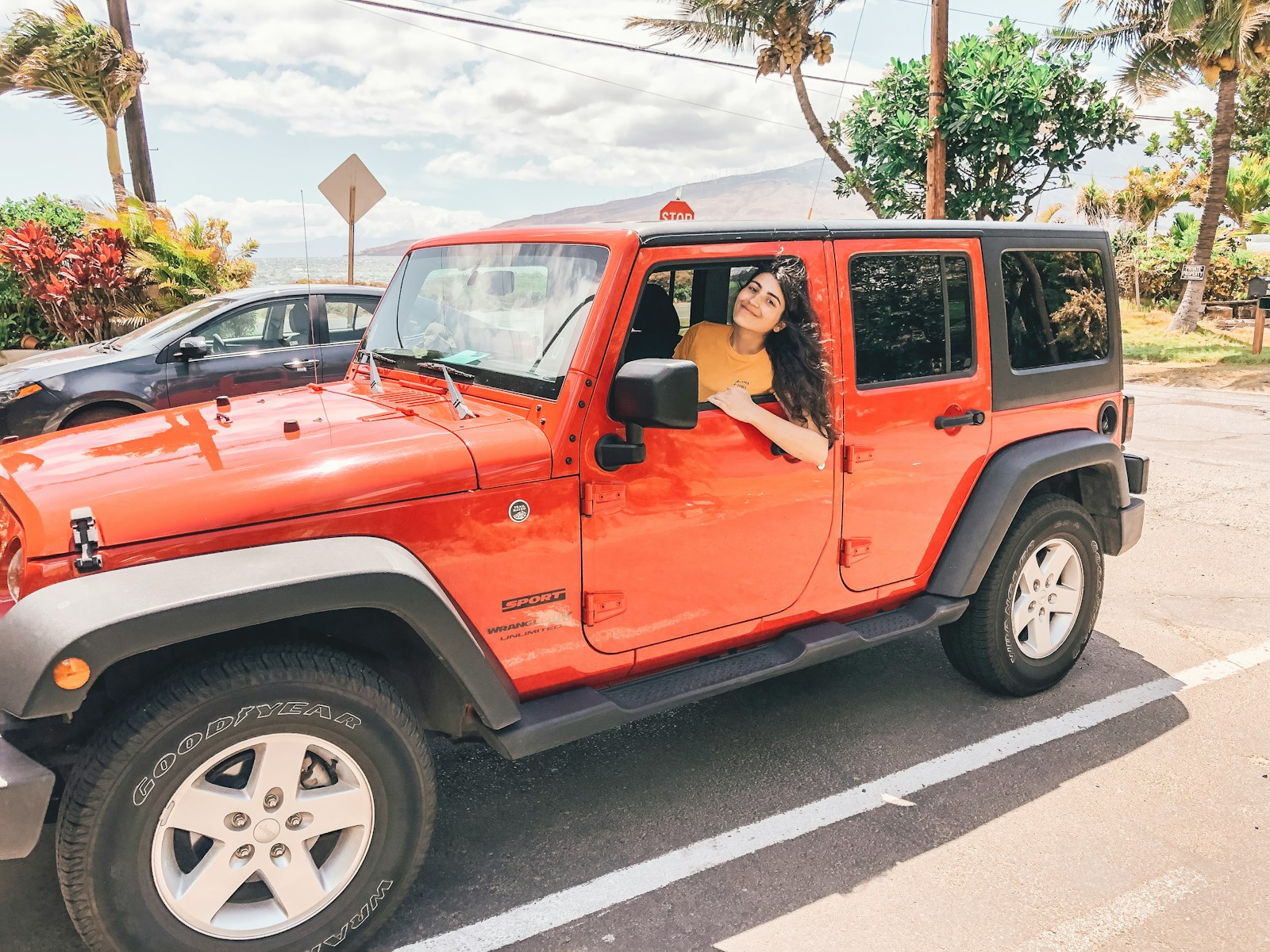

She’d wanted a Jeep since she was a teenager—one of those specific, stubborn dreams that survived college, crappy apartments, and the phase where “responsible” meant buying a used sedan with good gas mileage. So when she finally got a better-paying job and saw the exact model she’d been bookmarking for years, she didn’t sleep on it. She went to the dealership after work, did the painfully adult math, and signed for it with her own name on the paperwork.
When she pulled into the driveway that night, she was buzzing in that quiet, fizzy way people get when they’ve done something big for themselves. Her husband came out, did the whole impressed walk-around, and whistled like he was in a commercial. She expected teasing, maybe a little “must be nice,” maybe even a genuine “I’m proud of you.” What she didn’t expect was him grinning and saying, “Damn, our Jeep looks good.”
She laughed at first because it sounded like a slip of the tongue—marriage brain, shared life, shared everything, right? But then he kept saying it. “We’re gonna take this camping.” “We should get seat covers.” “I can’t wait to drive it.” And the thing about repetition is it stops sounding cute pretty quickly when it’s attached to something you worked for, saved for, and pictured for years as yours.

The dream purchase that wasn’t supposed to be a group project
She didn’t buy the Jeep as a symbol of independence or a secret middle finger to her marriage. It was just… hers. They already had a shared car—his daily driver—that they both used when needed, and a rhythm that worked fine: he drove to work, she drove hers, and on weekends they’d take whichever made sense.
Her old vehicle was on its last legs, and she’d spent months squirreling away money in a separate savings account specifically labeled “Jeep.” Not “car fund.” Not “family vehicle.” Jeep. She’d even shown him the account once, like, look, I’m doing it, I’m actually doing it, and he’d nodded and said it was cool.
That’s what made the “ours” thing hit weird. It wasn’t like she’d surprised him with a purchase that would strain their finances. She wasn’t asking him to co-sign. She wasn’t asking him to give up anything. She just wanted her dream car and the uncomplicated joy of driving it without it turning into an immediate committee decision.
“I’m taking it tomorrow” wasn’t a question
The first real crack happened the next morning. She was making coffee, still half-giddy, when he jingled the keys and said, casually, “I’m taking it to work today.” Not “Can I?” Not “Do you mind?” Just a statement, like he was announcing the weather.
She blinked and told him she planned on driving it herself. He shrugged like that was adorable and said he just wanted to try it out, that his car was “fine” but the Jeep was new and more fun, and he’d bring it back. It was said in this tone that implied she’d be uptight if she pushed back, like she was hoarding something that naturally belonged to both of them.
She hesitated because that’s the trap, isn’t it? The moment where you can either defend your boundary or swallow it to avoid a fight before 8 a.m. He leaned in for a kiss, did a quick “Thanks, babe,” and walked out with her keys before she’d even fully decided what she was okay with.
The “ours” language starts turning into behavior
At first she tried to tell herself it was a one-off. He’d take it once, get it out of his system, and she’d go back to enjoying the thing she’d worked so hard for. But that night he came home talking about how everyone at work loved it, how it “drove like a dream,” and how he was thinking of getting a lift kit “for us.”
She reminded him, gently at first, that she didn’t want modifications and that she wanted him to ask before taking it. He laughed and told her she was being intense, that it was just a car, that they were married. Then he did that slick little pivot where he acted wounded: “I thought you’d want me to enjoy it too.”
And then it happened again. The next day she went to grab her keys and found the hook empty. She texted him, confused, and he replied like it was obvious: “Took the Jeep. My car’s low on gas.” No apology, no heads-up, just a logistical justification that made her feel ridiculous for even asking.
When she finally got him on the phone, he acted like her annoyance was about control. “You’re really mad about this?” he asked, in that flat, disbelieving voice that makes you feel like you’re auditioning to be taken seriously. She said it wasn’t about the Jeep itself—it was about him deciding he had access to her things without asking. He replied, “It’s not your thing. It’s ours.”
The small humiliations pile up fast
Once he’d claimed it as “ours,” he started acting like the default driver. He’d toss the keys in his pocket when they went out to dinner. He’d offer coworkers rides. He’d talk about it in front of other people as if they’d shopped for it together, like he’d been part of the decision instead of a spectator who showed up for the reveal.
She noticed weird, tiny changes that made her stomach drop. The seat was pushed back every time she got in, mirrors adjusted, her preset radio stations replaced with his. One afternoon she found a fast-food bag stuffed under the passenger seat and a faint smell of cigarette smoke, even though she didn’t smoke and had told him she didn’t want anyone smoking in it.
When she confronted him about the smell, he rolled his eyes and said maybe it came from outside, maybe the upholstery was “sensitive,” maybe she was imagining it because she was already annoyed. That’s when it clicked for her: this wasn’t careless. This was him refusing to treat her boundary as real because doing so would mean acknowledging it existed.
She tried one more time to explain it calmly, laying it out like a normal adult: she paid for it, she insured it, she wanted to be asked, and she didn’t want it treated like a communal toy. He replied by making it about trust. “So you don’t trust me with it?” he said, like she’d accused him of stealing money instead of taking her keys without permission.
The fight isn’t about a Jeep anymore
The real blowup came on a morning when she had an early meeting across town. She got ready, grabbed her bag, and reached for the keys—gone again. This time she didn’t text him first; she called, and he answered with the sound of traffic in the background.
She asked where he was, and he said, breezy as ever, “On the way to work. Why?” She told him she needed the Jeep, that she had an early meeting, and he got irritated like she’d changed the rules. “Well, you didn’t say anything,” he snapped, as if she was responsible for pre-booking her own car like it was a shared calendar resource.
She ended up scrambling—calling a rideshare, arriving late, explaining herself in that humiliating way where you sound flaky even though you aren’t. All day she was half-listening in meetings while thinking about how easily he’d made her life harder, and how casually he’d done it. When she got home, she didn’t bring it up delicately. She asked for the keys and told him, flatly, he wasn’t taking it again without permission.
He didn’t apologize. He scoffed and asked if she was seriously “gatekeeping” a vehicle in a marriage. He said it was petty to “make a big deal” over something they could both use, and he pulled out the line that always lands like a slap: “If you didn’t want me to drive it, why did you marry me?”
That was the moment she stopped arguing about logistics and started staring straight at the bigger picture. The Jeep was just a bright, shiny object that made his entitlement easier to see. It wasn’t that he liked her car; it was that he liked the feeling of automatic access, the power of claiming something as shared after someone else did the work.
She took the keys that night and put them somewhere he wouldn’t find. It wasn’t a cute “hide the remote” thing; it felt like locking up a piece of her own life inside her own house. And as she lay in bed next to him, listening to him breathe like everything was normal, the Jeep sat in the driveway like a symbol of a question she couldn’t un-ask anymore: if he could turn her dream into his convenience this fast, what else had he already quietly labeled “ours” without ever really meaning “yours” at all?
More from Steel Horse Rides: