

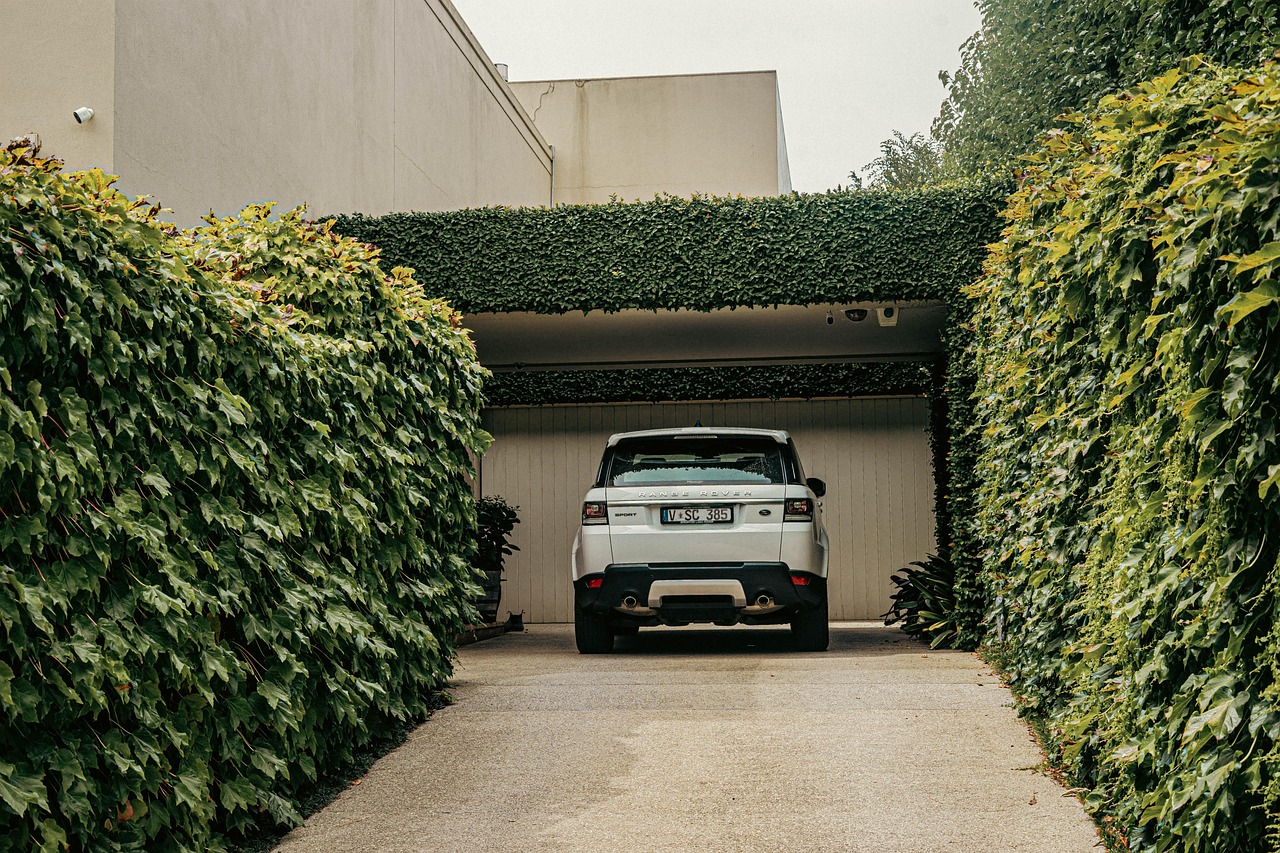
She didn’t buy the SUV to make a point. She bought it because her old sedan had started doing that thing where the check engine light was basically a roommate, and winter was coming fast. She’d been doing the math for months—repair estimates, trade-in value, interest rates, the whole boring adult spreadsheet routine—and she finally decided she was done limping along.
So on a Saturday morning, she went to a dealership “just to look,” which is what everyone says right before they sign their name eleven times. By the afternoon, she was texting her husband a photo of a shiny new midsize SUV in that safe, sensible color that dealers call something like “granite” but looks like clean wet pavement. He replied with a thumbs up, a “nice,” and a question about how much the payment was.
The weirdness didn’t start until she pulled into their driveway and saw him standing outside like a guy waiting for a tow truck. Not smiling, not waving—just watching her like she’d brought home a stray animal that was about to piss on the rug.
The Purchase Was Practical, Not Personal
She’d planned it like a stealth mission, not because she wanted to hide anything, but because every time she mentioned shopping for a car, he’d turn it into a debate. It was always “is now really the time,” and “can’t you just drive mine,” and “cars are the biggest waste of money,” while he somehow never applied that logic to his own hobbies. She didn’t need permission, but she also didn’t want to spend three more weekends sitting in dealership chairs while he interrogated salespeople like he was auditing their morals.
To be fair, they were married. They shared a mortgage, they had shared bills, and the normal rhythm in their house was to talk through big purchases. But she wasn’t draining the emergency fund or taking money out of their joint account; she’d been putting aside money for years, and her credit was strong enough that she got a decent rate. The SUV wasn’t a luxury brand or some ridiculous six-figure statement—it was just new, reliable, and safe.
She expected him to be mildly impressed and then move on. Instead, the first thing he said wasn’t “congrats” or “it looks great,” but “You could’ve told me you were buying something that nice.” Not nice like “I’m happy for you.” Nice like “I’m about to be forced to have feelings I don’t want.”
The Driveway Moment: When the Mood Turned
He walked around the SUV slowly, like he was inspecting damage after a fender bender. He yanked on the door handle, looked at the interior, and made a low noise in his throat that wasn’t admiration. She tried to keep it light—pointed out the safety features, the warranty, the fact that the heater actually worked without making a sound like a dying blender.
He barely listened. His eyes kept drifting to his truck parked beside the garage, the one he’d had since before they were married. It was a solid, older pickup—dents, faded paint, a couple of rust freckles, and a driver’s seat that had basically molded to his shape over the years.
Then he said it. Not loud, not screaming, almost like he was sharing a disappointing fact: “This makes me look bad.” She laughed at first because it sounded like a joke that didn’t land. But he didn’t smile, and he didn’t follow it with anything playful.
He explained, quickly and defensively, that now when they went places together, people were going to think she was “the successful one” and he was “falling behind.” He said it would look like he couldn’t provide, like his truck was “some beater,” like he was the guy with the old vehicle parked next to his wife’s shiny new one. He wasn’t describing a financial concern; he was describing a vibe problem.
What He Actually Wanted From Her
Once he started talking, it got more specific. He suggested she could’ve bought something “a little less flashy,” which was funny because the SUV was the automotive equivalent of khaki pants. He asked why she didn’t just keep driving the sedan “until it died for real,” like the car hadn’t already been flirting with death for a year.
And then the real ask came out: maybe she should park in the garage and leave his truck in the driveway, so it would be the first thing people saw. Or, if they went somewhere together, she could take his truck and he could take her SUV. He framed it like compromise, like teamwork, but the logic was basically “can you rearrange your life so my pride doesn’t bruise.”
She tried to answer him like an adult. She said she’d saved for it, it was her money, and she wasn’t trying to embarrass him. She even pointed out that if his truck bothered him that much, he could start looking at new ones too—he was the one who’d refused to upgrade because he liked not having a payment.
That’s when he got sharp. He said he shouldn’t have to buy a new truck “just because” she decided to get a new vehicle, and she was the one creating pressure. It was that classic flip where the person upset about something makes it sound like the other person is responsible for managing their reaction.
The Argument Hits the Group Chat Zone
Over the next couple days, the fight didn’t explode all at once; it seeped into everything. He’d drop comments while she was making dinner—little mutters about “must be nice” or “guess we’re doing the fancy car thing now.” If she asked him what he meant, he’d say “nothing,” which is how couples say “I want to keep being mad without having to justify it.”
When they went to visit his parents, he insisted on driving the SUV, but not in a “let me try it out” way. More like he was borrowing it for status, sitting taller in the driver’s seat, making a show of the touchscreen. His mom complimented the car and said it looked safe, and he answered for her—talked about “we” chose it, “we” wanted something reliable.
Later, in the kitchen while she was helping with dishes, his mom casually asked how long she’d been planning it. She told the truth: a while, she’d been saving, it felt good to finally do it. His mom gave her this quick look—half proud, half cautious—like she could already sense this was going to be an issue.
The issue became clearer on the way home when his dad made a harmless joke about how his truck was “still going strong,” and her husband got quiet. Not offended exactly—more like it hit the nerve he’d been pretending wasn’t exposed. He drove the rest of the way in stiff silence, hands tight on the wheel like the SUV had personally betrayed him.
Control Disguised as “Respect”
By the end of the week, it wasn’t even about the car anymore. He started talking about “respect” and “partnership,” but he used those words like leashes. He said she should’ve “included him” more, that it was “a bad look” for a wife to make a big purchase without her husband’s input, like she’d broken some unspoken rule and now needed to make it right.
She asked him point-blank: was he mad because she didn’t consult him, or because the SUV was newer than his truck. He dodged at first, but he kept circling back to the same point—how people would see them, how it “reflected” on him. It was hard not to hear it as: her success was a problem if it wasn’t attached to his name.
He also started pushing for her to contribute to a new truck for him, not as a joint goal they’d save for, but as a way to “balance things out.” He said it like it was fair. She heard it like a tax for daring to upgrade her own life.
She didn’t refuse the idea of him getting a new vehicle someday. She refused the framing that she’d done something wrong by buying one first. And that’s where the stalemate set in: him insisting her purchase was a public embarrassment, her insisting his embarrassment wasn’t her responsibility to fix.
The SUV sat in the driveway gleaming in the morning sun like a perfectly normal object that had somehow become a symbol. Every time she walked past it, she felt a little thrill—relief, pride, safety—and then, immediately after, the heavy awareness that her husband saw it as a scoreboard. And the worst part wasn’t that he felt insecure; it was that he wanted her to shrink, rearrange, and apologize until he didn’t have to feel that way anymore.