

It happened on a perfectly normal Tuesday afternoon, the kind where you’re thinking about errands and what’s in the fridge, not whether your whole month is about to get detonated by somebody else’s bad decisions. She was driving home from work in that slow, irritated flow of traffic where everyone is half-paying attention, when the car behind her decided the red light was optional.
The impact wasn’t movie-level dramatic. It was that sickening, heavy shove that throws your head forward and makes you instantly take inventory: neck, shoulders, teeth, airbag, phone. She sat there blinking, hands still clamped on the wheel, watching her rearview mirror fill with a guy climbing out of an older sedan like he’d just woken up and realized he was late for something.
He walked up apologizing too fast, talking over her like speed could rewrite physics. When she asked for his insurance, he did that thing where he pats his pockets and looks into the car as if the card might materialize on the passenger seat. Then he admitted it, casual and almost annoyed: he didn’t have any.
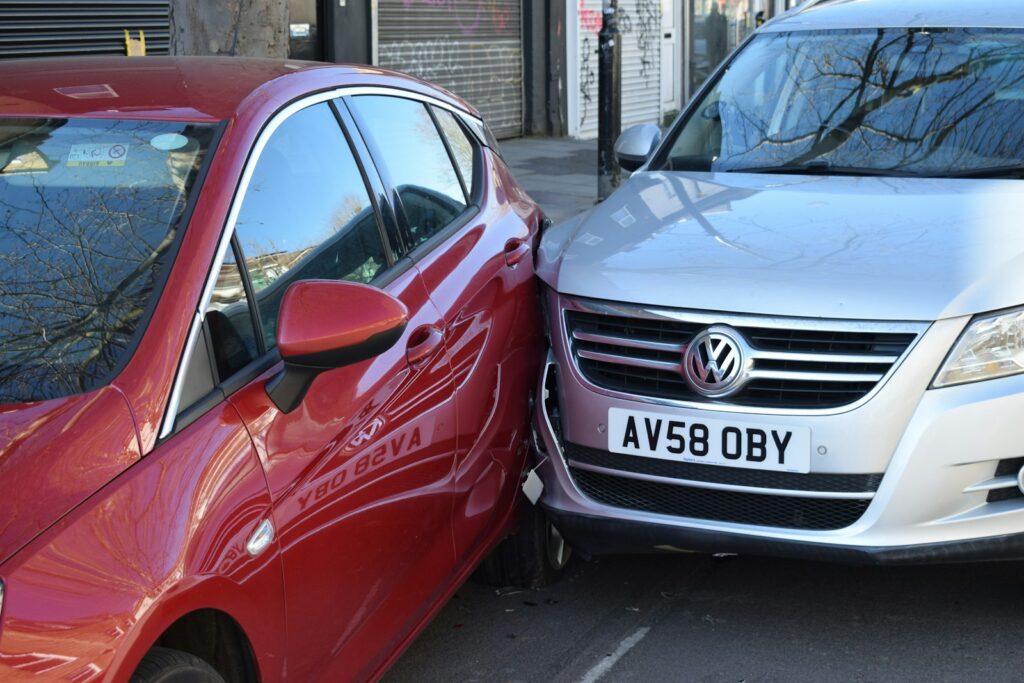
The little roadside negotiation nobody wants
She called the police because that’s what you do when someone hits you and then shrugs at the concept of responsibility. While they waited, the guy started pitching alternatives, like a man offering coupon options for a disaster. He could “Venmo something,” he said, or “handle it privately,” because the last thing he wanted was his license involved.
She didn’t even have the energy to argue; her neck had that stiff, hot feeling that comes on fast. She kept thinking about the dashboard light that had been on for a week and how she’d been putting off an oil change, and now she was parked on the shoulder with an uninsured stranger bargaining like it was a flea market. When the officer arrived, the guy’s tone changed—less friendly, more resigned—and he suddenly found a lot of reasons why it “wasn’t really that bad.”
The police report was straightforward: she was stopped, he hit her from behind, end of story. The officer cited him, took her statement, and gave her that practiced look that says, this happens a lot. She drove home with her bumper half-detached, trying not to turn her head, already doing the mental math of how much time she’d have to miss work.
Calling her own insurance like it’s a reset button
Once she got home, she did what most people do in that situation: she called her insurance company, expecting the “good hands” moment where a calm voice tells you it’s fine and you’re covered. She wasn’t even asking for miracles—just a rental car, a body shop estimate, something that made the whole thing feel containable. She paid her premium every month, had for years, and she’d never filed a claim.
The first rep was polite and weirdly upbeat, taking down details while she sat on her couch with an ice pack and a notepad. When the rep asked if the other driver had insurance and she said no, there was a pause so small you could miss it, but it changed the air in the call. The rep started using careful language, flipping from “we’ll take care of it” to “we’ll review the policy.”
Then came the question she didn’t expect: did she have collision coverage? She said yes—she remembered adding it when she was still paying off the car. The rep acknowledged that, asked a few more things, and promised an adjuster would call back. For a couple hours, she let herself believe it would be annoying but manageable, just paperwork and a deductible.
The adjuster’s phone call and the gap nobody explained
The adjuster called the next day with a voice that sounded like someone stepping carefully across broken glass. He confirmed the basics, pulled up her policy, and then hit her with the line that landed like another rear-end collision: yes, she had collision, but she didn’t have uninsured motorist property damage coverage. And in her state, that mattered more than she ever knew.
Here’s the part that made her go quiet: collision would technically cover the damage, but only after her deductible—and the deductible was high, because she’d raised it to lower her monthly bill. Meanwhile, uninsured motorist coverage was the thing that could have protected her from eating that deductible and getting stuck in the middle of a mess with a driver who had nothing to take. She’d always assumed “uninsured motorist” was just a standard part of the deal, like seatbelts.
She asked how that could even be optional, and the adjuster explained it the way people explain fine print they didn’t write: it depends on the state, depends on the carrier, depends on what you selected. He said the words “waiver” and “declined coverage,” and she felt her stomach drop because she didn’t remember waiving anything. She remembered a rushed phone call years ago, a quick “do you want this or that,” a promise that the new policy would be “basically the same” as her old one.
It got worse. The adjuster told her that even if she paid the deductible and got the car fixed under collision, her insurer would try to recover the money from the other driver through subrogation. But if the other driver was uninsured, that was code for “good luck.” If they couldn’t collect, she’d be out the deductible and stuck with the claim on her record anyway.
The two-week spiral: body shop numbers and dead ends
The body shop estimate came back higher than she expected because modern bumpers aren’t just plastic—they’re sensors, brackets, and hidden damage that doesn’t show until someone takes it apart. The shop guy walked her around the car like he was breaking bad news in a hospital hallway. He pointed to the trunk seam, the way it didn’t sit flush anymore, and told her the frame might have shifted.
She called the uninsured driver, because the police report had his number and she still had a thin thread of hope that he’d do the right thing. He answered like he’d been expecting it and immediately went defensive. He said he didn’t have that kind of money, said she was “making it a bigger thing,” asked if she could just “get it done cheap.”
When she mentioned small claims court, he laughed—actually laughed—and said she could try. He wasn’t threatening her exactly; it was more like he’d accepted his own chaos as a lifestyle and couldn’t imagine anyone else refusing to. That call ended with her staring at her phone, feeling embarrassed for thinking he’d suddenly become a responsible adult.
She tried everything that seemed reasonable. She asked the insurance company if there was any exception or add-on she could activate retroactively, and the answer was a clean, firm no. She asked if the waiver had her signature; they said it was recorded electronically as “declined,” which somehow felt even worse because it meant there wasn’t even a paper trail she could rage at.
The part that made her angriest wasn’t the money
What really got under her skin was how familiar the sales script sounded once she replayed it. She remembered being asked about coverage options in the same tone someone uses to ask if you want fries with that. Nobody said, “If an uninsured driver hits you, this is the coverage that keeps you from paying for their mistake.” Nobody said, “This is the gap that turns a bad day into a financial sinkhole.”
She pulled up her policy documents and started reading them like they were a personal insult. The language was technically there, buried in tidy sections with headings that sounded reassuring until you realized what they didn’t guarantee. Her deductible was printed plainly, her coverages listed neatly, and the absence—uninsured motorist property damage—sat there like a missing tooth you couldn’t stop touching with your tongue.
There was also the weird interpersonal fallout. Her family kept asking why her insurance “wouldn’t just cover it,” as if she’d done something wrong or bought a fake policy off a sketchy website. Friends offered advice that was half-helpful and half-maddening: “Can’t you just sue?” “Can’t the police make him pay?” “Doesn’t your insurance handle uninsured drivers?” Every question carried the assumption that there’s a safety net for normal people doing normal things.
She ended up paying the deductible because she needed the car to get to work, and the rental coverage she did have only stretched so far. She filed the claim, watched her savings take the hit, and waited for her insurer to attempt recovery from a guy who’d already proven he could barely keep a legal vehicle on the road. The last update she got was that they were “pursuing options,” which sounded like a fancy way of saying they’d sent a few letters into the void.
Months later, the car was fixed, but nothing felt resolved. She kept thinking about how close she’d been to thinking she was fully protected—how she’d paid on time, stayed loyal, done the responsible thing—and still got blindsided by a coverage hole that only shows up when someone else breaks the rules. The uninsured driver was still out there, presumably still driving, and she was the one carrying the bill and the claim, stuck with that lingering, itchy question: if this is what “being insured” looks like, what exactly was she paying for all those years?
More from Steel Horse Rides: