

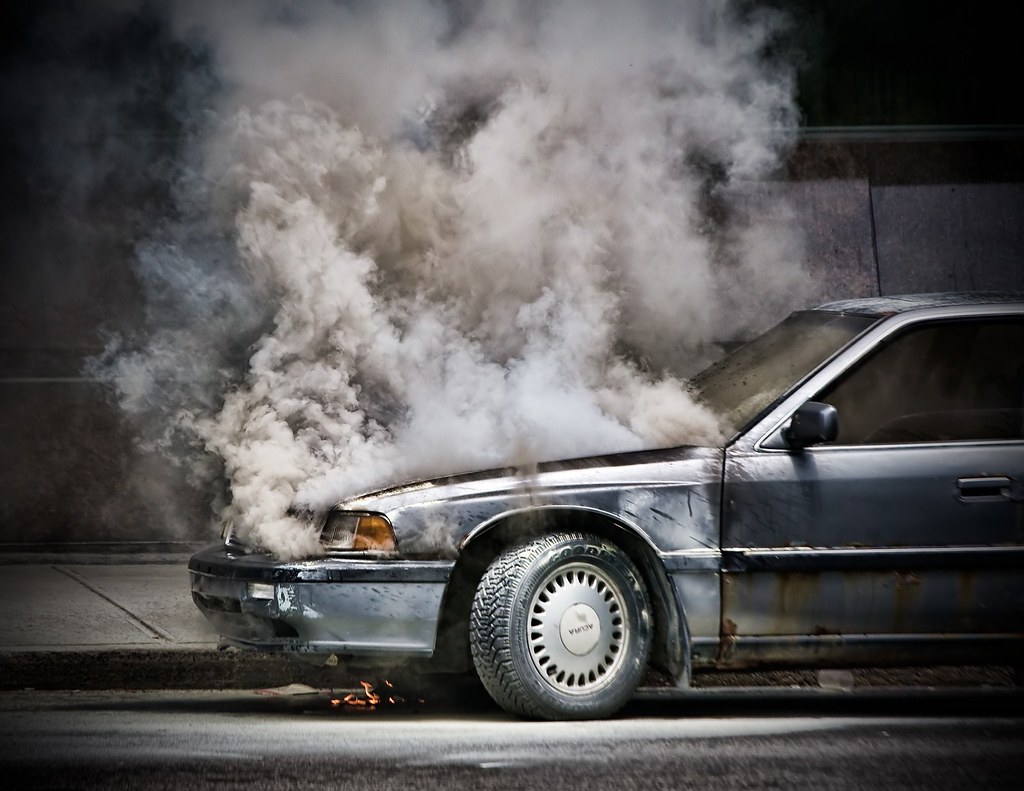
She’d only had the car for a couple of weeks, just long enough for the “new-to-her” feeling to wear off and the little annoyances to start registering. The Bluetooth was finicky. One of the cupholders pinched her knuckles. But it started every morning, the A/C blew cold, and the payment was something she could live with.
So when the first hint of trouble showed up, it didn’t come as a polite warning light or a weird rattle in a parking lot. It came at 70 miles an hour, boxed in by commuters on a busy highway, with the cabin suddenly filling with that unmistakable hot, chemical smell. She looked up from the speedometer and saw wisps of smoke curling from the hood seam like the car was exhaling.
She did the thing everyone hopes they’ll never have to do: hazards on, eyes scanning for a shoulder that wasn’t a death trap, trying not to imagine the word “fire” while her hands stayed steady on the wheel. By the time she rolled to a stop, the smoke was thick enough that the cars behind her were changing lanes early. She shut it off, grabbed her phone, and stood a few steps away, staring at her purchase like it had personally betrayed her.
The sale that felt “safe” at the time
The frustrating part was that she hadn’t bought it from a sketchy guy in a gas station parking lot. She’d gone to a real dealership—the kind with glossy signage, service bays, and a waiting room that smells like burnt coffee and tire rubber. The salesperson had pitched the used car as “inspected,” “ready to go,” and the kind of reliable commuter vehicle they move all the time.
She’d asked the obvious questions: any accidents, any major work, anything she should know. The answers were smooth and confident, the kind that make you feel slightly silly for worrying. She didn’t demand perfection; she just wanted basic honesty and the expectation that the car wouldn’t try to turn into a campfire before her first oil change.
She signed what they put in front of her, drove off with a temporary tag, and went home feeling like she’d navigated adulthood correctly. No impulse buy, no weird vibes, no mechanical mysteries. And now she was on the side of the highway watching her hood smoke like a cheap magic trick.
Smoke on the highway and the scramble to stay calm
Once she was stopped, she hesitated with the hood release because the last thing anyone wants is to give a fire more oxygen. She called roadside assistance first, then hovered near the guardrail, watching the smoke and trying to gauge whether she needed to back up further. A couple of drivers slowed down enough to rubberneck, which somehow made it feel more humiliating.
The smoke didn’t turn into visible flames, but it didn’t exactly quit either. It came and went in waves, like whatever was cooking under there had a timer. She kept picturing her insurance agent asking questions later in a tone that implied she’d been playing with matches.
When the tow truck finally showed up, the driver did that practiced squint into the engine bay—part curiosity, part “I’ve seen worse.” He didn’t give her a definitive diagnosis on the shoulder, just a few pointed observations: the smell suggested something fluid-related, and the heat levels weren’t normal. He loaded it up, and suddenly the situation shifted from terrifying to infuriating, which can be its own kind of adrenaline.
Walking back into the dealership like a bad sequel
She had the car towed straight back to the dealer because what else do you do? In her mind, this was the cleanest path: their car, their inspection, their problem. She pictured the service manager making a sympathetic face and saying something along the lines of, “Wow, that’s not okay, let’s get you in a loaner.”
Instead she walked into a building full of normal dealership energy—people browsing key fobs on the counter, a TV murmuring in the corner, someone complaining about wiper blades—while she carried the kind of stress that makes your jaw ache. She told the front desk her car started smoking on the highway and was towed in. The receptionist blinked like she was deciding which script applied: “oil change” or “engine failure.”
The first awkward moment came when she said she’d bought it there recently, and the person across from her didn’t immediately say “Oh no.” They said, “Okay… was it new or used?” like they were checking a box in their head. When she answered “used,” the air changed, just slightly, like she’d admitted she’d brought home a stray.
“Used” suddenly meant “not our problem”
The dealer’s line, as she described it later, was basically: used cars are sold as-is, and whatever happened on the highway was unfortunate but not their responsibility. It wasn’t delivered as a villain speech, more like a shrug wrapped in corporate language. They pointed at paperwork. They asked whether she bought an extended warranty. They talked about “wear items” and “pre-owned vehicles” the way people talk about weather: unpredictable, nobody’s fault.
She pushed back, because who wouldn’t? A car that starts smoking within weeks isn’t a quirky used-car personality trait. It’s a problem, and it’s the kind of problem that makes you question whether their “inspection” was real or just a word printed on a window sticker.
What made it worse was the way the conversation kept sliding from concern to liability management. Instead of focusing on what failed and why, they focused on what she could prove. They asked when the last oil change was, whether she’d noticed leaks, whether she’d driven it “hard,” the subtle implication being that she must’ve done something to cause it.
At some point, someone actually said the quiet part out loud: it was used, so it wasn’t their problem. Not “let’s at least diagnose it,” not “we’ll help you figure out next steps,” just a boundary drawn in pen. And she was standing there thinking about the smoke pouring out on the highway, wondering how close she’d been to a fire, and listening to a dealership treat it like she’d come back to complain about a scratch.
The standoff: paperwork vs. reality
She went into her glovebox paperwork like it was evidence in a trial. She found the buyer’s order, the inspection checklist, the little handouts they give you when they want you to feel supported. She pointed to the dates, to how little time had passed, to the basic idea that “as-is” shouldn’t mean “actively dangerous.”
The dealership didn’t exactly yell or throw her out. They stayed calm in that way that can feel more insulting than anger. The calm said, “We’ve had this argument before,” and it also said, “You can’t make us care.”
They offered to look at it—for a diagnostic fee. If they found something, they could quote her a repair. If she had a warranty, maybe it would cover some of it, maybe not. Every option had a price tag attached, and none of the options included the simple acknowledgment she wanted: that a car shouldn’t start smoking on a highway right after you sell it.
She tried the human angle, too. She told them she was scared. She described pulling over with traffic flying by, smoke thick enough that she didn’t know if she should run. She watched their faces while she talked, looking for that flicker of “oh, that’s bad,” and mostly got professional neutrality.
When you buy something expensive, you expect the seller to at least pretend you still matter afterward. What she got was the feeling of being transformed from “customer” to “inconvenience” the moment the paperwork cleared. The car was on their lot again, smoking trauma and all, and they were treating it like a separate transaction she needed to pay for.
By the time she left the building, she wasn’t just dealing with a broken car. She was dealing with the kind of anger that comes from being told a dangerous failure is simply “not our problem” because of a label. The car was used, sure—but the risk she’d just lived through was real, and the dealer’s refusal to even meet her halfway made it feel like the smoke on the highway wasn’t the scariest part of the story. The scariest part was realizing how quickly a place that promised “inspection” and “peace of mind” could turn around and act like she’d never mattered at all.