
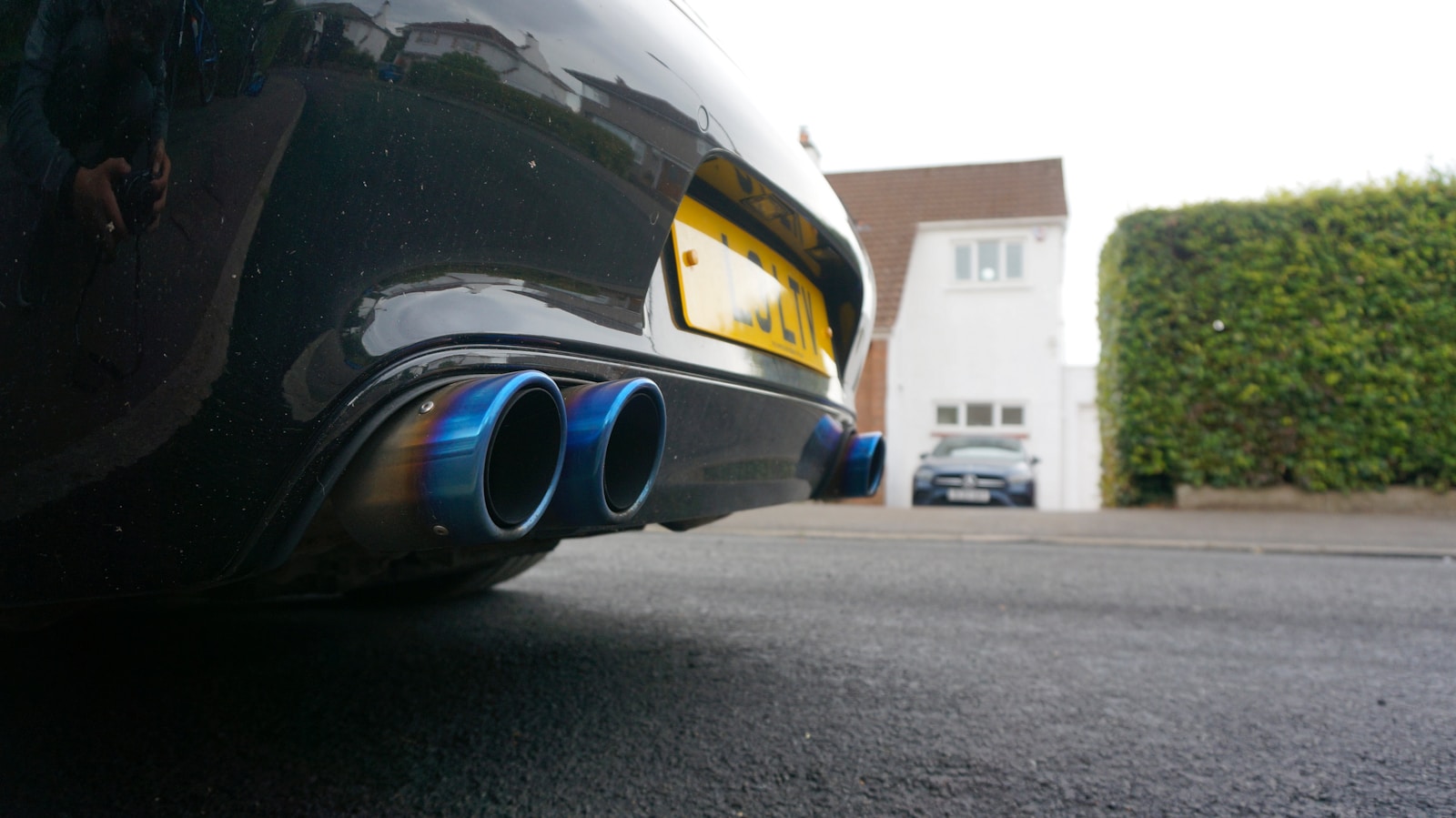

It started, like a lot of marriage arguments do, with a purchase that wasn’t technically secret… just revealed too late for anyone to veto it. Her husband came home on a Tuesday acting weirdly upbeat, like he’d won something, and announced he’d “finally done it.” Then he waved his phone around and showed her the receipt for a performance exhaust system he’d already scheduled to have installed.
She didn’t even know what to say at first, because their life wasn’t exactly “performance exhaust” life. They had a normal driveway, normal neighbors, and a normal budget that already felt tight in the way normal budgets do when groceries keep creeping up and the car insurance renewals hit like a second rent. But he was grinning like a teenager who’d just bought concert tickets, and he kept calling it his “one thing.”
When she asked why, he said it was about “feeling young again,” like that phrase was supposed to make the whole thing sweet and understandable. Except the car he wanted to make louder wasn’t some classic muscle car he’d restored with his dad; it was his everyday commuter. And from the way he said it—half defensive, half excited—she could already tell this wasn’t going to be a phase that quietly lived in the garage.

The exhaust shows up, and so does the new personality
The install happened that weekend, and he came back from the shop revving in the driveway like he’d been practicing for a movie scene. The sound was immediate and ridiculous, the kind of noise that makes you look up from inside your house even if you don’t care about cars. She said it didn’t just rumble; it barked, like the car was angry about being awake.
He was thrilled, though, pacing around the back of the car while it idled, smiling at the tailpipe like it was a piece of art. He kept telling her, “Listen to that,” and then blipping the throttle again as if she hadn’t already heard it through three walls. When she pointed out it was loud enough to wake the neighbor’s baby, he shrugged and said, “It’s not that bad. People are just sensitive now.”
The first awkward moment came almost immediately: their neighbor across the street, the one who always waved and chatted about lawn care, looked over with that tight smile people use when they’re trying not to say what they’re thinking. He didn’t complain directly, but he didn’t wave either. Her husband didn’t notice—or pretended not to—because he was too busy taking a video of the exhaust note on his phone.
Over the next couple of days, he started leaving earlier “so he could enjoy the drive,” which sounded harmless until she realized he was intentionally taking the long way through the quieter streets. He’d come home with that same bright-eyed, smug calm, like the car had given him some kind of therapy session. If she mentioned money or noise, he’d say she was “killing the vibe,” which is not a phrase that lands well in a kitchen full of bills.
Stop one: “Do you know why I pulled you over?”
The first pull-over happened three days after the install, and he didn’t even tell her right away. She found out because he left the citation on the counter under his keys like it was junk mail. It was for a noise violation, and the officer had written a note about “modified exhaust” in that neat, irritated handwriting that suggests the cop has seen this exact situation too many times.
When she confronted him, he tried to play it off like it was nothing—“Just a fix-it ticket” and “They’re cracking down lately.” He said it like he’d been personally targeted by some anti-fun task force. She asked if he’d been revving or speeding, and he said, “No, I was driving normally,” which somehow made the whole thing worse.
Because if he was driving normally and still got pulled over, then the car was basically announcing itself to every patrol unit within a mile. She suggested he put the stock exhaust back on, at least until they could figure out the rules in their area. He stared at her like she’d suggested selling his organs for car parts and said, “I’m not undoing it. That’s the whole point.”
He insisted the ticket would be dropped once he “proved” the exhaust was within legal limits, as if legality was just a misunderstanding that could be cleared up with the right attitude. She asked how he planned to prove that, and he admitted he didn’t know yet. Then he changed the subject to how “good” the car sounded in tunnels.
Stop two: The warning that didn’t land
The second pull-over happened two days later, and this one came with a story he couldn’t hide behind a piece of paper. He walked in annoyed, keys clacked onto the table like punctuation, and started ranting before he even sat down. Another officer, different spot, same issue: exhaust noise.
This time, it was supposedly a warning, and he talked about it like he’d won. “See? He just told me to keep it down,” he said, like that meant the problem had been solved by the universe acknowledging his right to be loud. She asked what “keep it down” even meant when the car is loud at idle, and he said he’d “try not to gun it.”
Then she got a text from a friend who lived a few blocks away: “Is your husband driving that loud car? Because I just heard it and thought someone’s muffler fell off.” That’s when she realized it wasn’t just their immediate neighbors; the sound was traveling. Her husband, meanwhile, was doing that performative innocence thing where he acts confused that actions have consequences.
That night, she asked him again about money—tickets, insurance, the cost of the exhaust itself—and he got defensive in a way that made it clear this wasn’t really about the car anymore. He said he worked hard and deserved something fun, and she didn’t disagree with that part. What she disagreed with was the version of “fun” that involved police stops and fines and waking up half the street.
Stop three: The week falls apart in real time
The third pull-over came before the week was even over, and it’s the one that made her stop arguing and start doing the colder kind of math people do when they’re worried. He was on his way home from work when it happened, broad daylight, and this officer wasn’t interested in warnings. He got cited again, and the ticket amount was big enough that he stopped pretending it was nothing.
He tried to come in with swagger and failed halfway through the front door. He slapped the ticket down and said the cops were “harassing” him, but his voice cracked with frustration. She asked, quietly, if maybe the cops weren’t harassing him and the car was just… illegal.
That’s when he started spiraling into technicalities, talking about decibel limits and “aftermarket compliance” like he’d been reading forums all day. He said he’d take it to a shop and “have them tune it” or “add a resonator,” which sounded suspiciously like spending more money to fix the money problem he created. She asked why he didn’t just reverse it, and he said, “Because then what was the point?”
Her patience thinned in a way she could actually feel, like a rope fraying. She told him the point was getting to work and back without collecting citations, and he accused her of not supporting him. That word—support—hung in the air, because it implied she was supposed to cheer while he lit their shared finances on fire for a midlife soundtrack.
Where the real fight started: pride vs. peace
By the weekend, the issue wasn’t just the exhaust; it was the mood in the house. He was jumpy and angry, checking the window when he heard any car outside like he expected a cop to materialize. She was tense in a quieter way, watching him turn every conversation into a defense of his “right” to enjoy his car.
They started bickering over tiny stuff that had nothing to do with the exhaust—dishes, schedules, who forgot to buy coffee—because that’s what happens when there’s one huge argument sitting in the middle of the room. When she asked whether he’d tell the shop to undo the modification, he said he’d “look into options,” which sounded like a stall. She could tell he wanted a magic fix where the car stayed loud and the world stopped noticing.
He also kept leaning on the “feel young again” line, but now it sounded less like a harmless craving and more like a shield. Like if he said it enough, she’d feel guilty for being the adult in the room. She wasn’t against him feeling good; she was against him turning that feeling into a public disturbance with a payment plan.
And the thing that really got under her skin was how he’d started framing himself as the victim. Not of his own choices, but of other people being too sensitive, too strict, too joyless. Meanwhile, she was the one picturing their insurance premiums creeping up, the neighbors’ patience snapping, and the next traffic stop turning into something worse.
By the time she told the story, the exhaust was still on the car, the tickets were still on the counter, and her husband was still insisting he could “figure it out.” The unresolved part wasn’t whether the car could be made quieter; it was whether he could admit that his version of “young again” had turned him into someone who’d rather be loud and right than calm and accountable. And she couldn’t shake the feeling that the next pull-over wouldn’t just be about the car—it would be about everything they’d been avoiding saying out loud.
More from Steel Horse Rides: