

By the time her car started making that dry, rattly sound every time she turned the wheel, she and her boyfriend were still in the phase where everything felt like a team sport. He was a mechanic, the kind of guy who couldn’t walk past a parking lot without scanning it for bald tires and mismatched panels. She figured dating him meant two things: he’d always smell faintly like soap that couldn’t quite beat engine grease, and her old sedan would finally stop bleeding money.
So when she mentioned the noise and the way her check-engine light was basically a permanent dashboard decoration, he didn’t even let her book an appointment. He told her to bring it by his shop after hours. No invoice, no waiting room coffee, no “we’ll call you when we know what it is.” Just him, a lift, and that confident little shrug that said, I’ve got this.
She thought the “for free” part was sweet. It didn’t feel like a bargain with hidden terms, more like one of those early relationship gestures that’s practical instead of performative. The problem was, he kept the receipt anyway—just not the kind you can staple to your taxes.
The “Free Fix” That Didn’t Feel Free
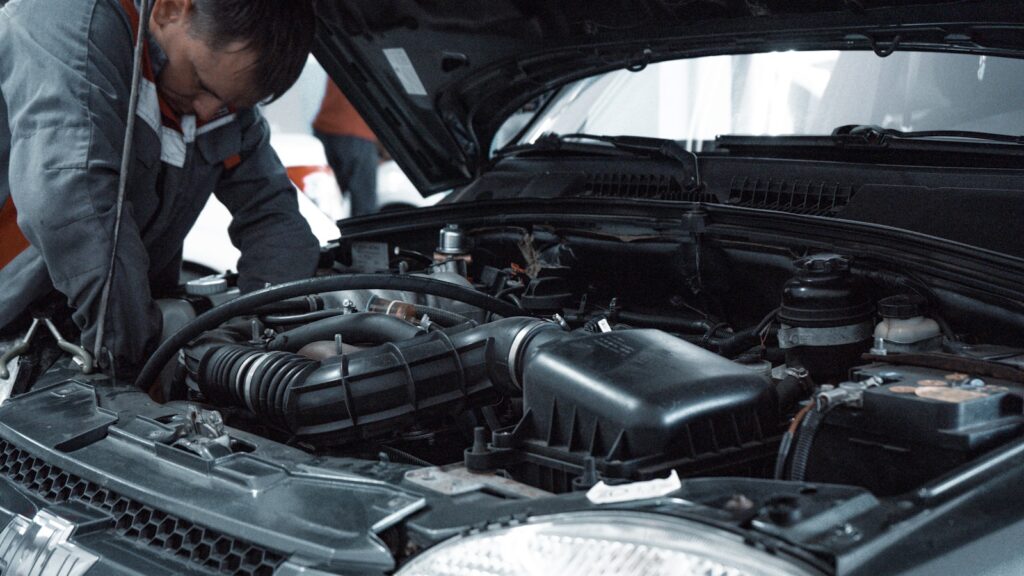
He kept her car overnight, texted her updates like he was live-blogging a surgery: “tie rod end was toast,” “brake fluid looked nasty,” “rotors were basically screaming.” When she offered to pay for parts at least, he refused and sent a selfie with a grin and his hands up, like she’d insulted him. He told her she’d “get him back” another time, and she laughed because it sounded like flirting.
When she picked the car up, it drove better than it had in years. The steering felt tight again, the squeal was gone, and the check-engine light stayed off for an entire week like a miracle. He leaned on the driver’s side window and reminded her, casually, that she shouldn’t take it to anyone else “unless you want to get scammed.”
That line would’ve been nothing on its own. A lot of mechanics say that about other mechanics, and he said it with a teasing tone. But he also asked her to share her location with him “in case anything happens with the car,” which she did, because she wanted to be easygoing and because he’d just rescued her from a repair bill she couldn’t afford.
Little Questions That Started Adding Up
At first it was small stuff—him checking in when she was out later than usual. If she went from work to the grocery store and took an extra twenty minutes, he’d text, “Everything good? Car running okay?” It sounded caring, and she didn’t want to be the person who reads malice into a boyfriend asking if she got home safe.
Then he started noticing details she hadn’t told him. She’d swing by her friend Nina’s place to drop off a borrowed book, and before she even made it back to her car, her phone would buzz: “Didn’t know you were over by Nina’s.” Not “How’s Nina,” not “Hope you’re having fun,” just that—like he was logging her movements.
She joked once, “Are you watching me on a map like a little spy?” and he didn’t deny it. He just said, “I mean, yeah, obviously. After all the work I did on that car, I don’t want you doing dumb stuff with it.” The way he said “after all the work” landed weird, like he’d just slid a bill across the table without printing the numbers.
And whenever she pushed back—even lightly—he’d pivot to the same point: the car. He’d fixed it. He’d done it for free. He’d spent hours. He’d used his tools. He’d taken it seriously. The favor kept floating between them like a ghost he could point at whenever he needed leverage.
When the Map Turned Into a Leash
The first time it really blew up was over a bar. She went out with coworkers after a brutal week, the kind where you can feel your nervous system vibrating even when you’re standing still. She told him she was grabbing one drink, and that was true—until one drink turned into two, and then someone ordered fries, and suddenly it was 11:30.
He texted her a screenshot of her location. Not the address, not a “you okay?”—a screenshot, like evidence. “Why are you at that place?” he asked, and when she responded, he hit her with, “I thought we agreed you weren’t going to bars like that. That’s not a safe area.”
She didn’t remember agreeing to anything. She remembered him mentioning once that the neighborhood was “sketchy,” the same way people say a street is messy or parking is annoying. Now he was treating it like a rule she’d broken, and he kept folding the car into it: “If something happens to you out there, I’m the one who has to deal with the aftermath. I’m the one who made sure that car isn’t a deathtrap.”
When she got home, he was waiting up, not yelling, just icy and tight. He didn’t accuse her of cheating outright; he didn’t have to. He asked why she’d been there, why she hadn’t answered faster, why she’d stayed so long, and why she needed to be out “driving around” at all if she had a boyfriend who could pick her up.
The Favor Becomes a Tab He Keeps Running
From there, the “free fix” started showing up everywhere. If she drove to see her sister on a Sunday, he wanted to know why she didn’t invite him and why she was putting “unnecessary miles” on the car he’d “basically rebuilt.” If she took a different route home because of traffic, he’d ask why she’d “detoured” and whether she’d stopped anywhere.
He got weirdly territorial about her going to certain places, but he framed it like mechanical expertise. “That parking lot is full of potholes,” he’d say. “Those speed bumps will mess up your suspension.” “If you keep taking that highway, you’re going to chew through tires.” It was hard to argue, because the words sounded practical, like the advice of someone who actually knew what he was talking about.
The control wasn’t just in the questions, it was in the tone—like she was a teenager borrowing a parent’s car instead of an adult driving her own. He’d also started using “after everything I’ve done” as a conversational weapon. If she didn’t want to spend the night at his place, he’d remind her how he’d stayed late at the shop for her. If she wanted a solo day, he’d act wounded, like she was ungrateful.
And the worst part was how easy it was to get stuck in the gratitude trap. Every time she felt herself getting angry, she’d remember the cost of the work he’d done and feel guilty, like she was trying to wriggle out of an unspoken contract. He didn’t have to say, “You owe me,” because he’d built a whole lifestyle out of implying it.
The Moment She Realized It Wasn’t About the Car
The shift happened on a random Tuesday that didn’t even start as a fight. She’d had a stressful day and drove to a quiet park just to sit and scroll on her phone for a while, the way people do when they need a buffer between work and home. She didn’t tell him because she didn’t think she needed permission to exist somewhere for twenty minutes.
He texted: “Why are you at the park?” She said she wanted air. He replied, “Turn around and come here. I need to look at something on your car anyway.” When she asked what, he said he’d “noticed” her location was near a road with construction and didn’t want her “messing up” what he’d fixed.
That was the moment the whole thing clicked into place—not as protectiveness, not as concern, but as a system. The location sharing wasn’t about emergencies; it was about access. The free repair wasn’t a gift; it was a down payment on authority. Her car had become the easiest handle for him to grab whenever he wanted to steer her.
She told him she was turning the location off. He went quiet for a beat, then asked, “So you don’t trust me?” and followed it with, “I guess all that work didn’t mean much.” He didn’t say he’d break up with her, but he didn’t have to; he just let the guilt hang there like fumes.
Fallout, Silence, and an Uncomfortable Kind of Freedom
After that, she started noticing how much of her routine had subtly rearranged itself around not triggering him. She’d stopped taking certain routes. She’d stopped lingering anywhere after work. She’d started pre-explaining every errand so she wouldn’t have to deal with the interrogation later, and realizing you’re narrating your own life to avoid conflict does something ugly to your stomach.
He tried to bargain. If she wanted to turn off location sharing, then he wanted a promise she’d “check in” every time she got somewhere. If she didn’t like that, then he wanted her to agree that he’d handle all future car stuff, period, because “clearly” she didn’t appreciate how other shops would treat her. Every compromise sounded like a new version of the same leash.
She didn’t have a clean ending yet—no dramatic slam of the door, no neat little wrap-up where everyone learns a lesson. What she had was this creeping sense that the most expensive thing about a “free” favor is how long it keeps charging interest. And every time she turned the key in the ignition, she couldn’t tell whether she was driving her own car again or just testing how far she could go before he decided she owed him another explanation.
More from Steel Horse Rides: