

It started as one of those annoying little neighborhood frictions that usually burns out on its own: a classic car in a driveway, a few sideways looks, maybe a passive-aggressive comment about “curb appeal.” Except in this case, the neighbor didn’t just glare at the car. He kept trying to get it towed.
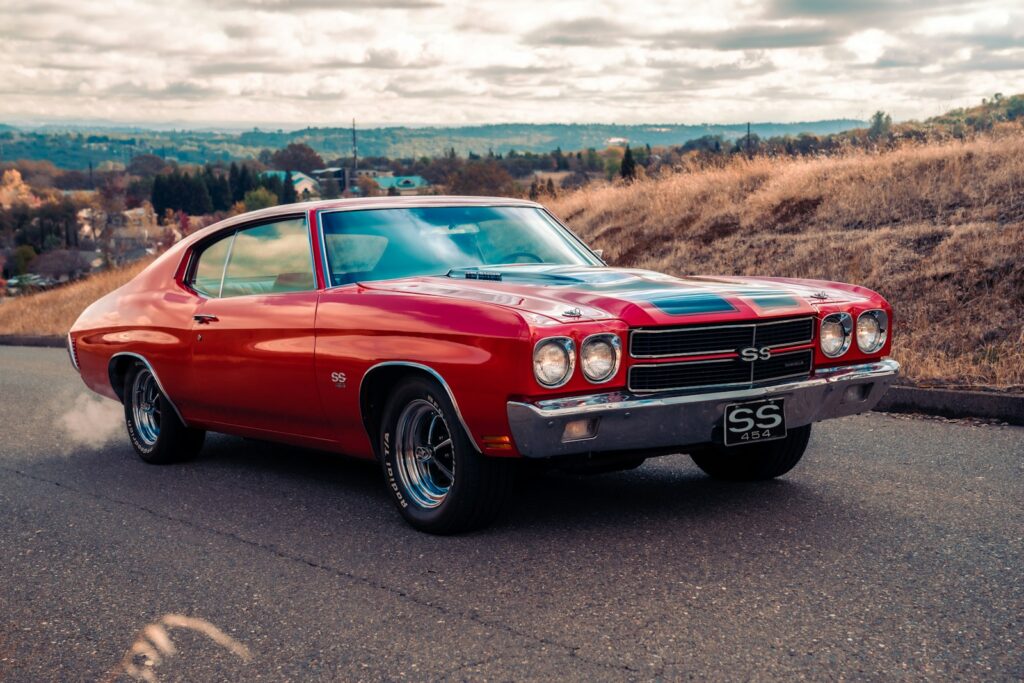
The woman at the center of it owns an older muscle car—one of those clean, loud-in-the-right-way classics that’s more hobby than transportation. It isn’t on blocks, it isn’t full of weeds, and it isn’t sinking into the dirt like a shipwreck. It runs, it has current tags, and it lives where it’s supposed to live: in her own driveway.
And yet, every couple of weeks like clockwork, she’d get a knock at the door or notice a city vehicle lingering too long at the curb. The pattern was getting hard to ignore: someone kept reporting her car as “abandoned,” and the complaints were persistent enough that the city kept coming back to check.
The first “abandoned vehicle” notice
The first time it happened, she assumed it was a mistake. A code enforcement officer showed up with that official, neutral face, walked a slow circle around the car, and asked if it belonged to her. She said yes, it runs, it’s registered, and it’s not going anywhere except to weekend meets and the occasional grocery run when she felt like making a statement.
The officer looked at the plates, glanced at the windshield, and basically shrugged. It didn’t match what “abandoned” usually looks like—no flat tires, no busted windows, no expired tags—but he still had to document the visit because the complaint existed. He took a couple photos, noted the registration, and left her with the kind of polite reminder that makes you feel like you’re still being watched.
She chalked it up to somebody fat-fingering an address or confusing her car with something down the street. Lots of neighborhoods have a rotating cast of broken-down cars and half-finished projects. She didn’t love being checked, but she figured it was a one-time annoyance.
The complaints keep coming, and the timing gets weird
Then it happened again. Same car, same “abandoned vehicle” label, same slow inspection like her driveway was suddenly a public nuisance. The officer this time recognized the situation, or at least recognized the car, and his tone shifted from “introducing a new problem” to “following up on a continuing one.”
That’s when the timing started to feel personal. The car would sit for a few days—normal, because not everyone drives their weekend car on a Tuesday—and somehow a complaint would appear right around day three or four. If she moved it a few feet to wash it or worked on it with the hood up for an hour, there’d be another visit not long after, like someone had been waiting for the exact moment it looked remotely “inactive.”
She began keeping track without meaning to. Dates. Times. The officer’s name on the business card. The fact that the car had clearly been driven recently because the engine was still ticking with heat when the city truck pulled up. It was the kind of petty surveillance that makes you start feeling tense just pulling into your own driveway.
Eventually she asked one of the officers, as casually as she could, if they could tell her who was filing the complaints. He didn’t give her a name. He just said it was “a neighbor,” which in a cul-de-sac or a tight street might as well be a pointed finger.
The neighbor who couldn’t just mind his business
She didn’t have to play detective for long. There was a guy two houses down who’d already made it clear he hated the car, not in a “noise ordinance” kind of way, but in a “this doesn’t belong here” kind of way. He was the type who loved a perfectly empty driveway and treated other people’s property like an extension of his HOA fantasies.
According to her, he’d made little remarks before—nothing directly threatening, just constant little nudges dressed up as concern. “You know, cars like that attract thieves.” “That thing been sitting a while.” “Some people might think it’s abandoned.” It was never phrased as “I’m going to report you,” but it had that unmistakable vibe of someone laying the groundwork so they can later say, “I tried to warn you.”
One afternoon, after the third or fourth complaint, she caught him watching while the officer took photos. He wasn’t hiding, exactly. He was doing that suburban thing where you stand near your mailbox and pretend you just happened to be outside, but your eyes never leave the scene.
She walked over and asked him if he was the one reporting it. He didn’t admit it outright. He just gave her a tight little smile and said something like, “Well, someone has to keep the neighborhood from turning into a junkyard.” Which wasn’t an answer, but it also wasn’t a denial.
Code enforcement’s awkward middle role
Here’s the part that made the whole situation extra maddening: the city officers weren’t villains in this story. They weren’t rude, and they weren’t trying to hassle her for fun. But they also weren’t going to ignore repeated complaints, because that’s not how those departments work—every report becomes paperwork, and every revisit becomes proof that they “responded.”
So she was stuck in this loop where she’d done nothing wrong, the city kept confirming she’d done nothing wrong, and the neighbor kept pulling the lever anyway. The officers would come out, check the tags, confirm it wasn’t abandoned, and leave. Then a new complaint would roll in like someone feeding quarters into a machine.
At one point, an officer asked if she could just keep it in the garage to “avoid more issues,” the way people suggest you rearrange your life to accommodate someone else’s obsession. She didn’t even have room in the garage without moving a bunch of storage and tools, and besides, the principle of it made her jaw clench. It was her driveway. The car was legal. Why should she have to hide it like contraband?
She started feeling like she had to “prove” the car was alive. She’d move it a few feet every couple days, not because it needed to be moved, but because she didn’t want to give anyone an excuse. It turned her own hobby into a chore, like she was maintaining a paper trail of normalcy.
Escalation: paperwork, photos, and the threat of a tow
The turning point came when one visit didn’t feel routine anymore. The officer was still polite, but he mentioned that repeated reports can sometimes trigger a more formal process. Not because the car suddenly becomes abandoned by magic, but because the system isn’t built for a neighbor who won’t stop pushing the same button.
She heard the words “tow notice” and “compliance timeline,” and that’s when her annoyance turned into that cold, focused anger people get when they realize someone is trying to take something from them using bureaucracy. It wasn’t just irritating; it was a direct threat to her property. Even if she could get it back after the fact, the idea of her classic car being hauled off because a neighbor kept lying made her feel sick.
So she began documenting everything like she was preparing for a court case. Photos of the plates. Screenshots of registration renewal. Videos of the engine starting. Time-stamped pictures showing it parked in her driveway, then moved, then parked again. She wrote down the dates code enforcement came out, and she started requesting records when she could, just to show a pattern.
And in the middle of all this, the neighbor didn’t stop. He didn’t ease up once he realized it wasn’t working. If anything, the persistence suggested he wasn’t doing it out of confusion—he was doing it because he wanted to wear her down until she gave up and moved the car somewhere else.
The confrontation that didn’t resolve anything
She tried the direct approach again. Not screaming, not dramatics—just walking over and telling him, clearly, that the car is registered, operational, and legally parked on her property. She asked him, point blank, what he wanted.
He acted offended, like she’d accused him of something unreasonable. He talked about “standards” and “property values” and how “you can’t be too careful” about vehicles that “sit.” He also conveniently avoided acknowledging that he was calling it abandoned when he knew it wasn’t, which is the whole trick of this kind of harassment: you wrap it in concern so you can pretend you’re the responsible one.
She told him she had documentation now, and that if the reports continued, she’d treat it as targeted harassment. He shrugged in a way that didn’t say “I’m innocent,” but did say “prove it.” Then he went back inside, like he’d just finished a normal neighborly chat about lawn fertilizer.
After that, the street felt different. The car didn’t just sit there looking cool; it sat there like a dare. Every time she heard a truck slow down outside, she’d peek through the blinds. Every time she went to start it, part of her wondered if she was doing it for herself or because she felt like she had to perform “not abandoned” for an audience.
The situation hadn’t reached a neat conclusion, and that was the maddening part. The car was still in her driveway, still legal, still hers—but it now came with this constant background tension, like a low hum you can’t turn off. The neighbor hadn’t “won,” exactly, but he’d managed to turn her own home into a place where she had to stay ready, because the next complaint could be the one that finally forces her to fight on paper instead of just in conversation.
More from Steel Horse Rides: