


It started as one of those normal, slightly annoying rides where you’re already running behind and the app’s little car icon is moving like it has somewhere better to be. The woman had ordered an Uber to get across town, the kind of trip you don’t think twice about until the driver pulls up and you immediately clock that he’s in a mood. Not yelling or anything—just tight-jawed, curt, the “say the name, get in, don’t talk” vibe.
She slid into the back seat, buckled up, and did the quick safety glance people do without thinking: door handle, window button, driver’s mirror. She says she had her phone in her hand with the route open, mostly because she’d been burned before by drivers “taking the scenic route” when traffic’s bad. The pickup was smooth, the car rolled out, and then within a couple minutes she noticed they were headed toward an on-ramp that didn’t match what her map was showing.
That’s the moment the ride stopped being background noise and turned into a fight. She tried to keep it light at first—more “hey, are we taking the highway?” than accusation. But the driver didn’t respond like someone who’d simply missed a turn; he responded like someone who’d been challenged.
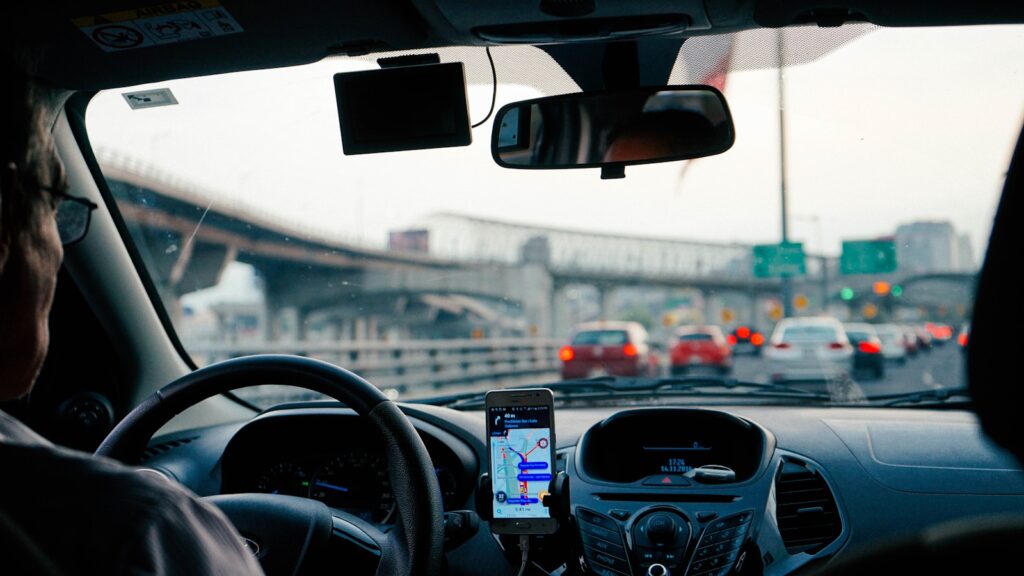
The first disagreement: “I know a faster way”
According to her, the driver snapped back with something along the lines of, “The app doesn’t know traffic like I do,” and kept driving as if the conversation was over. She watched the ETA tick up and the route line on her screen redraw in that way that always makes you feel like your plans are dissolving in real time. The woman says she told him she’d prefer to follow the in-app route because she was on a schedule and didn’t want any detours.
That’s when the tone shifted from annoyed to hostile. The driver started giving short, dismissive answers—“It’s fine,” “Relax,” “I do this all day”—and she says he threw in a comment that made it personal, like she was trying to tell him how to do his job. The car wasn’t swerving or speeding, but the atmosphere got dense fast, the kind where even the air conditioner feels aggressive.
She tried to reset: “Look, I’m not trying to argue. I just want the route I picked.” The driver apparently replied that passengers always think they know better because they’re staring at a phone, and that he wasn’t going to sit in traffic just because an app said so. She says she asked him to pull over so she could end the ride and request another driver.
“No, we’re not stopping”: the moment it got scary
She expected the normal reluctant-but-compliant response—an eye roll, a sigh, maybe a muttered complaint—followed by a pull into a gas station or a safe curb. Instead, she says he told her he wasn’t stopping “right here,” and kept going. The woman says she repeated it more firmly: pull over, now.
At this point, the disagreement wasn’t even about the route anymore. It was about control, and she could feel it. He started lecturing her about how dangerous it was to stop on certain roads, about how she didn’t understand the area, about how she needed to “calm down,” all while continuing to drive in a direction she hadn’t agreed to.
She says she reached for the door handle, not to jump out while the car was moving, but to test it—like people do when they’re suddenly aware they’re in someone else’s locked vehicle. The handle didn’t open. She tried again, thinking maybe she pulled the wrong way or there was a child lock or something. Still nothing.
That’s when she asked, directly, whether the doors were locked. And according to her, he didn’t deny it. He either shrugged it off or gave a flat “Yeah, obviously,” as if locking a passenger in during an argument was normal operating procedure.
The locked doors and the weird, tense stalemate
It’s hard to describe the particular panic of realizing you can’t leave an enclosed space with a stranger, especially when that stranger is already mad at you. The woman says her voice went shaky in spite of herself and she told him to unlock the doors immediately. The driver, rather than unlocking them, doubled down—telling her she was “being dramatic,” that he wasn’t doing anything wrong, and that he’d let her out “when it’s safe.”
There’s a quiet horror in that phrasing—when it’s safe—because it suggests he gets to decide what “safe” means. She says she started looking around for landmarks, trying to orient herself, noticing they weren’t in a busy area anymore. Fewer cars, fewer storefronts, less of that comforting sense that if you yell, someone will hear you.
She did what a lot of people would do: she grabbed her phone tighter and tried to think through options without escalating him further. She considered hitting the emergency button in the app, but she also worried that if he saw her doing it, it would set him off. So she went with direct language first, telling him she was ending the ride and he needed to pull over and unlock the door.
He apparently laughed—an ugly little burst of disbelief—and said something like, “Go ahead, end it.” Which is a terrifying flex if you’re the one locked in the back seat, because it implies the app is no longer relevant and you’re now negotiating in a private reality where the rules are his.
The threat that changed everything: “I’m calling the police”
She says she stopped trying to persuade him and switched to something sharper. Not screaming, but clear: if he didn’t pull over and unlock the doors right now, she was calling the police and reporting that she was being held in a vehicle against her will. There’s a difference between “I’m uncomfortable” and “this is unlawful,” and she deliberately used the second one.
That got his attention. The woman describes a beat of silence where the driver finally seemed to calculate how this would sound if a dispatcher was listening, or if a patrol car showed up, or if the trip data got subpoenaed. His posture changed. His voice changed.
He started arguing again, but it was the kind of arguing people do when they’ve realized they’ve crossed a line and they’re trying to talk you back behind it. He said she was misunderstanding, that the doors were locked for “safety,” that she was making it into a bigger deal than it was. She repeated the same sentence: pull over, unlock the doors, or she’s calling 911.
She says she started dialing, not just bluffing. She lifted the phone so he could see the screen in the mirror, which is a risky move but also one of the only ways to communicate seriousness without physically escalating. The driver’s response wasn’t an apology—it was compliance wrapped in resentment.
The drop-off that wasn’t a drop-off
He finally pulled into a spot—she describes it as a wide shoulder or a turnout near a busier street—and the car slowed to a stop. For a second she didn’t move, because she didn’t trust that stopping meant anything. Then she heard the click: the doors unlocked.
She didn’t gather herself neatly. She didn’t do the polite “okay, thanks” thing people do out of habit even when they’re furious. She grabbed her bag and got out fast, stepping away from the car like it might lunge after her.
The driver said something as she was leaving—either a final jab about her attitude or a defensive “I didn’t do anything”—but she didn’t engage. The ride ended in the app, but the feeling didn’t end with it. She stood there a moment, heart hammering, looking down at her phone and realizing her hands were shaking hard enough to make the screen blur.
Afterward, she said she reported him through the app, and she considered making a police report too, but she wasn’t sure what would happen or whether she had enough information beyond what was already in the ride details. That uncertainty is part of what made the whole thing stick to her—because the most frightening part wasn’t the argument, it was how quickly a routine service turned into a locked-door standoff where “please” didn’t work and only the threat of police snapped him back into reality. And even then, he didn’t act like someone who understood he’d scared her; he acted like someone who was angry he’d been forced to stop.
More from Steel Horse Rides: