

She wasn’t snooping. That’s the part she kept repeating, mostly to herself, like if she said it enough times it would stay true. Her husband’s work truck had become a rolling junk drawer—receipts, empty water bottles, loose screws, a half-dead phone charger—and she’d offered to help clean it out because he’d been complaining he couldn’t find anything in there.
It was one of those weekend mornings where you’re both home, both pretending you’re not annoyed at each other, and you pick a “productive” task as a truce. He tossed her the keys, told her the passenger side was a disaster zone, and went inside to shower. She climbed up, bracing one knee on the running board, already planning to throw out the fast-food bags and wipe the sticky cup holder.
Ten minutes in, her fingers closed around something familiar in the dark space between the center console and the passenger seat. A small metal glint, a little cold against her skin. She pulled it out, and her stomach did that drop you get when you realize you’re not about to have a normal day.
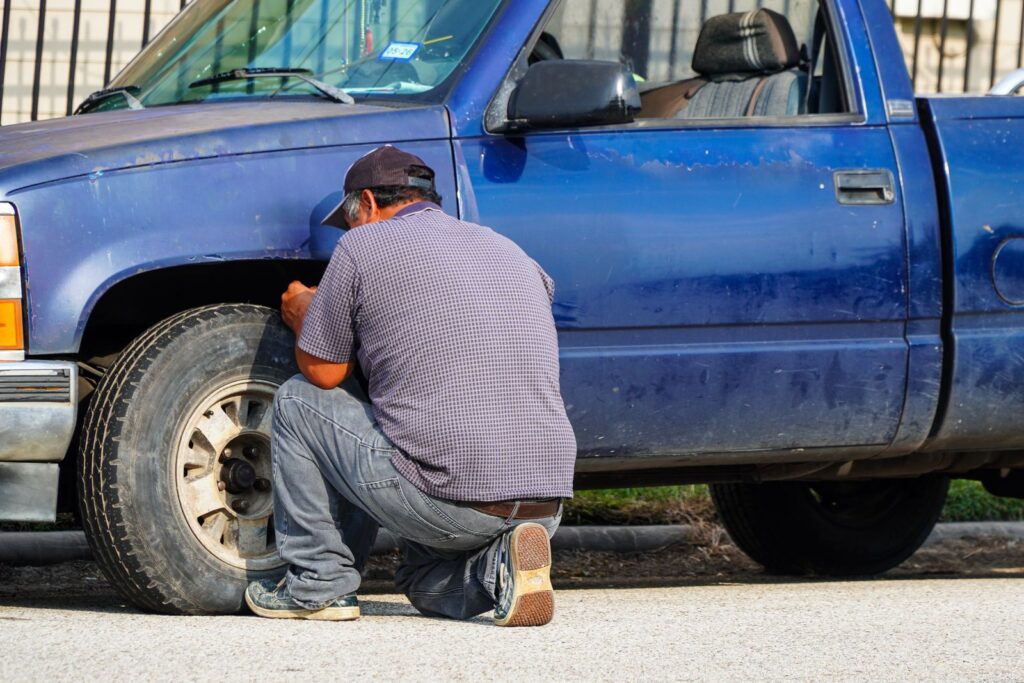
The earrings she’d stopped looking for
They were her earrings—one of the pair, at least. Small gold hoops with a tiny engraved pattern, the kind she wore all the time because they went with everything and didn’t snag her hair. She’d noticed they were missing weeks ago and went through the whole routine: checked the bathroom sink, shook out hoodie pockets, dug through the laundry basket, even looked under the bed with her phone flashlight.
Her husband had helped in that half-hearted way people do when they’re trying to be supportive but also want the search to end. “They’ll turn up,” he’d said, which is what everyone says right before an item disappears forever. She’d eventually shrugged it off and replaced them with cheap studs, telling herself it was a dumb thing to be upset about.
So seeing one hoop in his truck felt weird, but not impossible. Maybe it fell out when she rode with him. Maybe it got hooked on a scarf and dropped. She tried to stay in that lane—normal explanations, boring reasons—while she set it in the cup holder like she’d found a coin.
The hair clip that didn’t belong
Then she reached deeper, fishing out a crusty napkin and something plastic that snapped against her fingernail. It was a hair clip, the cheap claw kind, but not the basic black or tortoiseshell ones she owned. This one was glossy pale pink, with a little rhinestone strip down the spine—something you’d buy on impulse at a drugstore checkout.
She didn’t wear pink. She didn’t own anything with rhinestones. Her hair was short enough that claw clips were more annoyance than help, and she’d made that clear every time her mother tried to gift her one. She stared at it in her palm and did the quick inventory of possibilities anyway: maybe it was old, maybe it belonged to a cousin, maybe it had been in the truck forever.
But the clip wasn’t dusty or sun-faded. It looked like it had been used recently—tiny scuffs near the hinge, a strand of light brown hair caught in the teeth. Not her color. Not her texture. Her brain, which had been working so hard to keep things calm, quietly stopped cooperating.
She lined the two items up on the passenger seat: her earring and the unfamiliar clip. Then she just sat there for a second, listening to the house vents kick on, hearing the shower running inside, and feeling that creeping heat of knowing you’re about to ask a question that might change everything.
“Why is this in your truck?”
When he came back out, towel around his neck, she was still in the driveway with the passenger door open. She didn’t do a dramatic confrontation. She held up the clip between her fingers and asked, as evenly as she could, “Why is this in your truck?”
He blinked like he didn’t understand the words. Then his face did that quick reset—eyes flicking to the truck interior, then back to her, then down at the clip like it might explain itself. “I don’t know,” he said, too fast. “Probably yours.”
She didn’t raise her voice. She didn’t need to. “It’s not mine,” she said, and then pointed at the earring. “And that’s mine. I’ve been looking for it.”
He laughed once, short and wrong. “Okay, but we’ve had people in the truck,” he said, which was news to her because this wasn’t a crew vehicle. It was his assigned work truck—his space, his responsibility, the thing he was weirdly protective of. The only “people” who were ever in it were him, occasionally her, and sometimes their dog when he’d swing by home during lunch.
She watched him build the explanation in real time. He said coworkers sometimes borrowed it to move equipment. He said someone’s kid could’ve climbed in at a job site. He said it could’ve been stuck under the seat for months. Each sentence came with a slightly higher pitch, like he was trying to talk his way out of a room that was getting smaller.
The story kept changing
She asked for specifics. Which coworker borrowed it? When? For what job? He answered in generalities, and when she pressed, his answers shifted. First it was “the guys” sometimes grabbing it, then it became “one guy” once, then it became “I don’t remember, why are you interrogating me?”
That last line was the turning point, because it flipped the energy from confusion to defensiveness. She hadn’t even accused him of cheating out loud yet; she’d just asked why another woman’s hair clip was in the truck with her missing jewelry. But he started acting like she was already calling him guilty.
She kept her voice low, which somehow made him more agitated. She said she could accept a weird explanation, but she needed one that made sense. He told her she was being paranoid, that she always jumped to conclusions, that he couldn’t control what ended up in a truck he used for work.
That’s when she did the thing people do when they’re trying not to cry: she got practical. “Can I see your phone?” she asked, not as a threat, like a test he could pass and end the whole conversation. He didn’t hand it over. He said, “Seriously?” and pocketed it like she’d reached for it.
The little details that wouldn’t sit right
She went back to the objects because objects don’t gaslight you. The clip was still warm from her hand, the rhinestones catching the daylight, the strand of hair like a signature. Her earring, meanwhile, made its own weird point: if her earring could end up in his truck, it meant she’d been in that seat at some point when it fell out. Which made her realize she hadn’t ridden in the truck in weeks.
He said maybe it was stuck in her jacket and fell out later. She asked why it would land under the passenger seat instead of on the floor. He snapped that he wasn’t going to debate physics. Then he tried to take the clip from her hand, like he could make it disappear by removing it from her sight.
She pulled back, and that small motion—guarding a hair clip like it was evidence—made the moment feel suddenly ugly. He went quiet, jaw tight, eyes narrowed like she was the one who’d betrayed him. She told him, calmly, that she was going inside and that she didn’t want him following her until he could explain what was going on without getting angry.
He followed her anyway, not close enough to look like a threat but close enough to feel like pressure. Inside the kitchen, he started doing chores he didn’t usually do—opening the fridge, moving things around, wiping a counter that wasn’t dirty—like he could scrub the tension out of the air. She sat at the table with the clip and the earring placed in front of her like tiny, humiliating paperweights.
What happened next wasn’t a clean resolution
He offered one more explanation: maybe a female coworker had ridden with him to a site, maybe she left it. That was the first time he’d admitted a specific scenario that involved an actual woman, and it landed badly because it sounded like a reluctant confession dressed up as a possibility. She asked why he hadn’t mentioned a coworker in the first place, and he said because it “didn’t matter” and he didn’t want her “making it weird.”
She told him it was already weird. She asked him to call his supervisor and confirm whether anyone else had been assigned to his truck recently. He refused, saying he wasn’t going to “drag work into their marriage.” She asked again to see his phone, and he said no, that she was being controlling.
By that afternoon, the fight had spread into all the older cracks couples pretend aren’t there. He accused her of not trusting him and of looking for reasons to be unhappy. She accused him of acting like someone with something to hide. The hair clip stayed on the table the whole time, untouched, like a third presence in the room.
And the part that kept looping in her head wasn’t even the clip itself—it was the way he’d gone from confused to defensive in under a minute, the way his story had mutated based on what she asked, the way he’d protected his phone like it mattered more than her peace of mind. By the end of the day, her earring was back in her jewelry dish where it belonged, but it didn’t feel recovered. It felt like a reminder that sometimes the smallest objects don’t prove anything outright—they just make it impossible to unsee the shape of a lie.
More from Steel Horse Rides: