

You grew up with the idea that cars can mean more than transport — they can shape style, sound, and culture. This article shows how eight iconic 1960s models captured that energy and still influence design, performance, and fandom today.
You’ll get a concise tour of eight standout 1960s cars, why they mattered then, and what makes them memorable now. Expect snapshots of design, performance highlights, and the lasting appeal that keeps these models in conversation.
Ford Mustang

You likely picture a long hood and a throaty V8 when you think of the 1960s Mustang. Ford launched it in 1964 as a sporty, affordable coupe and convertible that put performance within reach.
You could choose engines from a modest six to high-performance 289 V8s, making the Mustang adaptable to daily driving or spirited cruising. Its style, pricing, and optional upgrades turned it quickly into an icon of the decade.
Chevrolet Camaro
You’ll recognize the Camaro’s bold lines and muscular stance from a block away; it helped define the 1960s pony car era.
Chevrolet offered a range of engines and trim levels, so you could pick a nimble Z/28 for handling or a big-block SS for straight-line power.
Owners prize the Camaro for its mix of style and performance, and collectors value early examples like the 1969 models.
If you’re into restorations or weekend cruises, the Camaro delivers classic looks with plenty of aftermarket support.
Dodge Dart
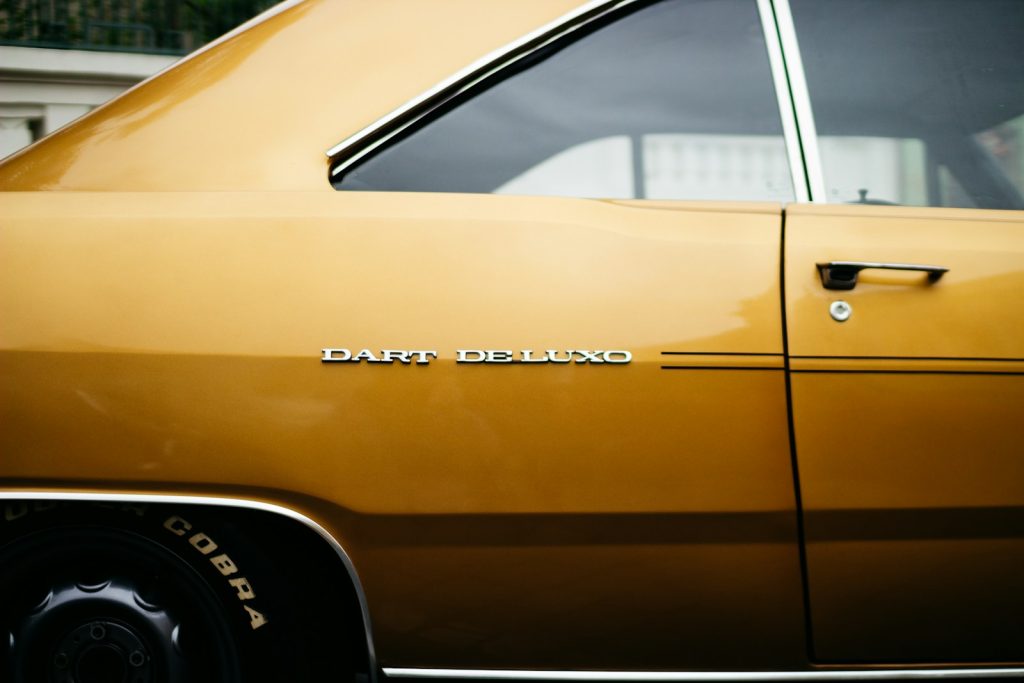
You’ll find the Dodge Dart introduced in 1960 as a bold, compact-for-its-class choice that quickly became popular.
It offered multiple body styles, three trim levels, and engines from a Slant Six to V8s, so you could tailor it to your taste.
The Phoenix and performance D-500 variants gave the Dart a sporty edge without abandoning everyday usability.
Collectors prize early Darts for their styling and adaptable platforms, and they remain attainable classics you can enjoy.
Volkswagen Beetle
You’ll recognize the Beetle instantly by its rounded shape and compact size.
It gained huge popularity in the 1960s for being affordable, easy to maintain, and reliable.
You can appreciate its simple engineering and air-cooled rear engine if you like hands-on driving or classic car restoration.
Many owners value its cultural charm and the wide availability of parts when keeping one roadworthy.
Barracuda Plymouth

You’ll find the Barracuda early in the 1960s lineup as Plymouth’s answer to the pony-car trend.
It began as a compact, Valiant-based two-door in 1964 but quickly evolved toward true muscle-car performance.
By the late 1960s the Barracuda offered bigger V8s and bolder styling that matched competitors.
If you like collectible classics, the Barracuda’s mix of rarity and performance makes it a standout choice.
Shelby Cobra
You’ll spot the Shelby Cobra by its compact British body and a thunderous Ford V8 planted under the hood.
Carroll Shelby mated the AC Ace chassis with American muscle, creating a lightweight sports car built for speed.
Driving one feels raw and immediate; steering and power connect directly to your hands and ears.
The 427 Cobra, in particular, paired a big-block V8 with a tiny frame, making it a defining performance icon of the 1960s.
Pontiac GTO
You’ll spot the 1964 Pontiac GTO as a turning point in American performance, packing a 389 V8 into a midsize body for big-power fun.
John DeLorean pushed Pontiac to offer race-level performance to everyday drivers, and that gamble helped spark the muscle car boom.
You’ll appreciate its clean lines and honest speed, qualities that made the GTO a favorite among enthusiasts then and now.
Mini Cooper
You’d spot the Mini Cooper instantly by its compact shape and cheeky stance. It packed clever engineering into a tiny package, making city driving nimble and fun.
If you like sporty surprises, the Cooper S brought more power and rally credibility, winning major events in the mid-1960s. Its mix of practicality and personality made it a 1960s icon you can still enjoy today.
More from Steel Horse Rides: