
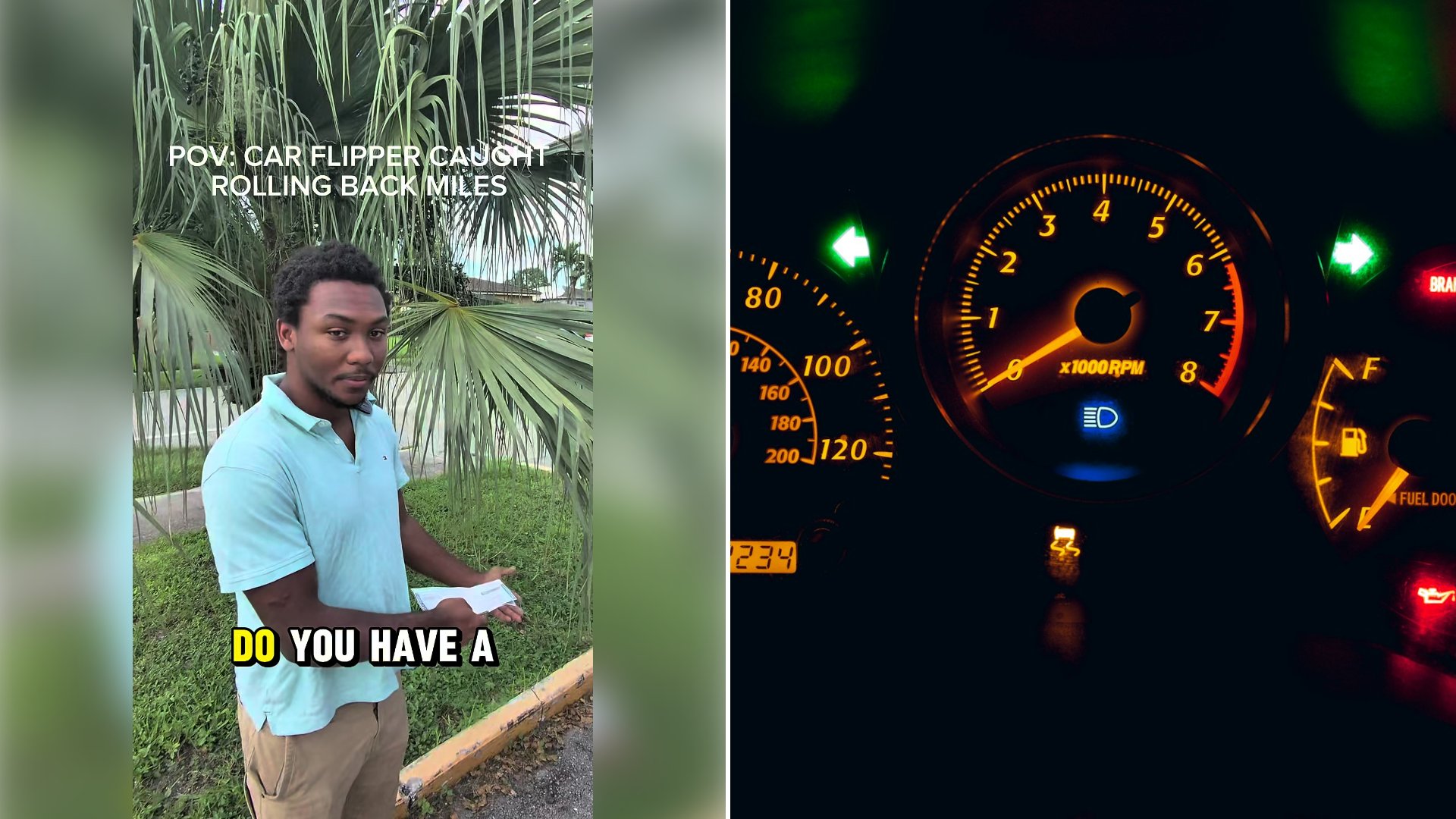

A video from the account Mateoflips opens with an on-screen title that sets up the whole encounter: “POV: CAR FLIPPER CAUGHT ROLLING BACK MILES.” The caption drops the second red flag the buyer uncovered: “the title is not even in his name ☠️.” Tagged #facebookmarketplace, #carflipping, #business, #profit, and #scam, the video shows the buyer confronting a Facebook Marketplace seller on camera and pulled in 44,600 likes, 367 comments, 2,809 saves, and 597 shares.
@mateoflips the title is not even in his name ☠️
Odometer rollback is a lot more common than most shoppers assume, and it isn’t cheap when it happens. NHTSA’s own research estimates that roughly 3.47 percent of passenger vehicles get their odometers rolled back at some point in their first 11 years, working out to about 452,000 cases a year nationwide. The agency puts the average extra cost to a buyer who unknowingly pays for a rolled-back car at around $2,336 per case, a figure that doesn’t even include the inflated financing, insurance, and resale costs that tend to follow a car with a falsified mileage history.
The second problem this video surfaces, a title that isn’t in the seller’s name, is its own separate warning sign according to PrivateAuto’s breakdown of title red flags. A clean title should show the correct owner’s name matching a photo ID, and the guide flags an active, undisclosed lien, altered or scratched-out paperwork, and a recently issued out-of-state title, a common sign of “title washing,” where a branded title gets moved to a new state specifically to look clean, as equally serious warning signs. Frequent title reassignments in a short window are another pattern the guide calls out directly, since it’s exactly the kind of history a seller flipping cars quickly and skipping proper paperwork would generate.
PrivateAuto’s recommended protections are straightforward but easy to skip when a deal feels urgent: verify the seller’s identity against the title and a photo ID in person, match the VIN across the vehicle, title, registration, and bill of sale, and run a lien check through state records before any money changes hands. A seller who gets annoyed or tries to rush a buyer through these checks, which is exactly the posture this video’s seller seems to be caught in, is itself one of the clearest signals something is being hidden.
More from Steel Horse Rides
- Owner Says the Seats in a 1986 Toyota 4Runner Smell Exactly How You Would Imagine, Then Pulls Out the Carpet and Asks Followers to Pick the Color for the New Kit
- Mechanic Pulls a Snapped Crankshaft Apart in Two Pieces on the Shop Bench, Says the Car Drove In Like That and Jokes the Customer Only Wanted an Oil Change
- Narrator of a Repair Clip Says a Car That Shook Every Time the Owner Hit the Gas Had an Engine Mount Cracked Clean in Half, Then Explains Why the Impact Wrench Is Not the Last Step