

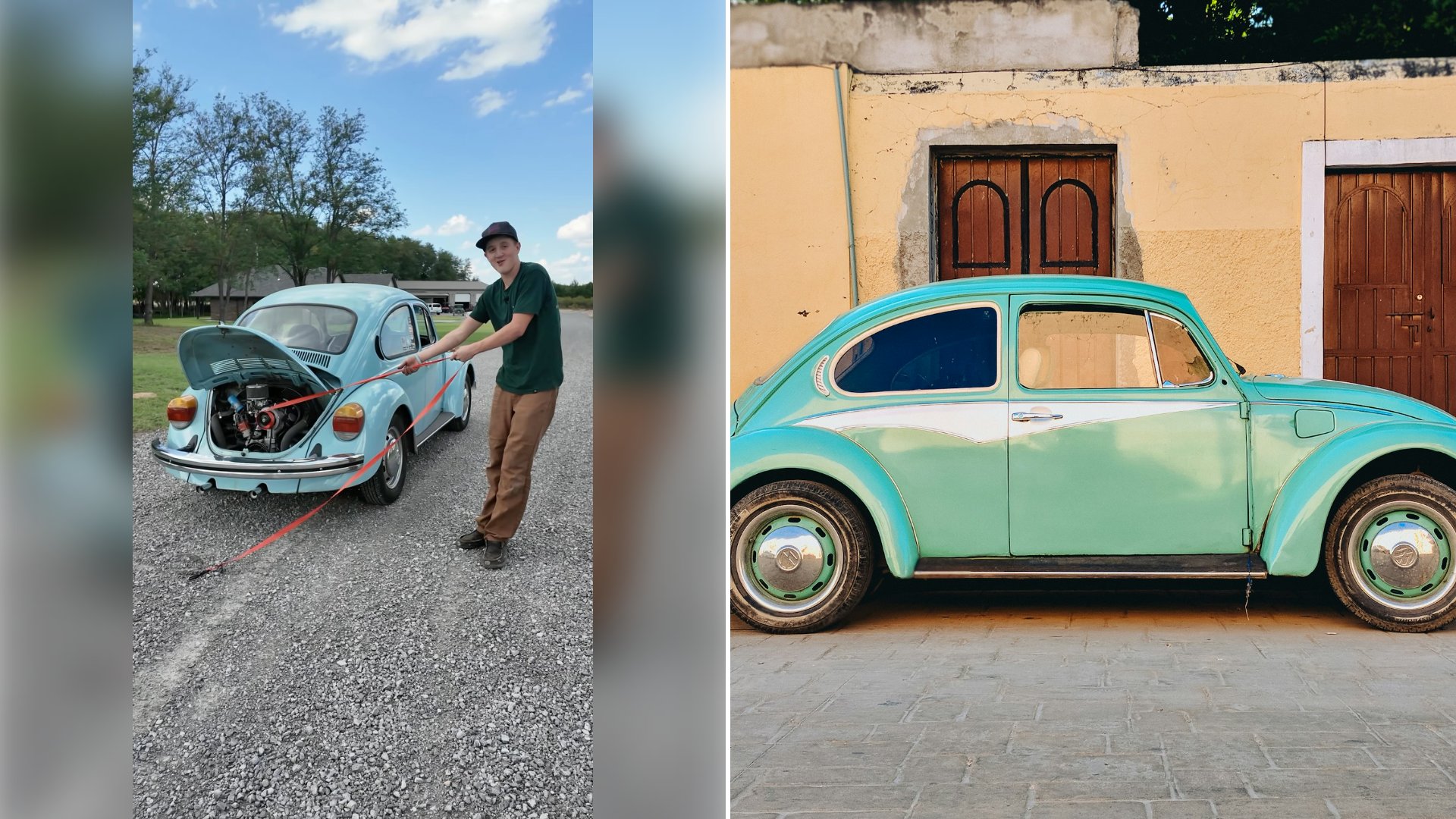
A video from @speedbumpgarage shows a mechanic using a strap to pull-start a classic Volkswagen Beetle instead of the usual push start, captioned simply: “Pull Start Bug.” The clip drew 128,000 likes, 869 comments, and 1,834 shares.
Push starting became a Beetle tradition for a simple reason: Volkswagen’s air-cooled Beetles ran on a 6-volt electrical system all the way up through the 1966 model year before switching to 12 volts for 1967, and 6-volt systems deliver meaningfully less cranking power to the starter than their 12-volt successors. On a car already decades old, that thinner margin means a starter, solenoid, or battery only has to lose a little performance to corrosion, age, or a weak charge before the engine simply won’t turn over on its own, and push starting became the universal workaround because a rolling car in second gear can spin the engine with momentum instead of electrical current.
A strap-and-pull method does the same basic job as a push start, using mechanical force to spin the engine over, but it solves a different practical problem: it works when there’s no hill, no extra set of hands to push, or not enough room to get the car rolling fast enough. Classic VW forums are full of owners troubleshooting exactly this scenario, a Beetle that cranks weakly or not at all, tracing it back to corroded starter contacts, a tired six-volt battery, or a solenoid that’s finally given out after decades of service, all common failure points on air-cooled cars this old regardless of how well they’ve otherwise been maintained.
None of this means the Beetle in the video has a serious problem; it just means its owner found a creative solution to a very old, very common one. Push starting and pull starting are both workarounds, not fixes, and the fact that Beetle owners still need them more than fifty years after the last 6-volt model rolled off the line says less about this particular car and more about how electrically marginal these engines always were, even when new.
More from Steel Horse Rides
- Owner Says the Seats in a 1986 Toyota 4Runner Smell Exactly How You Would Imagine, Then Pulls Out the Carpet and Asks Followers to Pick the Color for the New Kit
- Mechanic Pulls a Snapped Crankshaft Apart in Two Pieces on the Shop Bench, Says the Car Drove In Like That and Jokes the Customer Only Wanted an Oil Change
- Narrator of a Repair Clip Says a Car That Shook Every Time the Owner Hit the Gas Had an Engine Mount Cracked Clean in Half, Then Explains Why the Impact Wrench Is Not the Last Step