

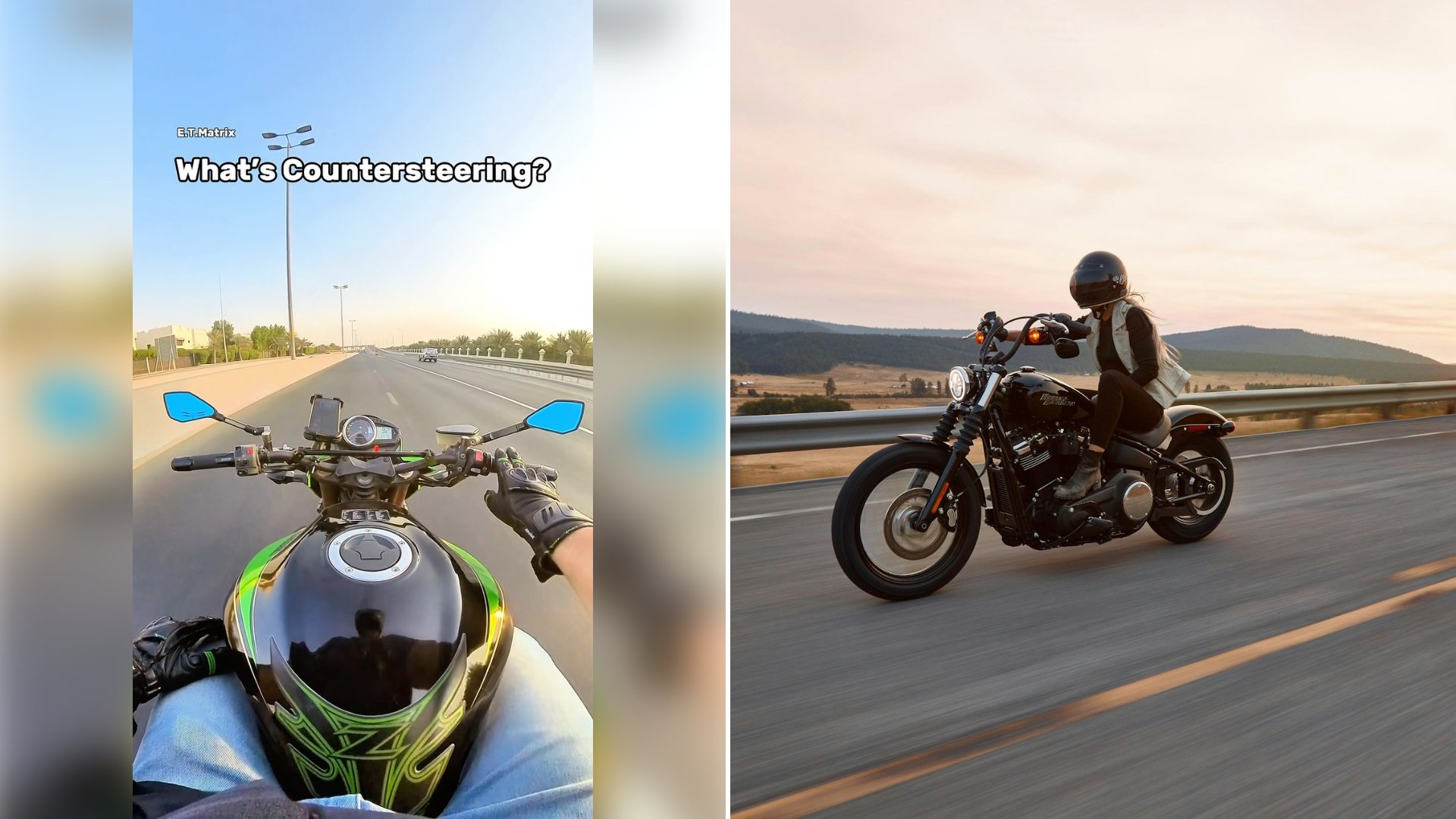
A first-person video from the verified account e_t_matrix puts viewers directly in the rider’s seat, hands on the bars, for a plain-caption lesson: “Countersteering on a motorcycle.” Tagged #motorcycle, #motorcycletips, #bikelife, and #etmatrix, the clip pulled in 11,600 likes, 95 comments, and 144 shares.
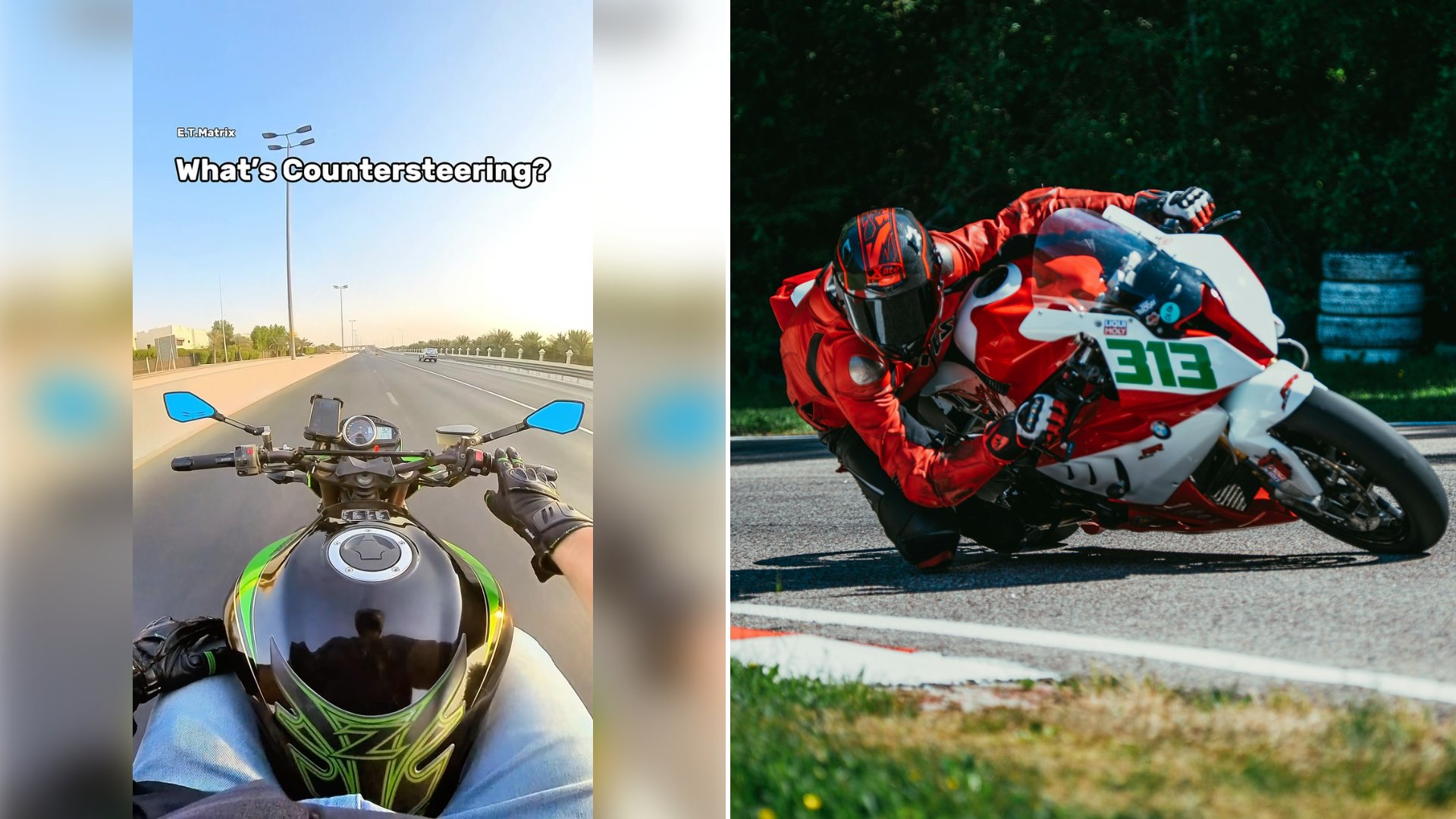
Countersteering is the single most counterintuitive thing a new rider has to unlearn from driving a car, and RideApart’s breakdown of the physics explains why it works the opposite way instinct suggests: to turn right on a motorcycle, a rider pushes forward on the right handlebar, which actually steers the front wheel slightly left and causes the bike to lean right into the turn. The lean, not the front wheel’s direction, is what actually carries the bike around the corner, and RideApart notes the front tire’s contact patch sits behind the axle on the turn side in a way that helps the bike track smoothly once it’s leaning. Pulling the opposite bar happens too, but the push is what starts the lean, which is why instructors shorthand the whole technique as “push, pull.”
The reason this becomes necessary instead of optional once a bike is moving comes down to gyroscopic force. RideApart explains that the spinning mass of the wheels resists changing direction, and that resistance is strong enough above roughly 15 mph that simply leaning the bike with body weight alone, the way a bicycle rider might, stops being an effective way to turn. The Ottawa Safety Council’s rider-training materials describe the same mechanism from the instructor’s side: turning the bars one direction makes the bike lean the other way and then turn in that direction, and because that’s the reverse of how steering a car or a tricycle works, new riders’ instincts often steer them straight into the exact obstacle they’re trying to avoid rather than away from it.
Both sources frame countersteering as something to drill until it’s automatic rather than a trick to understand once and move on from. The Ottawa Safety Council’s suggested practice is a slalom of consecutive S-curves ridden as one continuous, smooth path, specifically because it forces a rider to initiate the push-steer input repeatedly rather than relying on body lean out of habit. RideApart adds a useful self-check for whether a rider is doing it correctly: effective countersteering takes very little physical force, and if a rider feels like they’re pushing themselves away from the bike rather than just pressing the bar, they’re overdoing the input rather than trusting the technique.
More from Steel Horse Rides
- Owner Says the Seats in a 1986 Toyota 4Runner Smell Exactly How You Would Imagine, Then Pulls Out the Carpet and Asks Followers to Pick the Color for the New Kit
- Mechanic Pulls a Snapped Crankshaft Apart in Two Pieces on the Shop Bench, Says the Car Drove In Like That and Jokes the Customer Only Wanted an Oil Change
- Narrator of a Repair Clip Says a Car That Shook Every Time the Owner Hit the Gas Had an Engine Mount Cracked Clean in Half, Then Explains Why the Impact Wrench Is Not the Last Step