

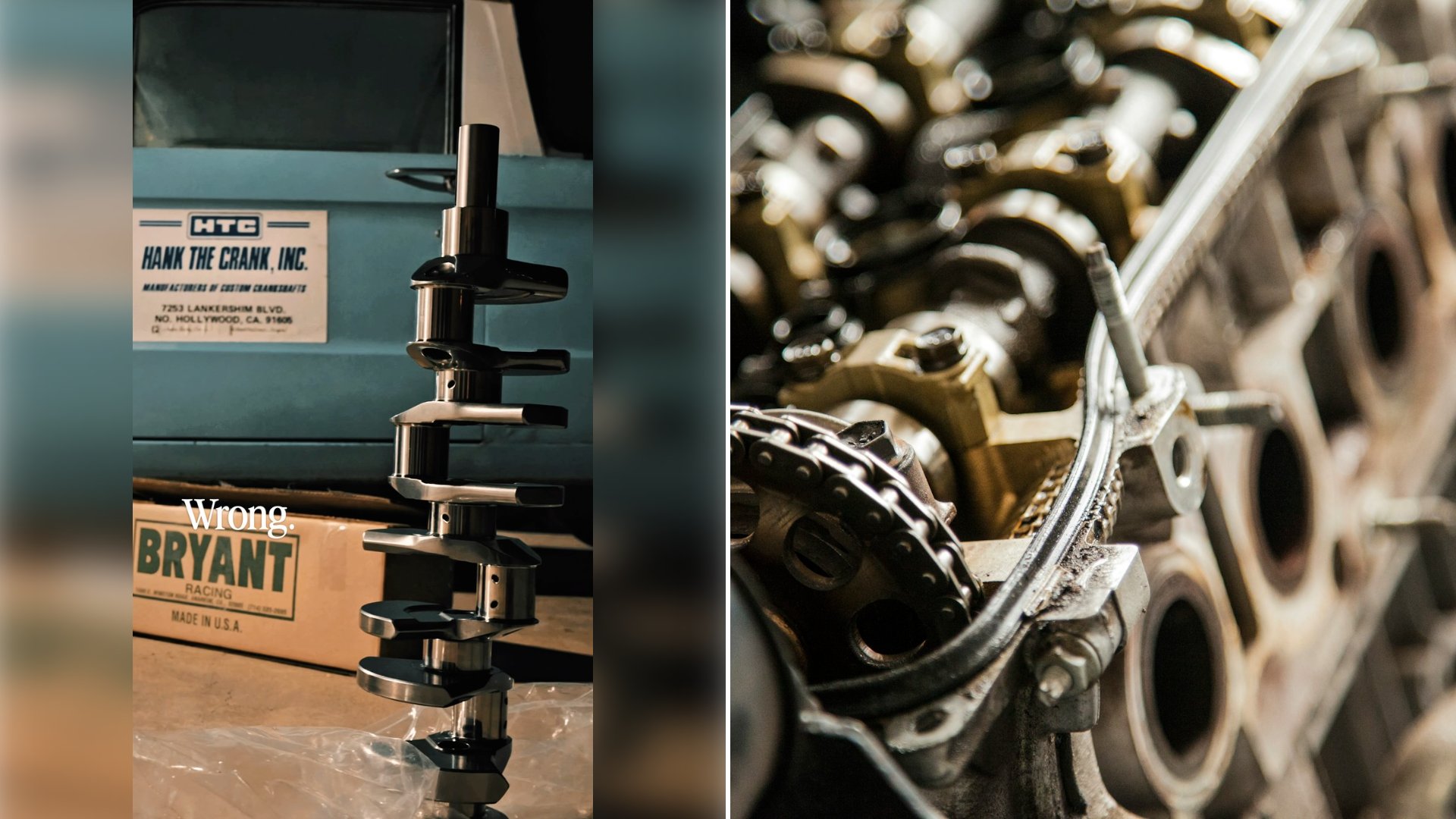
A video from the verified account ranchero_racing_co._ unpacks a family heirloom with a genuinely rare pedigree: “30 years ago my grandpa Hank the Crank ground this crankshaft from a block of Billet Steel and was later left over from a surplus order for the prominent NASCAR team Robert Yates Racing. Today, it’s going in a 1965 Mustang.” The caption credits Sonny Bryant Racing for balancing, polishing, and knife-edging the crankshaft, and the creator’s Uncle Scotty for saving and speccing it out over the decades, aiming for at least 650 horsepower. Tagged #carculture, #performance, #engine, #racing, and #nascar, the video pulled in 49,800 likes, 247 comments, and 263 shares.
A surplus part from Robert Yates Racing isn’t a minor detail to drop into a caption. The NASCAR Hall of Fame’s profile of Yates, inducted as both an owner and engine builder in 2018, traces a career that started at Holman-Moody in 1968 and ran through engines for Bobby Allison’s 1983 championship team, Davey Allison’s 1992 Daytona 500 win, and two more Daytona 500 victories with Dale Jarrett in 1996 and 2000, the second coming the year after Jarrett won the Cup Series title outright. A shop with that record of championships and Daytona wins wasn’t ordering crankshaft blanks casually, which is exactly what makes a leftover piece from one of their surplus orders, hand-ground by a family member three decades ago, a genuinely unusual find rather than just old inventory.
What makes that crankshaft worth building an engine around today comes down to what billet steel actually offers over a stock part. Engine Builder magazine’s explainer describes a billet crank as CNC-machined from a single solid bar of high-grade alloy steel rather than cast or forged into shape, which means the designer isn’t boxed in by an existing die and can custom-tailor the stroke, counterweight design, journal sizing, and oiling path to the engine it’s going into. The magazine is careful to note that billet isn’t automatically stronger than a quality forged crank, since real-world strength comes down to the geometry, material, heat treatment, and machining precision rather than the raw method alone, but it is the format that gives a builder the design freedom to push an engine toward a specific power target.
The finishing work this crankshaft got from Sonny Bryant Racing is what actually makes 650 horsepower survivable at the crank itself. Engine Builder explains that knife-edging reshapes the counterweights specifically to cut windage, the aerodynamic drag created by a spinning crank fighting the air and oil mist inside the crankcase, while also improving oil control and trimming rotating mass so the engine can rev and respond more freely. Precision balancing after that work is what keeps vibration in check and protects bearing life at the RPM a 650-horsepower target demands, turning a three-decade-old scrap piece of NASCAR surplus into something built to survive exactly the kind of abuse a built 1965 Mustang is about to put it through.
More from Steel Horse Rides
- Owner Says the Seats in a 1986 Toyota 4Runner Smell Exactly How You Would Imagine, Then Pulls Out the Carpet and Asks Followers to Pick the Color for the New Kit
- Mechanic Pulls a Snapped Crankshaft Apart in Two Pieces on the Shop Bench, Says the Car Drove In Like That and Jokes the Customer Only Wanted an Oil Change
- Narrator of a Repair Clip Says a Car That Shook Every Time the Owner Hit the Gas Had an Engine Mount Cracked Clean in Half, Then Explains Why the Impact Wrench Is Not the Last Step