

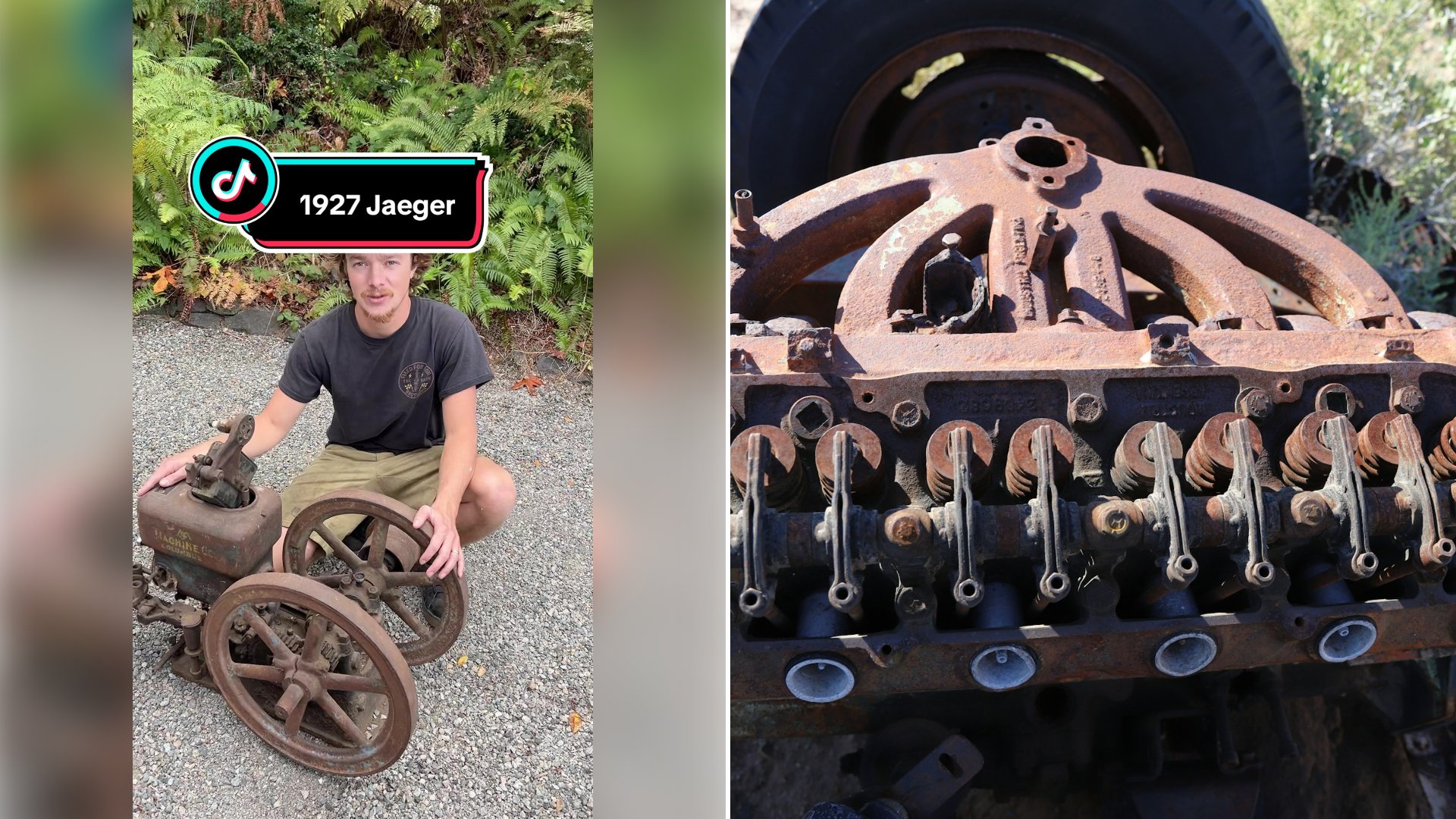
A video gaining attention shows a restorer attempting something most people would write off as hopeless: bringing a ninety nine year old, heavily rusted hit and miss engine, originally mounted to an old concrete mixer, back to actual running condition. The footage shows the engine caked in surface rust and decades of grime, with the restorer working through disassembly, cleaning, and inspection to figure out exactly how much of the century-old machine can realistically be saved.
The restoration comes from @thebarnbrothers, creators who focus on reviving old farm and industrial equipment that’s spent years, and sometimes decades, sitting outside or forgotten in a barn.
@thebarnbrothers
Hit and miss engines get their name from the way they actually run. Unlike a modern engine that fires on a regular cycle at a set speed, a hit and miss engine fires only when needed to maintain its target speed, then coasts along on a flywheel until it needs another power stroke, a design that made these engines simple, fuel-efficient for their era, and remarkably durable. They were built by dozens of manufacturers in the late 1800s and early 1900s and used to power everything from water pumps to grain grinders to, as in this video, concrete mixers, making them one of the most common pieces of small industrial machinery in rural America before cheap electric motors took over that role.
Despite being over a century old in many surviving cases, hit and miss engines are known for being mechanically forgiving to work on, which is a big part of why hobbyists keep pulling rusted examples like this one out of barns and sheds rather than scrapping them. Their simple single-cylinder design, slow operating speed, and large, accessible components mean a patient restorer can often get decades of corrosion and seized parts moving again with penetrating oil, careful heat, and basic hand tools, without needing specialized machine shop work unless a part is truly broken rather than just stuck.
The collector market for these engines has grown steadily as fewer running, original examples remain. Smaller, common hit and miss engines in rough but complete condition typically trade in the few hundred dollar range, while rarer makes, larger horsepower examples, or engines with their original manufacturer tags and matching components can bring well over a thousand dollars at auctions and swap meets dedicated to antique engines and tractors. A fully restored, running example from a sought-after manufacturer can climb considerably higher than that, especially when it comes with documented original history like the concrete mixer application shown in this video.
Clubs built entirely around this hobby, often organized under names referencing antique gas engines and threshing, hold regular meets where members show off working restorations and swap parts for engines that haven’t been in production for roughly a century. That built-in community is part of why a project like the one in this video has an audience beyond just car and mechanical enthusiasts generally; antique engine collecting has its own dedicated following that treats a successful revival like this one as a genuine achievement worth documenting step by step.
What makes this particular engine’s story compelling is the tie to the concrete mixer it once powered. Small portable concrete mixers were common on farms and job sites in the early twentieth century, often running off exactly this kind of standalone gas engine rather than being tied to a vehicle. Bringing the engine back to running condition doesn’t just save a piece of mechanical history, it potentially brings a working glimpse of early twentieth century construction technology back to life, one cleaned part at a time.
More from Steel Horse Rides
- Restorer Pulls a Pontiac GTO Body From an Acid Dip Tank and Shows How It Gets Neutralized and Pressure Washed To Reveal the Metal Underneath the Rust
- Restorer Rescues a Dead 1967 Ford Mustang Found Buried Under Leaves and Shows the Careful Steps a Decades Dormant Engine Needs Before It Can Safely Run Again
- Creator Shows a Thirty Year Old NASCAR Surplus Crankshaft His Grandfather Ground by Hand and Explains Why It Is Going Into a 1965 Mustang Build