

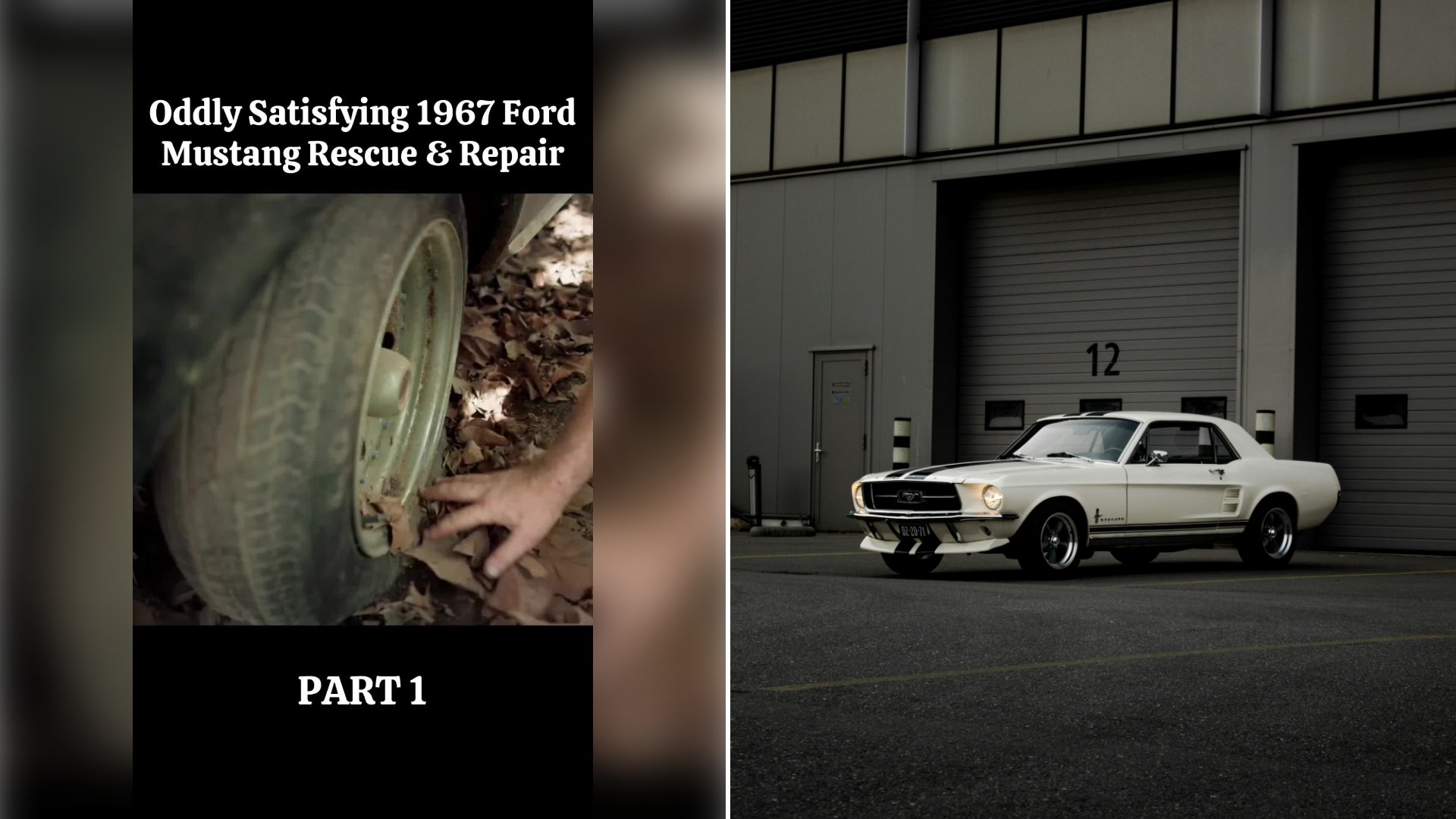
A video from the account Restoration USA opens on a weathered tire buried in dead leaves, with the title doing the rest of the work: “Oddly Satisfying 1967 Ford Mustang Rescue & Repair, PART 1.” The caption confirms it’s the first installment of a documented rescue and early repair process on a 1967 Mustang that had been left abandoned. The video pulled in 27,500 likes, 57 comments, 2,540 saves, and 406 shares.
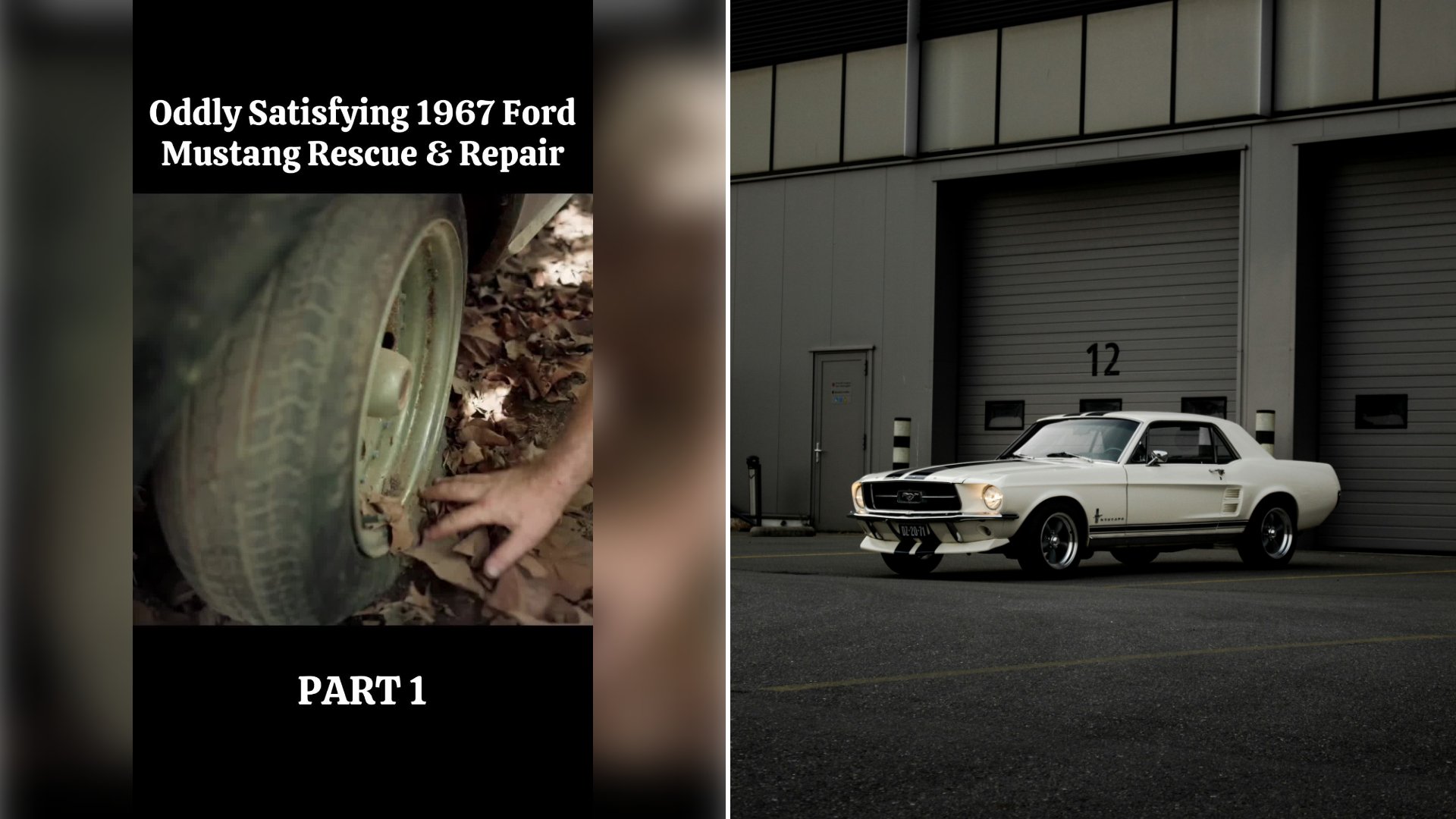
@restoration.usa Part 1/ Oddly Satisfying 1967 Ford Mustang Rescue & Repair
A 1967 Mustang is a meaningful car to find buried under debris rather than just another old sedan. Gateway Classic Cars’ rundown of the model explains that 1967 brought a larger, more aggressive body than the original 1964½ design, one roomy enough to finally accept big-block power, including a 390 cubic inch V8 making up to 320 horsepower. Enthusiasts consider it the first genuinely high-performance Mustang, built to compete directly with the rest of Detroit’s muscle car lineup rather than just looking sporty. Ford moved 472,121 Mustangs that model year, according to Mustang Specs’ production breakdown, split between 356,271 hardtops, 71,042 fastbacks, and 44,808 convertibles, numbers that explain why parts and knowledge for reviving one are still so widely available decades later.
That same Classic Motorsports barn-find revival guide lays out exactly why a car left outdoors needs patience before anyone turns a key. Mice nests are common enough that the guide specifically warns not to be surprised by them, and anything that look merely dusty from fuel lines to brake hoses can be rotted through on the inside. Brakes get checked first: discs, calipers, lines, and the master cylinder all need inspection for rust and seized components, since seals that stuck during years of sitting can fail unpredictably once the car is finally driven again. The fuel system gets equally careful treatment, since old gasoline breaks down into varnish and sludge that can ruin a carburetor, meaning the tank typically needs draining and cleaning and every rubber hose needs replacing regardless of how it looks from the outside.
The engine itself doesn’t just get cranked over once the obvious problems are handled, either. The same guide recommends draining and replacing the oil, pulling the spark plugs to pre-lube the cylinders directly, and confirming oil pressure exists before the engine ever fires for real, since running a motor with no oil flowing after years of sitting is one of the fastest ways to turn a promising rescue into a scrapped engine. Expect smoke on that first start as accumulated grime burns off, and expect to keep listening for new noises for miles afterward, since compression readings on a long-dormant engine can stay erratic until it’s had real running time to settle back in. For a nameplate as documented and well-supported as the 1967 Mustang, that patience is usually rewarded; the parts and know-how to do it right are rarely the hard part.
More from Steel Horse Rides
- Owner Says the Seats in a 1986 Toyota 4Runner Smell Exactly How You Would Imagine, Then Pulls Out the Carpet and Asks Followers to Pick the Color for the New Kit
- Mechanic Pulls a Snapped Crankshaft Apart in Two Pieces on the Shop Bench, Says the Car Drove In Like That and Jokes the Customer Only Wanted an Oil Change
- Narrator of a Repair Clip Says a Car That Shook Every Time the Owner Hit the Gas Had an Engine Mount Cracked Clean in Half, Then Explains Why the Impact Wrench Is Not the Last Step